
Related videos:
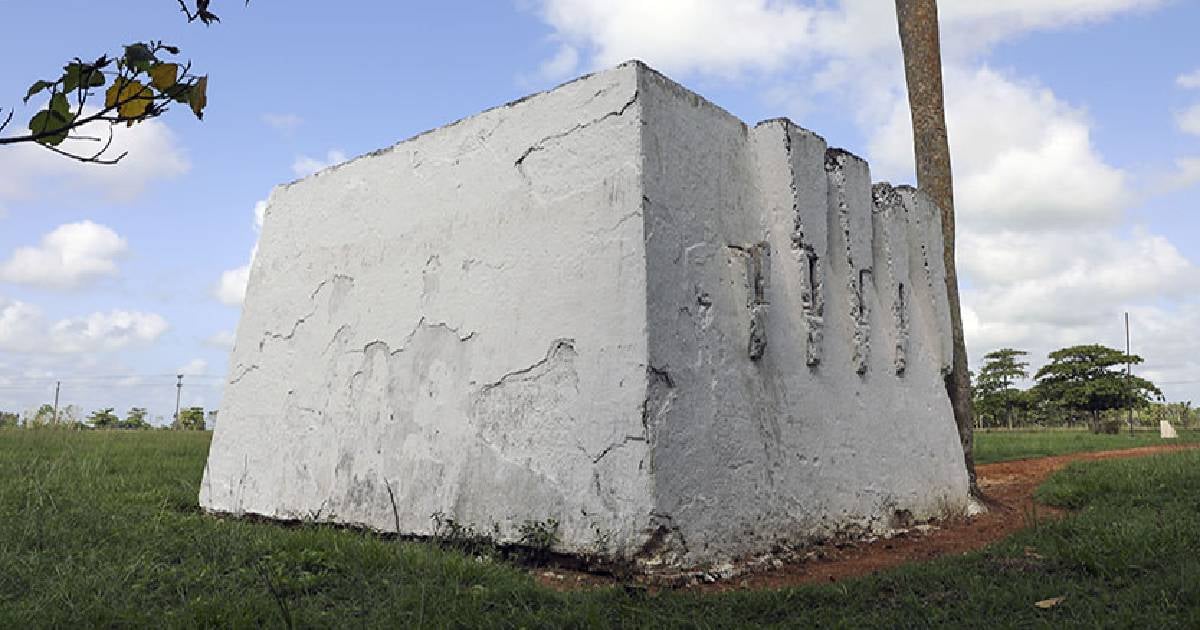
The Júcaro to Morón Trocha, whose crossing in the 19th century marked a milestone of audacity, resilience, and military strategy for the Cuban mambises during the wars of independence, is now listed among the threatened heritage sites in the province of Ciego de Ávila.
Likewise, the batey of the former Cunagua sugar mill -also a National Monument like the trocha- and three other local historical sites: the Teatro Principal, the house where Camilo Cienfuegos camped in Boquerón, and the Hoyo de los Indios, in the municipality of Florencia, face a deterioration that could become irreversible, highlighted the official newspaper Invasor:
In the case of the batey of the former Cunagua sugar mill, “the investment could even exceed the financial capacity of the province. But we also know that if a monument is completely destroyed, its recovery becomes impossible, as it would be a historical falsehood and the damage would be irreversible,” warned Doralis Nuez González, director of the Provincial Center for Cultural Heritage.
He pointed out that "reversing the condition of these monuments requires, first and foremost, financial resources, which, in the current situation of the country, becomes very complex and sometimes surpasses the capabilities of the municipalities."
Even though Law No. 155, in effect since March 2024, establishes the legal obligation to protect cultural and natural heritage, in practice, there is no way to do so without resources or trained personnel.
But the heritage crisis in Ciego de Ávila is not limited to these five sites. Four museums are closed due to the poor condition of the buildings or the lack of display cases: Majagua, Buchillones, Bolivia, and the Museum of Decorative Arts; and two others are partially operational: the Museum of Florencia, which still has two rooms closed, and the Museum of Ciro Redondo, which has the Memorial House of Sergio Antuña shut down.
The director of the Heritage Center acknowledged that the shortage of specialized technicians is a serious obstacle and that this deficiency "is reflected in some of the results."
Despite this outlook, the authorities highlight some achievements, such as the partial reopening of the Municipal Museum of Florence, which had been closed since 2017, and the awarding of the Provincial Conservation Prize 2025 to the Villa Madrid Family House, in addition to a mention for the Holy Cathedral Church of San Eugenio de la Palma.
The Loma de Cunagua Wildlife Refuge in the municipality of Bolivia was also recognized at a national level. However, these specific acknowledgments do not disguise the structural precariousness of the heritage system in Avila.
According to the media outlet, three provincial working commissions have been established for movable, intangible, and monumental heritage, in compliance with current regulations. However, without adequate equipment or personnel, their scope of action is limited. The process of digitizing heritage is just beginning, with some newly acquired technological equipment, though still insufficient for the magnitude of the work ahead.
Museums such as the one in Venezuela, the Birthplace of Pedro Martínez Brito, and the Provincial Museum Colonel Simón Reyes Hernández have incorporated interactive techniques in their galleries, allowing visitors to choose the type of information they wish to consume. These initiatives, while valuable, are isolated and do not suffice to counteract the closure of entire facilities or the gradual deterioration of the most important monuments.
Ciego de Ávila closed 2024 with recognition as Outstanding by the Provincial Directorate of Culture. However, beyond institutional merits, the facts reveal a cultural system in crisis, with weakened structures and a chronic lack of sustainability. The historical legacy of the territory faces not only the wear of time but also the burden of neglect.
While the government champions the cult of historical memory, dozens of heritage buildings and cultural symbols in Cuba are crumbling. This accelerated deterioration, largely due to state inaction and the economic crisis, has been normalized among a population resigned to witnessing entire fragments of their national identity disappear.
In Ciego de Ávila itself, the Morón Railway Terminal, a National Monument and the second largest in the country, is a vivid example of how public budgets in Cuba can skyrocket without realistic planning or transparency. What started in 2022 as a "capital restoration" with a budget of 3.4 million pesos has turned into a state megaproject that has already surpassed 100 million pesos.
For its part, the Máximo Gómez Airport in Ciego de Ávila, built with over 100 million pesos, is now a ruin without flights or purpose. More than two decades of state abandonment have buried public investment under the weight of neglect and absurdity.
In Guanajay, in the province of Artemisa, the museum that pays tribute to Carlos Baliño (1848-1926), one of the founders of the first Communist Party of Cuba (PCC), has been closed since 2019, while undergoing a stagnant investment process, facing serious structural risks and lacking guarantees to preserve its heritage collection.
Similarly, the El Arte Printing House in Manzanillo, one of the most significant cultural symbols of eastern Cuba, is languishing in neglect, while its historical and editorial legacy crumbles.
The once magnificent Casino Español de La Habana, located in the Playa municipality; the emblematic Teatro Musical de La Habana; and the former Hotel Venus in Santiago de Cuba, are just a few examples of cultural and architectural treasures that have fallen victim to neglect, civic vandalism, and governmental indifference.
Frequently Asked Questions about Heritage Deterioration in Ciego de Ávila
What monuments in Ciego de Ávila are at risk of irreversible deterioration?
The monuments at risk of irreversible deterioration in Ciego de Ávila include the Trocha de Júcaro to Morón, the batey of the former Cunagua sugar mill, the Principal Theatre, the house where Camilo Cienfuegos camped in Boquerón, and the Hoyo de los Indios in Florencia. Although these sites are recognized as National Monuments, they face a significant threat due to a lack of financial resources and skilled personnel for their maintenance and restoration.
Why has the restoration of the Morón Railway Terminal exceeded 100 million pesos?
The restoration of the Morón Train Station has exceeded 100 million pesos due to poor initial planning and a lack of control over public resources. What began as a modest restoration in 2022 with a budget of 3.4 million pesos has turned into a state megaproject with multiple cost overruns, including the importation of wood and the repair of a large stained glass window.
What obstacles does Ciego de Ávila face in protecting its cultural heritage?
Ciego de Ávila faces several obstacles in protecting its cultural heritage, including a lack of financial resources, a shortage of qualified personnel, and poor state management. Although there are laws in place for the protection of heritage, the lack of equipment and staff limits actions to preserve the monuments and historical sites of the province.
What other infrastructures in Cuba suffer from neglect similar to the heritage of Ciego de Ávila?
Other infrastructures in Cuba that suffer from similar neglect include the Máximo Gómez Airport in Ciego de Ávila, the Carlos Baliño Museum in Guanajay, and the Musical Theater of Havana. These sites reflect the same governmental neglect and lack of planning that impact the heritage of Ciego de Ávila, resulting in deterioration that threatens to erase important fragments of the country's cultural identity.
Filed under: