
Related videos:
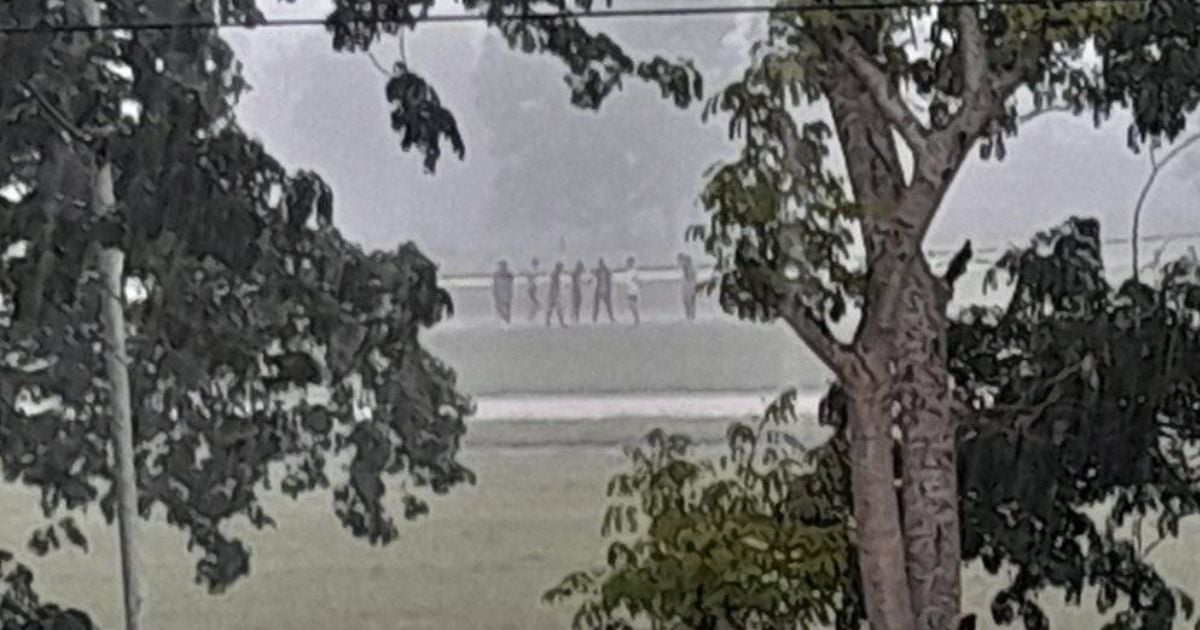
A group of young people in Ciego de Ávila was nearly struck by lightning this Thursday while playing soccer outdoors during a thunderstorm.
The discharge occurred very close to the field where they were, and the blast of the electric arc was heard loudly in the area.
The alert was published on Facebook by the meteorologist Frank Fernández Castañeda, who reported that the impact was so close to the headquarters of the Provincial Meteorological Center (CMP) that the sound of the thunder was clearly audible, highlighting the imminent risk that the young people were exposed to.
Fernández criticized the recklessness of the group, which stayed in the area despite warnings issued on television, radio, and social media, repeatedly urging people to seek immediate shelter in the face of electrical phenomena.
A reckless attitude that could cost them their lives, warned the specialist in his post.
The incident occurs just days after the death of two teenagers in Cuba due to a lightning strike, an event that shocked public opinion and reignited calls for caution during storms.
The meteorologist emphasized that lightning can strike without warning, even several kilometers away from the center of the storm, making any open space—such as fields, beaches, or parks—a high-risk area.
Fortunately, in this case, no injuries were reported, but the incident highlights the urgent need to strengthen education about climate risks, particularly among the youth.
Playing or staying outdoors during a thunderstorm is not only reckless but potentially deadly.
Experts recommend that at the first sound of thunder or flash of lightning, people should move away from open spaces, poles, trees, metal structures, or bodies of water, and seek refuge in enclosed buildings or vehicles.
The risks associated with thunderstorms have gained prominence in Cuba in recent weeks.
In the municipality of Santo Domingo, Villa Clara province, a lightning strike severely impacted the local electrical system, leaving multiple areas without service for several hours.
The impact caused damage to transformers and distribution lines, highlighting the vulnerability of the infrastructure to these natural phenomena.
Days earlier, in Guantánamo, a lightning strike hit a group of trees along Camilo Cienfuegos Avenue, causing power outages and alarm among the residents.
Although there were no injuries, images of the incident circulated on social media revealed the extent of the damage, with broken branches and signs of charring on the ground.
Frequently Asked Questions about the Risks of Playing Outdoors During Thunderstorms in Cuba
Why is it dangerous to play outside during a lightning storm?
Playing outdoors during a thunderstorm is extremely dangerous because lightning can strike without warning, even miles away from the center of the storm. Open spaces such as football fields, beaches, or parks become high-risk areas, increasing the likelihood of being struck by lightning.
How many deaths do lightning strikes cause in Cuba compared to hurricanes?
In Cuba, lightning causes more deaths than hurricanes. A study by the Institute of Meteorology revealed that between 1987 and 2017, lightning strikes resulted in an average of 54 deaths per year, totaling 1,742 fatalities over three decades.
What safety measures should be taken during thunderstorms?
During thunderstorms, it is crucial to seek immediate shelter in enclosed buildings or within a vehicle, avoiding open spaces. Staying away from poles, trees, metal structures, and bodies of water is vital. Indoors, it is advisable to unplug appliances and refrain from using landline phones.
Which provinces in Cuba are most affected by lightning?
The provinces of Granma, Holguín, Camagüey, and Santiago de Cuba are the most affected by lightning in Cuba, with the highest mortality peaks recorded during the months of June, July, and August.
Filed under: