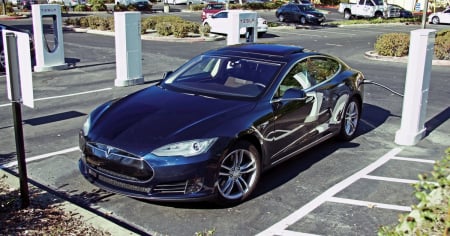
Tesla Inc., the electric vehicle manufacturer owned by entrepreneur Elon Musk, is facing a civil trial with a federal jury in Miami starting this Monday that will determine whether the company is responsible for the death of an individual in an accident in 2019 in South Florida, which involved a car equipped with its autopilot technology.
The civil lawsuit for negligent homicide aims to hold Tesla accountable for the traffic accident that occurred on April 25 of that year in Key Largo, in which 20-year-old Naibel Benavides León lost her life, and her boyfriend, Dillon Angulo, sustained serious injuries, reported the news agency EFE.
The incident occurred after George McGee, who was driving a 2019 Tesla Model S, activated the Autopilot feature while searching for his mobile phone, neglecting to pay attention to the road. The car collided with another vehicle, which subsequently struck the couple.
The victims were next to a parked Chevrolet Tahoe on the shoulder when the fatal impact occurred. McGee was traveling at 62 miles per hour (approximately 100 km/h).
During the seconds when McGee was trying to pick up the phone from the floor of the car, it veered off the road, missed a stop sign and a red traffic light, and crashed into the pickup truck, which caused it to collide with Benavides and Angulo.
The young woman was thrown about 23 meters and died instantly, while Angulo was seriously injured.
In the case registered as Benavides v. Tesla Inc., the families of Benavides and Angulo accuse Tesla of design defects and failure to provide adequate warnings about the risks of its Autopilot system, which was activated at the time of the accident.
According to a court document cited by EFE, the plaintiffs also accuse Tesla of "efforts to obstruct the investigation of the accident," claiming that it prevented the Florida Highway Patrol (FHP) from "accessing data" from the vehicle that "demonstrates the role of the autopilot failure in the accident."
The lawsuit also presents evidence that the automotive company recalled over two million vehicles in 2024 to address a safety issue with its autopilot system, through a letter sent to the owners in which it acknowledged “the existence of a defect and promised to fix it in all its cars.”
The federal judge Beth Bloom, from the Southern District of Florida court, rejected Tesla's attempt to dismiss the case, allowing the federal jury trial that began this Monday to proceed. In her ruling, outlined in a 98-page document, Bloom concluded that there was sufficient evidence for the case to move forward.
On the other hand, although McGee admitted to not driving safely, his testimony is crucial. The man stated that he hoped the Autopilot system would prevent a collision.
The judge argued that this expectation prevents considering the driver as solely responsible for the accident. "The plaintiffs provided sufficient evidence that the defects in the autopilot were a 'substantial factor'" in the tragic incident, Bloom warned.
Tesla has repeatedly defended that the Autopilot system does not make its vehicles autonomous and has warned that drivers must be “fully attentive” to driving and keep their hands on the wheel at all times.
The company asserts that its functions are designed to assist, not replace the human driver. However, one of the key points in the lawsuit is the manner in which Tesla communicates such risks.
Judge Bloom noted that the user manuals, accessible only from the touchscreen of the Model S, could hinder users from fully understanding the limitations of the autopilot.
This element reinforces the accusation of a failure to warn, as it considers that Tesla did not adequately explain the inherent dangers of using Autopilot.
Tentatively, the trial could be decided on July 31, one of the first in which the automotive company faces a civil jury.
Tesla Inc. has faced increasing pressure due to issues with its autopilot system.
According to information from EFE, last month a class action was made public by about 10,000 drivers in Australia, who are seeking compensation from the company due to an automatic braking issue.
Also in June, U.S. authorities requested information from Musk's company regarding incidents reported during the initial hours of the robotaxi's test service in Austin, Texas. Users shared videos on social media showing these cars exceeding speed limits or driving in the wrong direction.
In 2024, Tesla Inc. reached an agreement to end a lawsuit related to an accident involving one of its semi-automatic vehicles, which occurred in California in 2018, resulting in the driver's death.
Frequently Asked Questions about the Tesla Trial for Accident Involving Autopilot
Why is Tesla facing a lawsuit in Miami related to its Autopilot system?
Tesla faces a trial in Miami due to a fatal accident in 2019, in which a Tesla Model S, with Autopilot activated, caused the death of Naibel Benavides León. The victim's family accuses Tesla of design flaws and failing to warn about the risks of its Autopilot system.
What are the accusations against Tesla in this case?
The accusations against Tesla include design flaws and inadequate warning about the risks of the Autopilot system. Additionally, it is alleged that Tesla obstructed the investigation of the accident by preventing access to vehicle data that could demonstrate the Autopilot's failure in the incident.
How does Tesla's risk communication affect its liability in the accident?
The way Tesla communicates the risks of Autopilot is a key point in the lawsuit. The judge noted that the user manuals, accessible only from the touchscreen of the Model S, could make it difficult for users to fully understand the system's limitations, which reinforces the claim of failure to warn.
What position has Tesla taken regarding the responsibilities of the Autopilot system?
Tesla has stated that the Autopilot system does not turn its vehicles into autonomous ones and that drivers must always remain alert and keep their hands on the wheel. The system is designed to assist, not to replace the human driver, according to the company.
Filed under: