
Related videos:
The power outages in Cuba continued throughout the early hours of this Saturday and show no signs of relief for the population, despite the Antonio Guiteras Thermoelectric Power Plant in Matanzas managing to synchronize with the National Electric System (SEN) the night before after a much-anticipated maintenance shutdown.
The official statement from the Unión Eléctrica (UNE) indicates that the impact from the generation deficit reached 1,964 megawatts (MW) at 9:30 PM this Friday, coinciding with peak demand. The situation did not improve overnight, and service interruptions were reported throughout the entire 24-hour period.
The commissioning of Guiteras, which started delivering about 170 MW to the system, has not been enough to ease the severe energy crisis impacting Cubans.
This Saturday morning, the total availability of the SEN was only 1,950 MW compared to a demand of 3,200 MW, resulting in a deficit of 1,304 MW.
The factors that exacerbate the situation
Among the factors exacerbating the energy crisis are the breakdowns at Unit 4 of Energas Varadero, Unit 2 of CTE Felton, and Unit 5 of CTE Renté. There are also units down for maintenance at the thermoelectric plants in Santa Cruz, Cienfuegos, and again Renté.
The government reports thermal limitations of 517 MW out of service and asserts that the lack of fuel has left 78 distributed generation plants (648 MW) and 12 engines of the Patana de Regla (84 MW) non-operational.
In total, the capacity out of service due to lack of fuel amounts to 732 MW.
Gloomy outlook for peak hours
On this Saturday night, during peak hours, the UNE forecasts a availability of only 2,200 MW against a demand of 3,650 MW, which could imply an impact of up to 1,520 MW if current conditions persist.
Despite the expectation of a partial recovery of some engines and the partial entry of the Patana de Regla, the projected deficit far exceeds the anticipated recovery capacity.
Frustrated expectations with the Guiteras
The entry of the Guiteras into the system was announced with fanfare on official networks this Friday at 9:00 p.m., after the plant passed a boiler test and ignited its burners. In theory, its reactivation was supposed to provide relief for the struggling Cuban electrical grid, but the numbers reveal a very different reality.
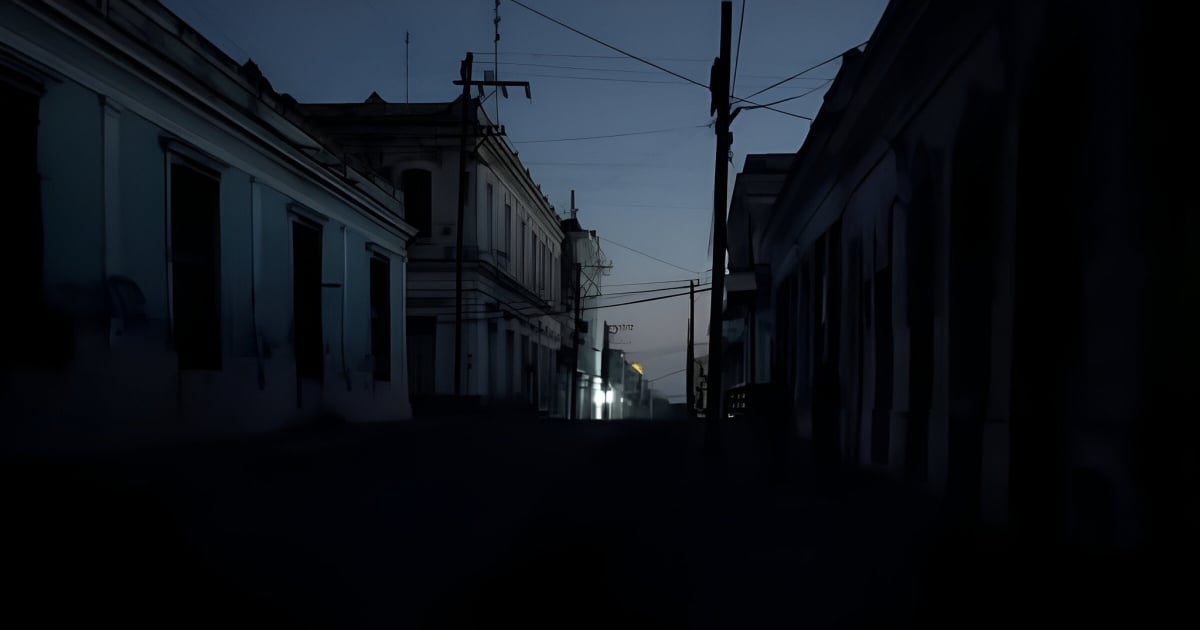
Meanwhile, in several regions of the country, power outages are lasting over 20 hours, exacerbating public discontent amid an unprecedented economic and social crisis.
The Cuban population continues to face prolonged power outages, with no structural solutions in sight and technical promises that rarely result in sustainable improvements.
Frequently asked questions about the energy crisis in Cuba
Why does the energy crisis in Cuba continue despite the synchronization of the Antonio Guiteras Thermal Power Plant?
Despite the synchronization of the Antonio Guiteras Thermal Power Plant, the electric generation deficit in Cuba exceeds 1,500 megawatts (MW). The entry of the Guiteras has not been sufficient to meet the high demand, due to breakdowns in other thermal units and the lack of fuel, which severely impact the National Electric System (SEN).
What are the main factors that exacerbate the energy crisis in Cuba?
The energy crisis in Cuba is worsening mainly due to breakdowns at various thermoelectric plants and a lack of fuel. Units at plants such as Energas Varadero, CTE Felton, and CTE Renté are out of service. Furthermore, the lack of fuel has left 78 distributed generation plants and barge engines non-operational.
How do power outages impact the daily lives of Cubans?
Prolonged blackouts severely impact the daily lives of Cubans, affecting the economy, production, and basic services. In several provinces, outages last for over 20 hours, exacerbating social discontent and creating an atmosphere of desperation and uncertainty among the population.
What measures has the Cuban government taken in response to the energy crisis?
The Cuban government has promised investments to restore capacity and modernize energy infrastructures. However, the credibility of these promises is low among the population, which still suffers from daily and prolonged blackouts without visible improvements in the short term.
Filed under: