
Related videos:
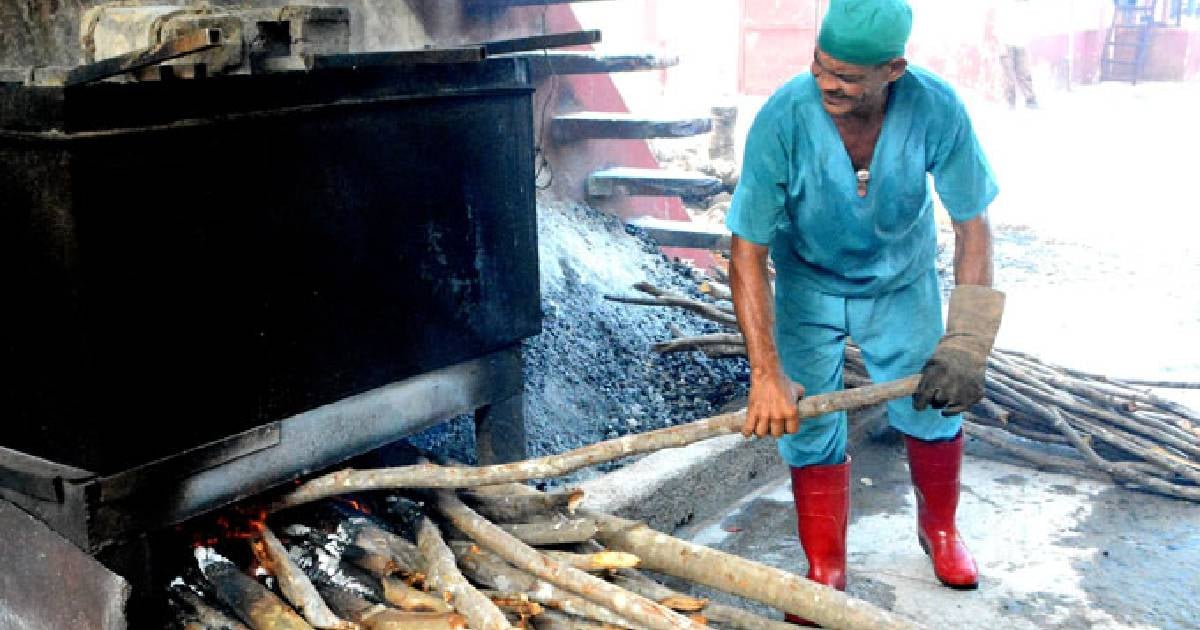
With the sharp decline in the supply of beef, pork, and fuel, the old meat processing plant Inocencio Bladwood in Niquero, in the province of Granma, survives by producing sweets and guarapo instead of meat, painting a stark picture of industrial precariousness in Cuba.
Due to a shortage of animals for slaughter and diesel for operation, the plant belonging to the provincial Meat Company exchanged sausages for slices of mango, shaved ice, and sugarcane juice, reported the official newspaper La Demajagua.
According to Alexis la Hera Segura, director of the entity, in the last two years they have managed to process just over 140 tons of sausages, cooked with firewood due to the fuel shortage.
During the same period, 1.3 tons of processed foods were produced, as well as sugarcane juice, sugar, and mango slices, intended for the population of the municipality of Niquero; while ham, mortadella, and sausage are sold to the Education sector - for school snacks - other agencies, and the public, according to the source.
Forced reconversion is presented in the state press as an example of creativity and effort. Hera stated that diversification has allowed the entity to continue operating and to ensure monthly salaries reaching up to 13,000 pesos.
The transformation of the team has included labor changes. Yordanis Torres Capote, a former processing technician, took on the role of oven operator, a position that did not exist before in the plant. However, what underlies this is a forced displacement of functions due to the collapse of basic supply.
Far from reflecting progress or modernization, the new face of the slaughterhouse symbolizes the productive regression of the country. The food industry, battered by shortages of supplies, transportation, and electricity, reinvents itself not out of choice, but out of necessity.
What was once a meat processing center is now still active thanks to marginal products, whose production is more a symbol of resilience than of development.
The "Inocencio Bladwood," now transformed into a comprehensive food production center, has been awarded the Labor Excellence flag and presented as one of the pillars of the municipality in anticipation of the July 26 celebrations. However, behind the official narrative lies a less glorious truth: when a slaughterhouse ends up making sweets, there is no victory, but rather a concerning adaptation to emptiness.
The Cuban livestock industry is facing a severe crisis, with the loss of over 900,000 head of cattle since 2019, according to official data recently presented by the Ministry of Agriculture (MINAG).
When presenting the figures to one of the parliamentary committees, the Director General of Livestock, Arián Gutiérrez Velázquez, reported that by the end of 2024, the livestock population in the country was only three million animals, which represents a decrease of about 400,000 heads compared to the previous year, as reported by the official newspaper Granma.
The downward trend is not only due to natural factors such as mortality but also to serious structural problems, such as theft and illegal slaughter, which in the last year alone affected more than 27,000 animals, including cattle and horses.
It was also acknowledged that the situation is due to non-compliance and negligence on the part of the tenants and state entities.
Other factors related to the significant decrease in the number of livestock include failures in breeding technologies, shortages of veterinary supplies and feed, productive deterioration, theft, and illegal slaughters.
They are joined by the lack of food and fodder, the deficit of veterinary supplies, the deterioration of productive infrastructure, and the absence of economic incentives for producers, which have seriously affected livestock breeding and reproduction.
Official media recently revealed that the collapse of livestock farming in the municipality of Jobabo is the result of years of improvisation, lack of investment, and forgotten strategies. What was once a system with productive potential now survives with only a third of the milk collection levels that existed before 2020.
Cuban farmers have reported that the theft and slaughter of livestock remain out of control in the fields of the island, amid the economic crisis and food shortages, which severely impact agricultural economy and food security.
Meanwhile, the province of Camagüey, which for years was the largest producer of milk in Cuba, has seen its annual volume plummet to less than half of the 92 million liters it produced in 2019, a setback that is not only numerical but also reflects a structural crisis where disorder, unpaid debts, and a lack of effective responses prevail.
A national audit conducted between March 2024 and January 2025 detected 181,854 irregularities in the control of the cattle population in Cuba, as reported by Yudith Almeida Núñez, head of the Livestock Registry Department of MINAG.
In light of this situation, the ministry proposes to prioritize those with more than 10 cows, expand land allocation to producers with good results, develop the supply market, and promote the export of charcoal as an economic incentive.
Similarly, they discussed solving the issue of water supply through renewable energy sources, addressing the inefficient use of idle land infested with marabou, and accelerating the digitization of livestock records.
The need to organize value chains and supply chains was also discussed, as well as fostering productive linkages with the national and local industries to increase the production of milk and meat.
Frequently asked questions about the industrial and food crisis in Cuba
Why has the meat company Inocencio Bladwood in Niquero changed its production from meat to sweets and guarapo?
The meat processing company Inocencio Bladwood in Niquero has shifted its production from meat to sweets and guarapo due to the shortage of cattle, pigs, and fuel. In light of the lack of animals to slaughter and the shortage of diesel for operations, the plant has been compelled to diversify its production to survive, now producing mango slices, raspadura, and sugarcane guarapo.
What is the current situation of livestock farming in Cuba?
Cattle farming in Cuba is facing a severe crisis, with an accumulated loss of more than 900,000 heads of cattle since 2019. The livestock population in the country has been reduced to three million animals by the end of 2024, due to serious structural issues such as theft, illegal slaughtering, lack of veterinary supplies and feed, and deterioration of productive infrastructure.
How has the energy crisis affected food production in Cuba?
The energy crisis has severely impacted food production in Cuba, limiting the ability of industries to operate effectively. The lack of electricity and fuel has led to sectors such as fishing and sugar production being significantly affected, forcing reliance on rudimentary production methods such as preserving fish with salt and sun or cooking with firewood.
What measures are being taken in Cuba to address the food scarcity?
In Cuba, measures are being taken such as product diversification and the use of ancestral techniques to address food shortages. This includes the production of sweets and guarapo, the preservation of fish in brine, and the mixing of wheat flour with extenders like sweet potato, cassava, and pumpkin to stretch the available raw materials. These measures reflect more of a response to precariousness than a productive advancement.
Filed under: