
Related videos:
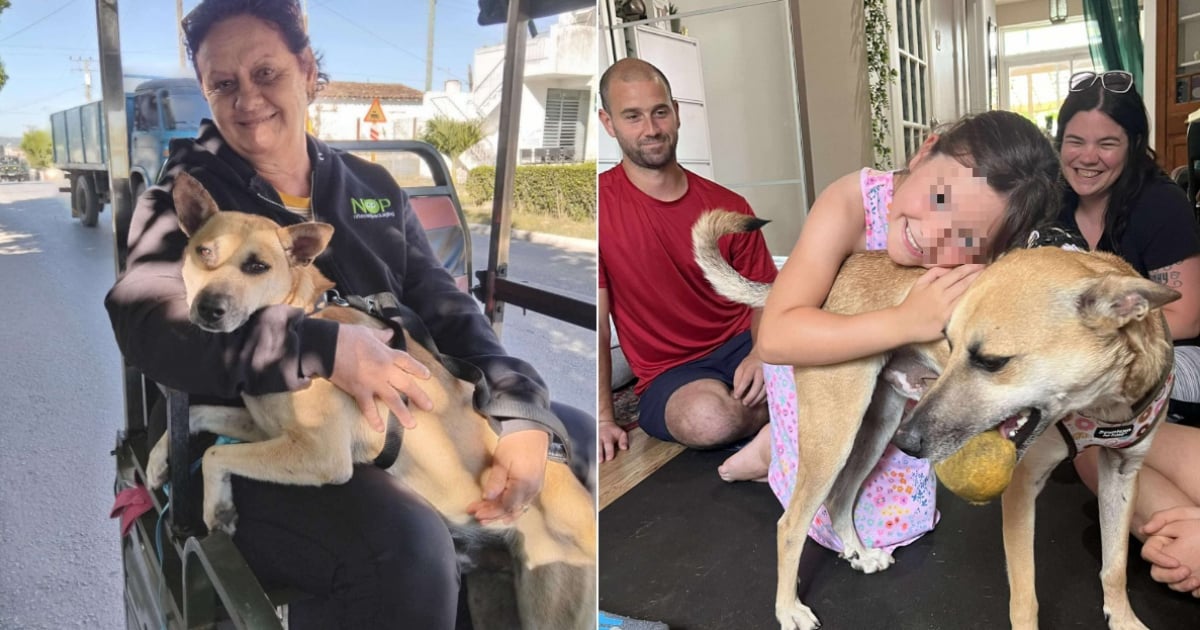
The story of the street dog Leo, rescued from the streets of Cuba, has a happy ending after being adopted by a family in Canada and moved to that country.
From Santa Clara to Montreal, the long journey of this Cuban dog began after the puppy was rescued and its story was shared in a Facebook group.
Leo was rescued under conditions of abandonment and initially taken to Morón and Cayo Coco, before undergoing a recovery and veterinary preparation process in anticipation of his international journey.
Thanks to a network of volunteers, rescuers, and foster families, the animal finally arrived in Toronto before settling permanently with Catherine, Maxime, and their two children in Montreal.
The rescue of Leo was coordinated by a group of Canadian citizens dedicated to the rescue and adoption of stray animals in Cuba.
These organizations, often driven by personal experiences during trips to the island, successfully rescue dogs and cats from situations of extreme vulnerability and integrate them into foster programs in Canada.
One of the key moments of the process was when Simona, a volunteer, met Leo at the Santa Clara airport and personally committed to finding him a home.
“She was with him every step of the way,” reported the rescue network.
Gratitude was extended to "everyone who assisted with transport, hosting, veterinary bills, trainers, animal communicators, and those who shared their story."
Leo arrived sterilized, vaccinated, and with his veterinary health up to date, as required by regulations for the entry of animals in Canada.
According to his rescuers, he is a sweet, sociable dog, especially affectionate with children, which made him the perfect companion for his new family.
Leo's case is not isolated. Dogs like Cayo and Bruno were also rescued from the streets of Cuba in previous years by Canadian tourists who, moved by compassion, decided to take them home.
In all cases, the process has been complex: from health issues like mange to the strict exit controls for animals leaving Cuba. However, the collective effort has allowed several of these animals to celebrate their first Christmas today in the warmth of a real home.
"Enjoy your beautiful new life, Leo. You deserve every bit of happiness that's on its way," wrote Gabrielle Chapdelaine-Roy, one of the volunteers in the group, when announcing the news on social media.
Amid the economic difficulties facing Cuba and the lack of animal protection programs, these acts of international solidarity not only save lives but also bring together people from different countries around respect and love for animals.
Stories like Leo's reaffirm that, even in adverse contexts, it is possible to change destinies with willpower, empathy, and global cooperation, the activist stated.
Frequently Asked Questions about the Rescue and Adoption of Street Dogs in Cuba
How was Leo, the street dog from Cuba, rescued?
Leo was rescued in abandoned conditions in Cuba and taken to Canada where he was adopted by a family. His rescue was made possible thanks to a network of volunteers who coordinated his transportation and veterinary care until his adoption in Montreal.
What role do Canadian organizations play in rescuing animals in Cuba?
Canadian organizations coordinate the rescue and adoption of stray animals in Cuba. These efforts are driven by personal experiences during trips to the island and aim to take dogs and cats out of situations of extreme vulnerability, integrating them into fostering programs in Canada.
What challenges do animal rescuers face in Cuba?
Rescuers face challenges such as health issues with the animals and strict exit controls from Cuba. Furthermore, there is a lack of animal protection programs in Cuba and a weak legal system that complicates the enforcement of penalties for abuse.
Why are volunteer networks important in animal rescue?
Volunteer networks are crucial for coordinating the rescue, care, and adoption of animals in at-risk situations. These networks help manage transportation, veterinary care, and the search for adoptive homes, addressing the lack of state action in Cuba.
Filed under: