Pedro Lorenzo, a Cuban migrant with three children born in the United States who had already served a sentence for a past offense, was arrested on July 8 after voluntarily reporting to the Immigration and Customs Enforcement (ICE) office in Miramar, Florida, for a routine check.
Lorenzo, who regularly attended appointments to keep his work permit active and comply with the requirements set by ICE, was unexpectedly arrested even though he was fulfilling his legal obligations, reported his wife, Daymaris Lorenzo, in an emotional video posted on Facebook.
The woman reiterated that Lorenzo went to the center despite the fear of being arrested, with the intention of "doing things right."
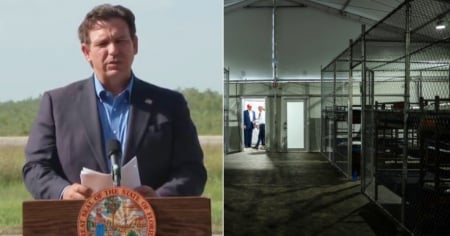
He is currently confined in the detention center "Alligator Alcatraz," located in the heart of the Everglades, which has been criticized by human rights organizations as a facility with inhumane and degrading conditions.
Daymaris reported that Lorenzo has not been charged with any new crime and that his detention is purely administrative.
"He is not imprisoned for a crime; he was reporting as he was required to. But now they are treating him worse than if he were a criminal," he recounted.
He added that the conditions inside the facility have been described as psychologically torturous.
According to testimonies, the detainees are not allowed to turn off the lights to rest, they barely sleep two hours a day, do not receive hot meals, and are fed irregularly, sometimes with just simple sandwiches.
“If someone feels unwell, their blood pressure is taken, and they are not given proper medical attention. They do not have access to phones, not even paper or a pencil to jot down their children's phone numbers. They are cut off from communication and treated like dogs,” he lamented.
Since 6 p.m. the previous day, Pedro Lorenzo has been on a hunger strike in protest of his situation. So far, he has not received clear information about his immigration status nor has he had access to legal assistance.
“Alligator Alcatraz” has faced numerous criticisms since its opening. According to a recent investigation by The Miami Herald and Tampa Bay Times, more than 55% of its over 700 detainees are from Guatemala, Mexico, and Cuba. The majority of the inmates are facing only immigration charges, without serious criminal records.
A legislative report described the conditions at the center as "inhumane," citing overcrowded cages, extreme heat, suffocating humidity, a shortage of drinking water, and spoiled food. The Archdiocese of Miami denounced that the center violates human dignity and represents a "corrosive and inappropriate" solution.
In parallel, the administration of President Donald Trump has announced the construction of five new megacenters for detention inspired by the Alligator Alcatraz model, sparking a wave of concern among civil rights advocates.
Frequently Asked Questions about the detention of migrants in Alligator Alcatraz
Why was Pedro Lorenzo arrested in Alligator Alcatraz?
Pedro Lorenzo was detained for administrative reasons when he voluntarily appeared at the ICE office in Miramar for a routine check, despite being in compliance with his legal obligations and not having committed a new offense.
What are the detention conditions in Alligator Alcatraz?
The conditions in Alligator Alcatraz are considered inhumane and degrading by human rights organizations. Detainees face overcrowding, extreme heat, lack of drinking water, and spoiled food. Furthermore, they do not have adequate access to medical care or external communications.
What actions are the detainees taking in protest of their situation?
Some detainees, such as Pedro Lorenzo, have initiated hunger strikes in protest of the inhumane conditions and the lack of clarity regarding their immigration status. These actions aim to draw attention to their situation and demand more humane treatment.
What measures have the authorities taken in response to the complaints about Alligator Alcatraz?
Despite the numerous complaints from congress members, human rights organizations, and families of detainees, the authorities have continued to operate the center with little transparency and external oversight, although some relocations to centers like Krome have begun.
Filed under: