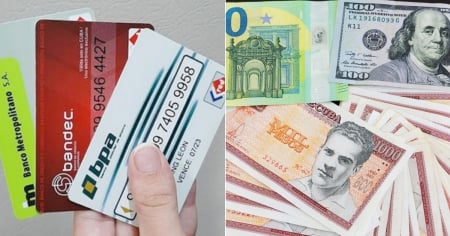
In Cuba, those who pay in cash with dollars in some state-run stores receive their change in candies due to the lack of spare coins in circulation, a practice that has sparked mockery, outrage, and a broad debate about the state of the economy and consumer rights.
The controversy intensified earlier this year with the opening of a supermarket at 3rd and 70th, in the Playa municipality of Havana, which only accepts payments in U.S. dollars in cash or cards linked to foreign currency accounts.
Although the store displays well-stocked shelves—in contrast to the nearly empty neighboring MLC market—the majority of Cubans are excluded due to lack of access to dollars.
One of the most controversial aspects is the change in sweets. Customers who pay with cash dollars and need change for amounts less than a bill (for example, cents) receive candies as compensation, since coins have not circulated in Cuba for years.
This practice, although widespread, has been described by many as an “institutionalized theft.”
The head of the Commercial Department of Tiendas Caribe, Yamilet Álvarez Tejo, publicly defended the use of candies as change, claiming that "it is the only viable alternative in the absence of small change."
Álvarez Tejo described the situation as an "inconvenience," but defended the candy method as a practical alternative, stating that there are other products available in the boxes for those who do not want sweets.
Additionally, he encouraged customers to preferably use electronic payment channels to avoid these inconveniences
However, the public has reacted with sarcasm and frustration. The practice was made viral by the Cuban user @ledyhr92 on TikTok, who demonstrated how she received candies as change after paying in cash.
His video was widely shared and generated outrage and sarcasm among Cubans both inside and outside the country, as well as among foreigners astonished by the unusual nature of the case.
"Would you accept candy as change in your country?" she asked. The scene went viral, garnering hundreds of comments criticizing the precarious situation and the lack of respect for consumers.
The dollar comes in but goes out in candies
The delivery of low-value items as a form of exchange is not new in Cuba. Since the 1990s, with the introduction of the “chavito” (CUC), to the conversion to the Cuban peso and the opening of stores in Freely Convertible Currency (MLC), citizens have experienced a history of devaluations, shortages, and forced compensations.
Even in the 90s, places like “La Casa del Oro” offered jewelry exchanges for special coins that could only be used in restricted establishments. Today, treats as currency rekindle that collective feeling of loss and distrust towards the state economic system.
The practice of giving candies as change illustrates the profound distortions of the Cuban economic system, where monetary policies and partial dollarization coexist with a deteriorated commercial infrastructure, lack of liquidity, and exclusion of the average citizen.
Meanwhile, the authorities are trying to normalize the situation by downplaying it as something that happens "in other economies."
The change given in candies is neither a joke nor an urban myth. It is a tangible consequence of the monetary disorganization that affects the Cuban commercial system amid a partial dollarization and a crisis-stricken economy.
For many citizens, this practice symbolizes not only material scarcity but also a lack of respect for the consumer and the degradation of the value of money in Cuba.
The truth is that, in 2025, Cuba remains the only country in the world where the dollar is accepted, but the change is given in candies.
Frequently Asked Questions about the change in candies in Cuba
Why is change given in candies in Cuba?
In Cuba, change is given in candies due to the lack of small coins in circulation. This situation has led some state-run businesses to use treats as an alternative to give change to people who pay in cash with dollars. The practice has sparked outrage and is seen as "institutionalized theft" by many citizens.
What do the Cuban authorities think about using candies as change?
Yamilet Álvarez Tejo, head of the Commercial Department of Tiendas Caribe, has defended the use of candies as change, describing it as the only viable alternative due to the lack of small change in dollars. Although she acknowledges it as an "inconvenience," she also points out that there are other products available for those who do not wish to receive candies. Furthermore, customers have been urged to use electronic payment channels to avoid these issues.
How has the Cuban population reacted to this situation?
The Cuban population has reacted with sarcasm and frustration. Many citizens view this practice as a disrespect to consumers and have expressed their outrage on social media. The case has gone viral through videos on TikTok, where users criticize the precariousness and deterioration of the Cuban economic system.
What are the implications of partial dollarization in Cuba?
Partial dollarization in Cuba has led to stores operating exclusively in dollars, which exacerbates economic inequalities since a large part of the population does not have access to this currency. While dollar stores are well-stocked, stores using the national currency remain understocked, creating a perception of injustice and economic segmentation.
What other products are offered as change in Cuban stores?
In addition to candies, other low-value products like gum and matches are offered as change in stores that operate with dollars. However, this practice is not well received by consumers, who see their money transformed into items they probably do not want or need.
Filed under: