
Related videos:
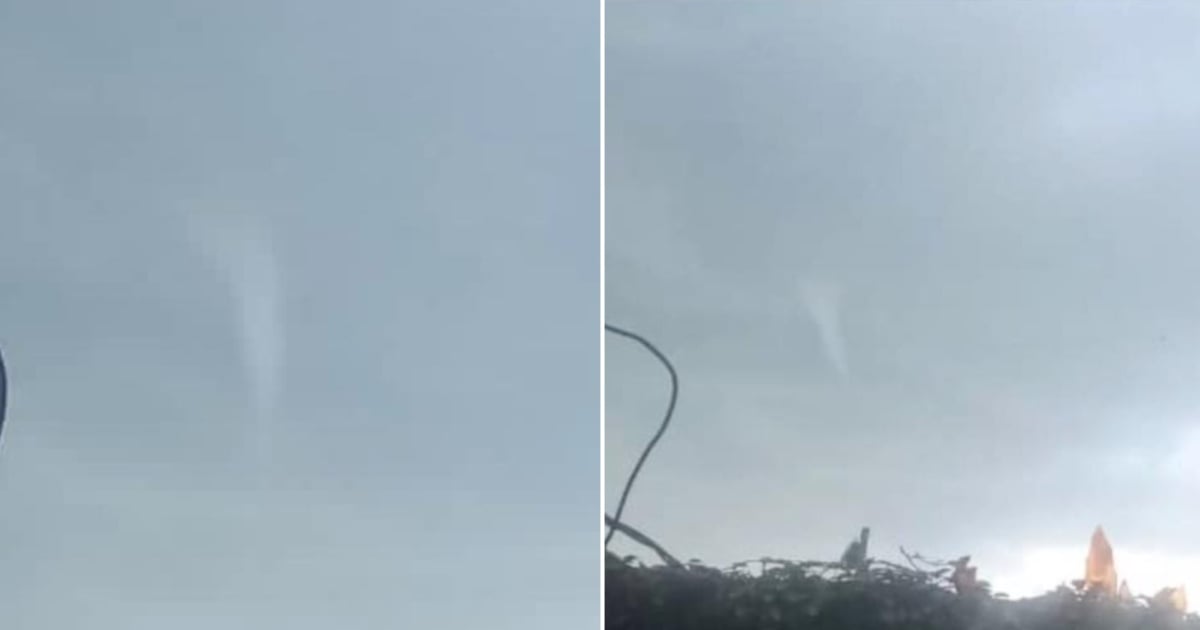
A waterspout was spotted in the afternoon of this Saturday in the municipality of Alquízar at 4:54 PM, which amazed the residents.
The images of the phenomenon, captured by Arelis Vargas Rodríguez, clearly show the atmospheric formation at high levels of the atmosphere, according to reports from meteorologist Raydel Ruisánchez.
This type of phenomenon, also known as a landspout or waterspout on land, resembles a tornado but does not have direct contact with the surface.
Unlike tornadoes, which are typically associated with severe storms featuring organized rotation and mesocyclones, waterspouts develop beneath cumulonimbus or congestus clouds—clouds with significant vertical development—and often appear as swirling columns of dust or sand.
Although visually striking, landspouts are generally less intense than tornadoes and have less destructive capacity.
Its formation is due to conditions of atmospheric instability, where warm, moist air rises rapidly while cold air descends.
Additionally, factors such as wind shear —the difference in direction and speed between atmospheric layers—and the mountainous terrain can contribute to their occurrence.
So far, no damages or injuries have been reported. Local authorities and meteorological services have not issued any alerts, although the weather behavior is being monitored for potential instability in the region.
Frequently Asked Questions about Waterspouts and Weather Phenomena in Cuba
What is a high-altitude tromba?
A funnel cloud is an atmospheric phenomenon similar to a tornado, but it forms at high levels of the atmosphere and does not touch the surface. It develops under clouds with significant vertical development, such as cumulonimbus or congestus cumulus, and is visually striking although generally less destructive than a tornado.
What conditions favor the formation of tornadoes at altitude?
The funnels at altitude form under conditions of atmospheric instability, where masses of warm, moist air rise quickly while cold air descends. Factors such as wind shear and mountainous terrain also contribute to their occurrence.
What are the differences between a waterspout and a tornado?
The main difference is that waterspouts do not touch the surface, while tornadoes do. Tornadoes tend to be more intense and destructive, associated with severe storms and mesocyclones, whereas waterspouts are less intense and develop under clouds with significant vertical development.
What impact do upper-level thunderstorms have in Cuba?
In Cuba, waterspouts, although visually striking, typically have little destructive impact compared to tornadoes. Nonetheless, their presence indicates an intensification of convective activity and the potential for severe storms, which requires continuous monitoring by meteorological authorities.
How is Cuba prepared to face extreme weather phenomena?
Despite not having reported any casualties in recent events, the readiness of Cuba for extreme weather phenomena is questioned by the population. The lack of adequate infrastructure and efficient evacuation plans are constant concerns, particularly in light of the increasing frequency of these phenomena due to climate change.
Filed under: