
Related videos:
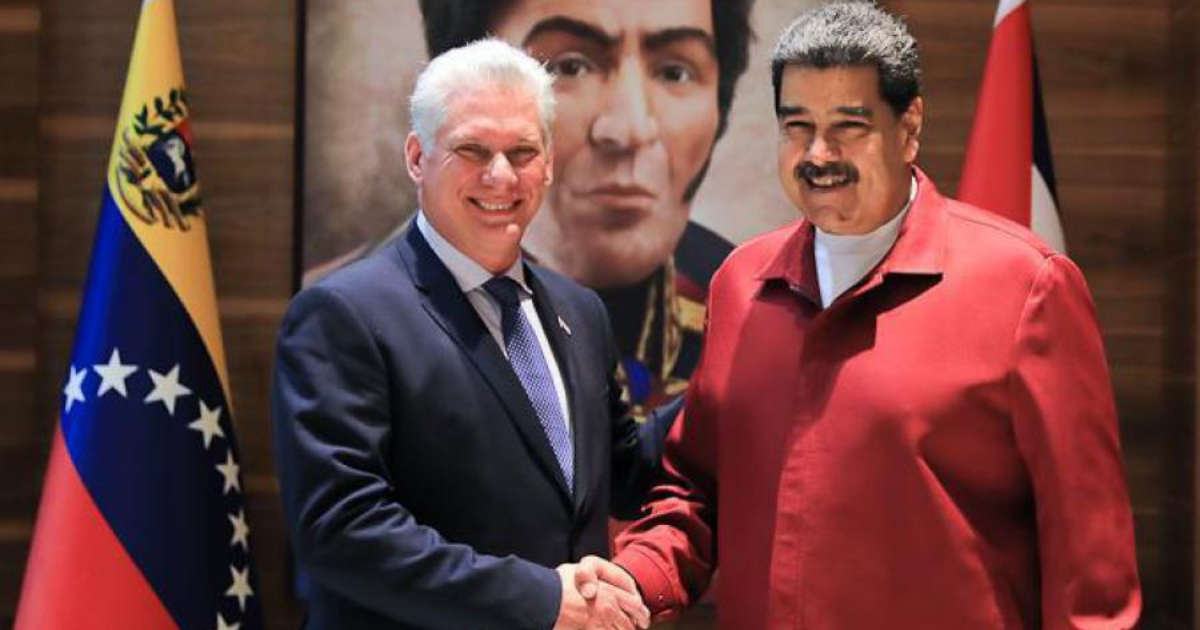
The Cuban leader Miguel Díaz-Canel congratulated Venezuelan President Nicolás Maduro on Monday for the results of the municipal elections in Venezuela, held on July 27, highlighting the “continuity” of the Bolivarian Revolution and reaffirming his support for the Chavista regime on a date filled with symbolism: the birthday of Hugo Chávez.
"Warm congratulations to the government and people of Venezuela […] Your results continue the Bolivarian and Chávez Revolution and strengthen your civic-military unity," wrote Díaz-Canel on his account on the social media platform X, accompanying the message with images of pro-government supporters and Maduro himself.
The electoral process took place without any public reports of irregularities so far, and according to the National Electoral Council (CNE) of Venezuela, based on the agency EFE, the ruling United Socialist Party of Venezuela (PSUV) achieved victory in most of the municipalities across the country, including the capital of Zulia state, Maracaibo, and the Caracas municipality of Sucre, which houses Petare, the largest slum in the country. The opposition, for its part, managed to retain some of its strongholds such as Chacao and Baruta.
Díaz-Canel's statement coincides with the 71st anniversary of Hugo Chávez's birth, a key figure in the contemporary history of Venezuela and one of the Cuban regime's greatest historical allies. In another message, the Cuban leader praised Chávez as "Cuba's best friend" and "an inspiration for revolutionaries around the world."
Chávez was the main architect of the political, economic, and ideological link between Havana and Caracas, an alliance that persists more than two decades later. Under his government, Venezuela became Cuba's largest economic supporter through the supply of subsidized oil, in exchange for sending Cuban professionals, primarily doctors and advisors.
Continuity under tension
Although the municipal elections of 2025 have not yet generated major controversies, the electoral process in Venezuela remains under international scrutiny due to the background of the 2024 presidential elections.
On that occasion, the opposition reported an electoral fraud that favored Maduro, leading to protests, international condemnation, and the recognition of opposition leader Edmundo González as the legitimate president by several governments.
However, on this occasion, no similar complaints have been made, and the results from the CNE have been presented without formal challenges.
Díaz-Canel's support statement reiterates the alliance between two regimes marked by authoritarian practices, in a context where millions of Venezuelans and Cubans are facing economic crises, forced migration, and restrictions on their freedoms. For many observers, Cuba's backing of Maduro symbolizes a bet on political survival rather than a genuine democratic legitimacy.
Frequently Asked Questions about the Municipal Elections in Venezuela and Cuba's Support
What results did the municipal elections in Venezuela yield in 2025?
The ruling United Socialist Party of Venezuela (PSUV) won the majority of the mayoralties in the country, including major cities such as Maracaibo and the Caracas municipality of Sucre. The opposition retained some strongholds like Chacao and Baruta. The electoral process took place without any public reports of significant irregularities so far.
Why did Miguel Díaz-Canel congratulate Nicolás Maduro on the electoral results?
Miguel Díaz-Canel congratulated Nicolás Maduro on the election results because he believes these results ensure the continuity of the Bolivarian and Chavista Revolution, thereby strengthening the civic-military union in Venezuela. Additionally, Díaz-Canel reaffirmed his support for the Chavista regime in a symbolic context, coinciding with the birthday of Hugo Chávez.
What is the relationship between Cuba and Venezuela in the current political context?
The relationship between Cuba and Venezuela is one of close political and economic alliance, primarily initiated under the leadership of Hugo Chávez and Fidel Castro. Venezuela has provided economic support to Cuba through the supply of subsidized oil, while Cuba has sent professionals, mainly doctors, to Venezuela. This relationship remains a critical link for both regimes, which face criticism for authoritarian practices and internal crises.
What has citizen participation been like in the recent Venezuelan elections?
Citizen participation in Venezuelan elections has been remarkably low, with significant abstention rates. In past elections, such as the legislative and regional elections of May 2025, participation was at 42.6% according to the CNE, while the opposition estimated an abstention rate of 87.4%. This reflects a growing distrust in the country's electoral system.
Filed under: