
Related videos:
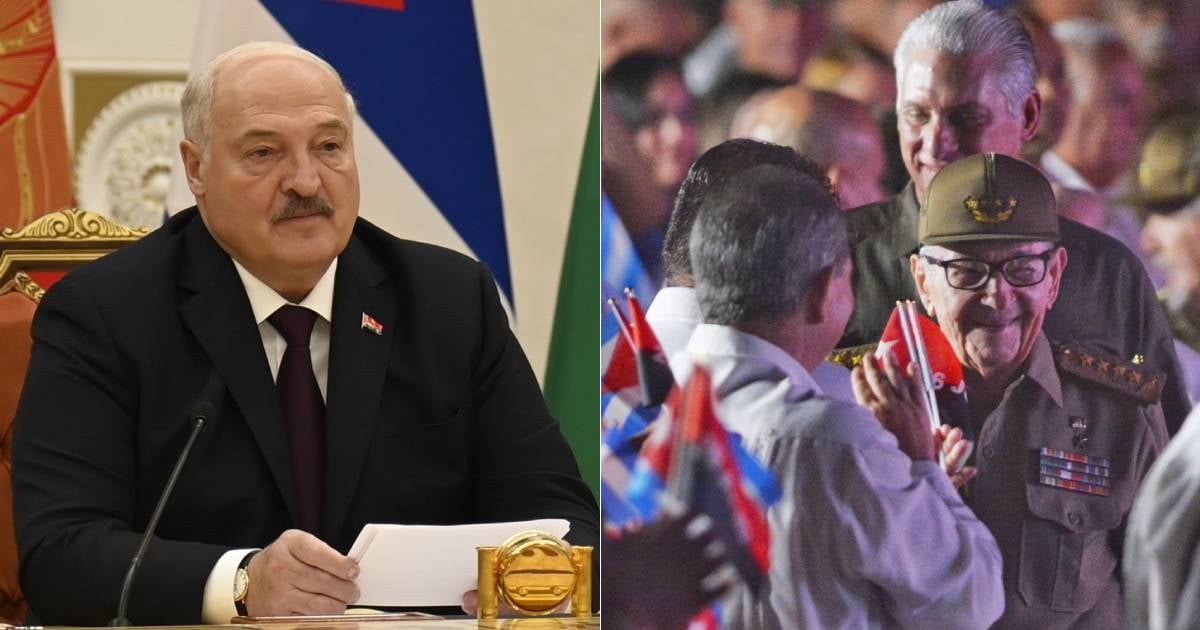
While the Cuban regime commemorates a new anniversary of July 26 amidst endless blackouts, collapsed hospitals, and empty shelves, the Belarusian dictator Alexander Lukashenko took the opportunity to send a message of "support and cooperation" to his ally Miguel Díaz-Canel, with whom he strengthened ties just a month ago during an official visit marked by luxurious gifts, symbolic gestures, and distant promises.
In his greeting, Lukashenko praised the "resilience of the Cuban people" and reiterated his willingness to deepen cooperation that includes strategic sectors such as energy, transportation, industry, biotechnology, and health, highlighted a note from the Belarusian state news agency BelTa.
"We have achieved significant results in promising areas such as food security and industrial modernization," stated the Belarusian leader.
The message, however, contrasts with the distressing reality of millions of Cubans facing power outages of up to 24 hours, a shortage of medications, rampant inflation, and a massive wave of migration that shows no signs of stopping.
During his recent visit to Minsk, Díaz-Canel gifted cigars, rum, and customized t-shirts to Lukashenko, who in turn offered him flowers and traditional sweets, while Cuban students were protesting at universities over the increase in internet fees and the population questioned whether there is a future on the island.
Both governments share not only a political closeness to Moscow, but also a authoritarian view of power and a documented history of repression by international organizations.
The promises of cooperation, such as the assembly of agricultural machinery, joint biotechnology projects, or tourist centers for recovery, have yet to translate into real improvements for Cubans.
"Havana and Minsk have built their cooperation exclusively on the basis of friendship." Lukashenko insisted. However, for many citizens within Cuba, this "friendship" seems to benefit only those who travel on planes from Venezuela, stay in five-star hotels, and participate in international summits.
The message of July 26 also serves to reinforce an official narrative that aims to present Cuba as a relevant geopolitical player, even when internal conditions are alarming.
Díaz-Canel even proposed creating a logistics center on the island to redistribute products from the Eurasian Economic Union to Latin America, an idea that few see as viable given the current conditions of infrastructure and connectivity.
Meanwhile, the Cuban government continues to blame the "blockade" for all its troubles, while tightening ties with sanctioned regimes such as Russia, Belarus, Iran, or Venezuela.
Frequently Asked Questions about Cooperation between Cuba and Belarus
What did Alexander Lukashenko promise Cuba in his message on July 26?
Alexander Lukashenko promised to strengthen cooperation with Cuba in strategic sectors such as energy, transportation, industry, biotechnology, and health. His message aims to reinforce ties with the regime of Miguel Díaz-Canel, amidst an internal crisis in Cuba characterized by blackouts, a shortage of medications, and inflation.
What areas of cooperation have Cuba and Belarus identified?
Cuba and Belarus have identified areas of cooperation in the food industry, joint production of agricultural machinery, biotechnology, mining, energy, and the healthcare sector. Although agreements have been signed in these sectors, tangible results for the Cuban population have yet to be seen, increasing skepticism about the effectiveness of these alliances.
How does Cuba's internal situation affect cooperation with Belarus?
Despite the promises of cooperation, the internal situation in Cuba, characterized by blackouts lasting up to 24 hours, shortages of food and medicine, and growing social discontent, complicates the effective implementation of agreements with Belarus. The current conditions of infrastructure and connectivity present significant challenges for projects such as the establishment of a logistics center proposed by Díaz-Canel.
What symbolism does the relationship between Cuba and Belarus have?
The relationship between Cuba and Belarus is loaded with political and geopolitical symbolism. Both governments share an authoritarian view of power and have been allies of Russia, which reinforces their alliance in an adverse international context. However, this relationship also reflects the disconnection between the elites in power and the realities of their people, as it has not resulted in concrete improvements for ordinary citizens.
Filed under: