
Related videos:
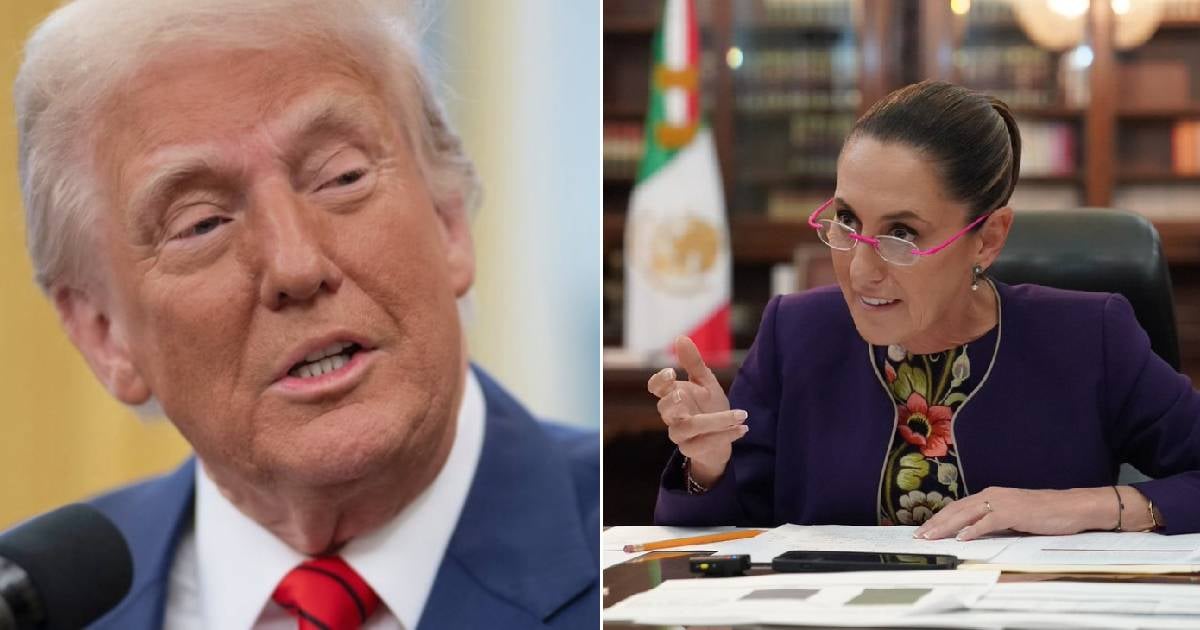
The President of the United States, Donald Trump, announced on Thursday a 90-day extension on the imposition of new tariffs on Mexico, following a phone conversation with the Mexican leader Claudia Sheinbaum, in which both leaders agreed on the need to maintain dialogue to reach a lasting trade agreement.
From his platform Truth Social, Trump explained that Mexico will continue to pay specific tariffs: 25% on fentanyl, another 25% on cars, and 50% on steel, aluminum, and copper. However, the imposition of tariffs on the rest of the products will be postponed for three months, while a new trade agreement is negotiated.
"The complexities of an agreement with Mexico are somewhat different from those with other countries due to the issues and advantages of the border," Trump noted, adding that Mexico has agreed to immediately eliminate its non-tariff trade barriers.
Trump seeks an agreement within 90 days
During the call, which included high-ranking officials from the administration such as Vice President JD Vance, Secretary of State Marco Rubio, and National Security Advisor Stephen Miller, Trump and Sheinbaum agreed to maintain border cooperation on key aspects such as drug trafficking control, drug distribution, and illegal immigration.
The goal, according to the Republican leader, is to sign a new trade agreement within 90 days. Otherwise, the White House may resume its plan to impose a general tariff of 30% on all trade partners, according to the agency EFE.
Reaction in Mexico: dialogue and long-term perspective
On her part, on the social media platform X, Claudia Sheinbaum described the call as "very good" and celebrated the extension of the deadline for negotiations: "We avoided the tariff increase announced for tomorrow and secured 90 days to build a long-term agreement through dialogue," wrote the Mexican president on her social media.
The decision marks a temporary relief in the trade tensions between both nations, as a negotiating process resumes that could reshape the foundations of bilateral trade in a context of increasing American protectionism.
Trump and the issue of tariffs
Since the beginning of his second term in January, Trump turned the issue of tariffs into one of the cornerstones of his economic and trade policy. His administration initiated an aggressive trade war, especially against China, imposing tariffs on hundreds of products under the pretext of protecting American industry and jobs.
This strategy also extended to traditional allies such as the European Union, Canada, and Mexico, whom he demanded renegotiate trade agreements that he claimed were unfair and detrimental to the United States.
Filed under: