
Related videos:
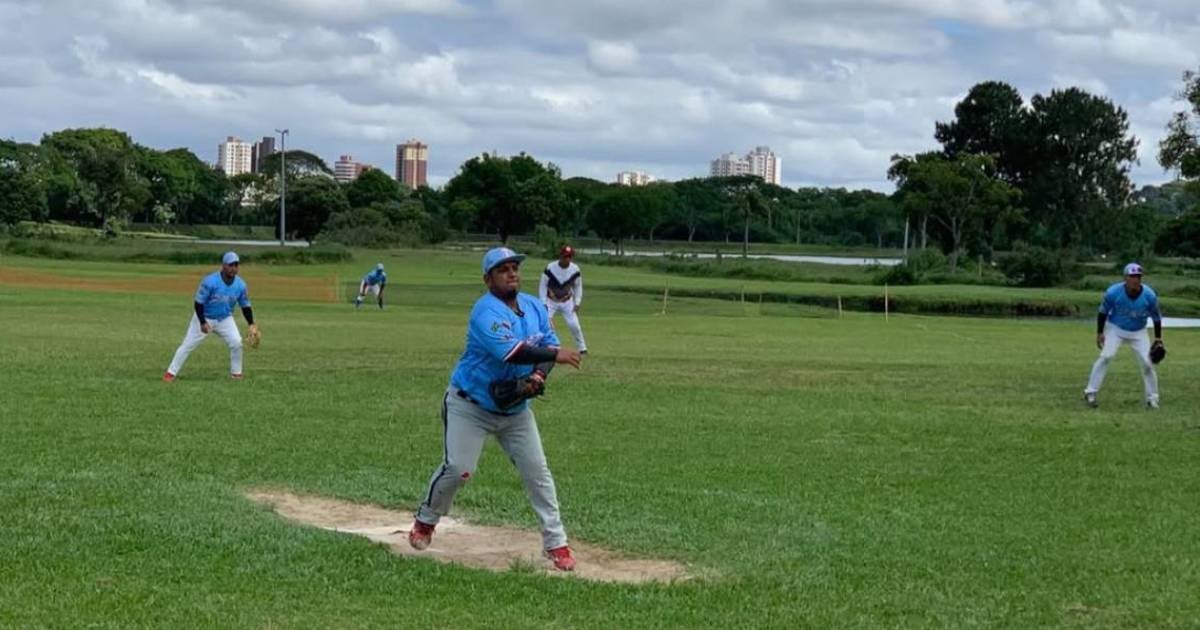
6,000 kilometers from Cuba and far from the longed-for "American dream," a group of Cuban migrants is making their way in southern Brazil with bats, gloves, and caps. In Curitiba, the capital of the state of Paraná, where just recently baseball was considered an exotic sport, the shout of "great hit, buddy!" can now be heard on makeshift softball fields.
The city, which has become one of the favorite destinations for the growing Cuban diaspora, is now witnessing an unprecedented social and cultural phenomenon, the creation of a softball league where teams of Cubans and Venezuelans compete, two of the migrant communities that have grown the most in Brazil.
A recent report by the British newspaper The Guardian mentions that about 350 players are divided into 16 teams. Although the Venezuelans are the majority, a group of Cubans managed to persist and form their own "Team Cuba," complete with uniforms.
The recipient Ernesto Alberto Keiser Limonta, 30 years old, is clear about his love for sports but also his choice to migrate. “I chose Curitiba because it is safe and has job opportunities. Here we are moving forward.”
Sport not only serves as an outlet for the stress of starting anew, but it has also become a space for emotional resilience. "Our goal is the south," some players joke, referencing a saying popularized among migrants.
Curitiba: a new home, but not without obstacles
The city of 1.8 million inhabitants is renowned for its efficient public services and economic stability. This is why it attracts an increasing number of Cubans, who arrive after crossing jungles, borders, and seas from Guyana or Suriname. However, the journey does not end upon setting foot on Brazilian soil.
The immigration regularization process can take months, even years. Appointments are overwhelmed, and many Cubans end up trapped in informal jobs, lacking labor rights and access to healthcare. The NGO Cáritas warns that this situation makes them vulnerable to exploitation and even modern slavery.
The language, discrimination, and recognition of university degrees are additional barriers. Yarismeli Nardo, a 36-year-old psychologist, told The Guardian that it took her years to validate her career. “I started as a sales assistant, but now I work in a clinic. It was hard, but I did it,” she proudly shares.
"Here at least I can live as a person."
An earlier report published by Bloomberg highlights how Brazil has become the premier destination for Cuban migrants, especially following the immigration restrictions imposed by the current administration of Donald Trump in the United States.
In front of a crowded supermarket, with shelves overflowing with meat, more than one Cuban has cried. It's an emotional shock that is difficult to explain for those coming from a country where even the basics are often lacking.
“I can't live without light, without food, without a future. Here, at least, I can live as a person”, says a young man from Tunera who now washes dishes while he waits to bring his family over.
Social media has been key in building community. Groups like "Cubans in Curitiba," with over 45,000 members, serve as a compass for newcomers: where to rent, what documents to process, how to find a job, or where to play softball on Sundays.
And while cheers echo among Caribbean claps in the parks of São José dos Pinhais, it will be clear that even far from home, Cuba remains alive in the heart and in the diamond.
Frequently Asked Questions about Cuban Migration to Brazil
Why has Curitiba become a popular destination for Cuban migrants?
Curitiba is considered an appealing destination for Cuban migrants due to its economic stability and safety. The city offers efficient public services and job opportunities, making it an ideal place for those looking to start a new life away from Cuba. Additionally, the establishment of communities such as the softball league among Cubans and Venezuelans reflects a social and cultural phenomenon that aids the integration of newcomers.
What are the main challenges faced by Cuban migrants in Brazil?
Among the main challenges faced by Cuban migrants in Brazil are the difficulties in the immigration regularization process, which can take months or even years. Furthermore, many find themselves trapped in informal jobs without labor rights. Additional barriers include language, discrimination, and the recognition of university degrees. These challenges increase the vulnerability of migrants to labor exploitation.
How has the Cuban diaspora impacted the local culture of Curitiba?
The Cuban diaspora has impacted the local culture of Curitiba through the introduction of new cultural and sports expressions. One of the most notable examples is the formation of a Cuban softball team that competes in a local league, which has led to significant cultural exchange between the migrant communities and the local population. This interaction has enriched the cultural diversity of the city.
What role do social networks play in the integration of Cuban migrants in Brazil?
Social networks are essential for the integration of Cuban migrants in Brazil, as they facilitate the creation of communities and the exchange of crucial information for newcomers. Groups on platforms like Facebook allow migrants to share advice on housing, jobs, legal procedures, and social activities, which helps reduce isolation and eases the adaptation to a new life in Brazil.
Filed under: