
Related videos:
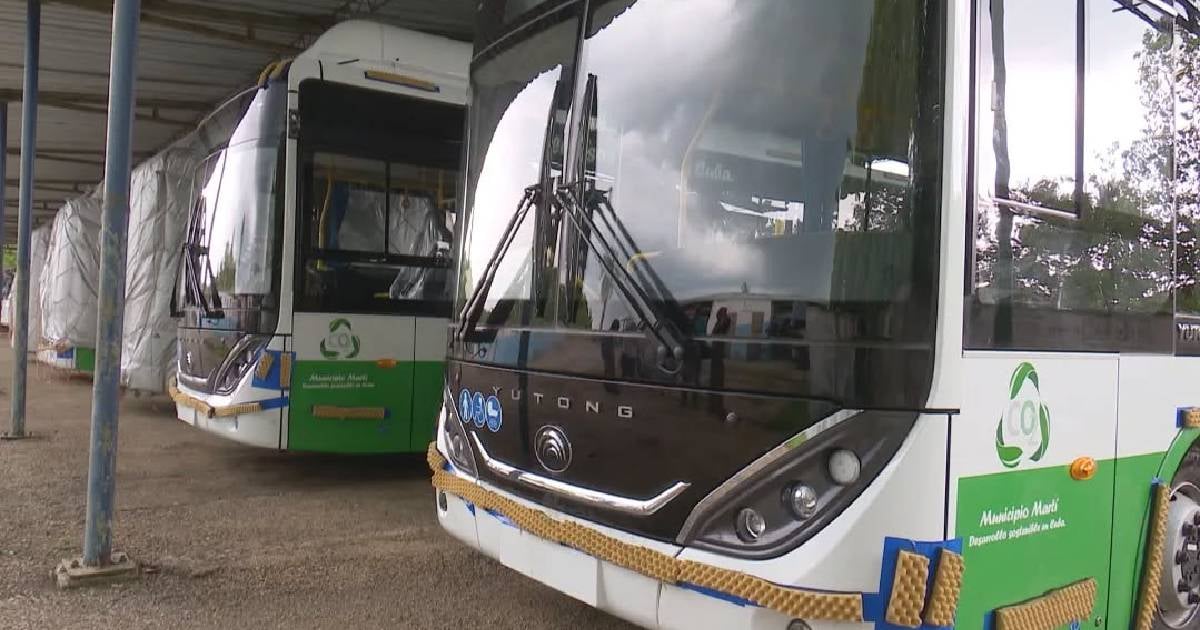
The government of the municipality of Martí, in the province of Matanzas, announced that “soon” five buses powered by biomethane will begin to operate in the area as part of a project to “invest in energy sovereignty” and a “carbon-neutral” transportation model.
The buses, manufactured in China (Yutong brand), "will be available from all the popular councils, and we also have designed routes that will be in service based on the proximity to where we have hospitals, as in the cases of Colón, Cárdenas, and Matanzas," explained the mayor of the municipality, Geovanny Castanedo Larena, to the provincial telecenter TV Yumurí.
The official information did not provide technical details regarding frequencies, schedules, or operating conditions.
The plant that will refine the biogas produced by local pig farming units is not yet operational. Although a 14-kilometer gas pipeline has been buried and civil construction of the system is projected to be completed, the start of operations is still pending the final assembly of the upper membrane.
The fuel will be generated using membrane biodigesters, but the actual production capacity, the stability of the supply, and how long-term maintenance will be ensured are not specified.
It was only mentioned that the system could benefit more than 22,000 people living in the municipality.
The project is part of the international initiative "Global Action for Climate Change," directed in Cuba by the Ministry of Economy and Planning, with support from the United Nations Development Programme (UNDP) and funding from the European Union, which has allocated five million euros out of a total of 33 million pesos.
In parallel, the local government stated that more than 13 kilometers of road are being paved as part of this investment, addressing "17 proposals from the Economic Plan," although it is not clear whether the roads actually cover the planned bus routes or if they are isolated actions.
Despite the official enthusiasm, there are many doubts, and past experiences weigh heavily, with initiatives that have ended up stalled due to a lack of resources, maintenance, or technical support.
Meanwhile, the population wonders how long these buses will last before ending up in a workshop or parking lot, like so many other promises.
Cuban authorities assure that the country will be a world leader in clean energy, claiming that it will rapidly advance in the energy transition, despite the population facing a severe electricity crisis with frequent blackouts.
The Cuban dependency on imported fuel is extremely high, around 50% of the oil it uses, which makes it urgent to transition to more efficient technologies.
In March, while participating in the television program Mesa Redonda, Ramsés Monte Calzadilla, Director of Policy and Strategy at the Ministry of Energy and Mines (Minem), explained that the adoption of electric vehicles could increase the current efficiency of combustion vehicles by four to five times, which would allow for significant savings in fuel consumption.
"For example, a conventional vehicle might achieve 10 kilometers per liter, while an electric vehicle with the same amount of energy could reach between 40 to 50 kilometers per equivalent liter," he stated.
He also referred to specific experiences that the country has implemented, such as the electric vehicles used by the company Aguas de La Habana since 2018, which, he asserted, maintain a high technical availability rate exceeding 90%.
It also highlighted the introduction of industrial heat pumps to replace conventional boilers, which are capable of significantly increasing energy efficiency and drastically reducing fuel consumption for industrial and tourism processes.
In light of the severe energy crisis suffocating the island, the Cuban government has decided to focus on the accelerated installation of solar parks as its main path to salvation.
In this regard, Cuba and Japan have initiated an ambitious collaboration project to promote renewable energies on the island, amid the severe deterioration of its electrical infrastructure and the ongoing blackouts affecting millions of Cuban families.
Frequently asked questions about the use of biomethane in public transportation in Cuba
What are the biomethane buses in Cuba?
The biomethane buses in Cuba are buses powered by biomethane, a fuel derived from refined biogas. This project aims to contribute to the country's energy sovereignty and provide a more sustainable and "carbon-neutral" transportation model. However, the system still faces technical and logistical challenges before its full implementation.
How is biomethane produced for buses in Cuba?
Biomethane is produced from biogas generated in local pig farming units using membrane biodigesters. Although the basic infrastructure, such as the pipeline, is already underway, the plant to refine the biogas is still under construction, and its operation depends on the installation of critical components such as the upper membrane.
What challenges does the biogas bus project face in Cuba?
The project faces significant challenges in terms of infrastructure and sustainability. The biogas refining plant is not yet operational, and the actual production capacities and long-term maintenance have not been detailed. In addition, the history of similar projects in Cuba raises concerns about the viability and practical continuity of this initiative.
What impact does the energy crisis have on sustainable transport projects in Cuba?
The energy crisis in Cuba complicates the implementation of sustainable transport projects, such as biogas buses and electric minibuses. Despite the government's efforts to introduce cleaner technologies, the lack of reliable energy infrastructure and frequent blackouts raise doubts about the sustainability of these projects in the short term.
Filed under: