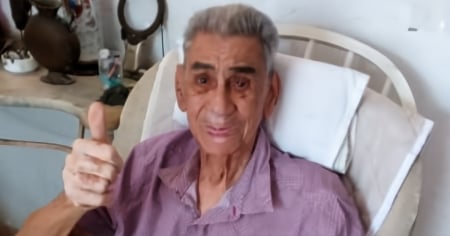
The Cuban actor Felito Lahera recounted in an interview with Destino Tolk how he arrived in Miami and the challenges he has faced working in sectors completely unrelated to acting.
After having built a career in Colombia, Lahera decided to emigrate to the United States. When asked if he arrived in Miami with high hopes of continuing his career as an actor, Felito responded: “No, I thought the opposite, the first thing I have to do is find a way to make a living, in whatever it takes, because I have to support this family, the first thing was whatever comes up,” he stated candidly.
Far from the glamour that many associate with acting, Felito began working as a coach on the show “Caso cerrado,” then became a producer, and after that experience, he got involved in a theater production. But his career path has also included jobs that many would prefer not to mention.
“You have no idea how many houses I had to clean. I painted houses, I cleaned houses, I did all of that. Here, I had to take on whatever came my way”, he admitted. He even shared that he has worked driving for Uber, something he feels no shame about. For him, all jobs are as dignified as being a doctor.
In response to the question of whether those tasks have affected his ego or self-esteem after having a successful career as an actor in Cuba and Colombia, Felito replied that although sometimes he feels “the sparrow,” he manages to refocus his perspective. “It’s contradictory because with the same hand that you’re painting a house, you get a call from Cuba saying you received an award for a movie you made in Cuba.”
Today, Lahera continues driving for Uber, participates in series for PRONYR TV, recently filmed a short movie, and remains connected to the theater, all while maintaining his dignity and pride in working honestly.
About his challenges as a Spanish-speaking actor in the U.S., he was also clear: "If I had come to this country knowing how to speak English, I wouldn't have stayed in Miami." For him, opportunities in the Hispanic networks in this city are limited. There are few Spanish-language television networks, only Univisión and Telemundo, and not many Cubans manage to work in them. He also pointed out that Spanish-language cinema has a minor presence in Miami.
Felito Lahera does not lose his drive. His story mirrors that of many Cubans who, far from home, have had to reinvent themselves time and again, without giving up on their dreams or their dignity.
Frequently Asked Questions about Felito Lahera's Experience in Miami
What was Felito Lahera's arrival in Miami like, and what was his initial approach?
Felito Lahera arrived in Miami with the priority of finding a way to make a living, whatever it took. Despite his career as an actor in Cuba and Colombia, he knew he had to work in any capacity to support his family. This led him to take on roles such as a coach on "Caso cerrado," producer, and in theater productions, in addition to other jobs like cleaning and painting houses, and driving for Uber.
Has working outside of acting in Miami affected Felito Lahera?
Felito Lahera has managed to maintain his self-esteem and dignity despite working in jobs far from acting. Although he acknowledges that it sometimes affects him, he is able to refocus his perspective and does not feel ashamed to work in any respectable job, such as driving for Uber.
What challenges does Felito Lahera face as a Spanish-speaking actor in the U.S.?
Felito Lahera faces the limitation of opportunities in Spanish-language networks in Miami and Spanish cinema. He explained that if he had spoken English upon arrival, he probably would not have stayed in Miami, as opportunities in Spanish television networks like Univisión and Telemundo are scarce for Cubans.
How does Felito Lahera's experience compare to that of other Cuban actors in exile?
Felito Lahera's experience is similar to that of many Cuban actors who have had to reinvent themselves in exile. Actors like Alberto Pujol have shared similar experiences, working in jobs outside of acting while facing the challenges of emigrating and adapting to a new life in the United States.
Filed under: