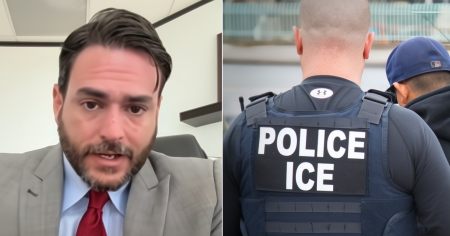
Rwanda became the third African country on Tuesday to accept immigrants deported from the United States under the immigration plan proposed by President Donald Trump.
The spokesperson for the Rwandan government, Yolande Makolo, confirmed to the Associated Press (AP) that her country will accept up to 250 individuals expelled by U.S. immigration authorities, although she clarified that they will have "the ability to approve each proposed case for resettlement on an individual basis."
Makolo did not provide specific dates or details on whether the deportees will arrive in groups or in stages.
The agreement with Rwanda is part of a broader policy of the Trump administration to deport migrants deemed undesirable to countries with which they have no connection.
The stated goal is to "remove them from U.S. soil," even as their countries of origin refuse to accept them.
Last month, the U.S. deported 13 men, described as dangerous criminals, to South Sudan and Eswatini, following the rejection from their countries of origin.
Among them were citizens of Cuba, Laos, Mexico, Myanmar, and Vietnam.
Some of these immigrants were held for weeks in a modified shipping container used as a cell at a U.S. military base in Djibouti while a legal dispute regarding their deportations was being resolved.
In the case of Eswatini, it has been confirmed that the deportees will be kept in isolation in prison and without access to legal representation, which has led to legal actions by human rights lawyers in that country, regarded as the last absolute monarchy on the continent.
The United States has also deported hundreds of people to Costa Rica, El Salvador, and Panama, as well as to Venezuelan citizens, all under the same plan initiated by Trump to rid the country of migrants he considers "the worst of the worst," AP recalled.
Rwanda, a country with about 15 million inhabitants, had already signed a similar agreement with the United Kingdom in 2022 to receive asylum seekers.
Despite ethical and legal criticisms, the agreement was ultimately annulled by the British Supreme Court in 2023, which ruled it illegal on the grounds that Rwanda was not a safe country for migrants.
Makolo justified the agreement with Washington as an act of international responsibility: “Our social values are based on reintegration and rehabilitation,” he stated.
According to what he said, those who are accepted will receive job training, medical care, and housing support to start a new life and contribute to "one of the fastest-growing economies in the world over the last decade."
So far, the economic terms of the agreement between the United States and Rwanda have not been disclosed.
However, political analysts like Gonzaga Muganwa believe that this type of agreement strengthens the ties between Kigali and the Trump administration.
" pleasing President Trump brings benefits," he stated, as reported by the news agency.
The controversial immigration deal between the United Kingdom and Rwanda—now annulled—had an estimated cost of 900 million dollars for the British government, including about 300 million delivered directly to Rwanda, which has assured that it will not reimburse those funds.
In June, the United States Supreme Court authorized President Trump to resume the deportations of migrants to countries other than their places of origin, by overturning a previous court order that required the Government to give those affected a meaningful opportunity to explain the risks they would face in those destinations.
According to BBC, with a 6-3 vote, the conservative majority of the Court overturned the ruling by Judge Brian Murphy from Boston, who in April had blocked those deportations on the grounds that they could involve torture or death for migrants if sent to third countries.
Frequently Asked Questions about the Migration Agreement between the U.S. and Rwanda
What does the migration agreement between the United States and Rwanda entail?
The agreement allows Rwanda to receive up to 250 immigrants deported from the United States, deemed dangerous or undesirable. Each case will be individually assessed by Rwanda before accepting the deportees. This agreement is part of a broader policy by the Trump administration to deport migrants to third countries, even if they have no connections to them.
Why has Rwanda been chosen to receive deportees from the U.S.?
Ruanda has been chosen as a recipient of deportees due to its willingness to accept immigrants from other countries without cultural or linguistic ties. The spokesperson for the Rwandan government, Yolande Makolo, justified the agreement with the U.S. as an act of international responsibility, underscoring the country's values of reintegration and rehabilitation.
What happens to the human rights of the deportees in these agreements?
The agreements for deportation to third countries have raised human rights concerns, particularly in countries where deportees may face adverse conditions. For instance, in Eswatini, deportees are held in isolation without access to legal representation, leading to lawsuits. The situation in Rwanda has also faced criticism, as a similar agreement with the United Kingdom was annulled on the grounds that Rwanda is not a safe country for migrants.
How does Trump's immigration plan affect Cubans?
Trump's immigration plan has led to the deportation of Cubans to third countries such as South Sudan and Eswatini, when Cuba refuses to accept its citizens with criminal records. This reflects the Cuban regime's stance of reviewing cases individually and rejecting those with serious offenses, despite the bilateral agreements in place to accept deportations.
Filed under: