
Related videos:
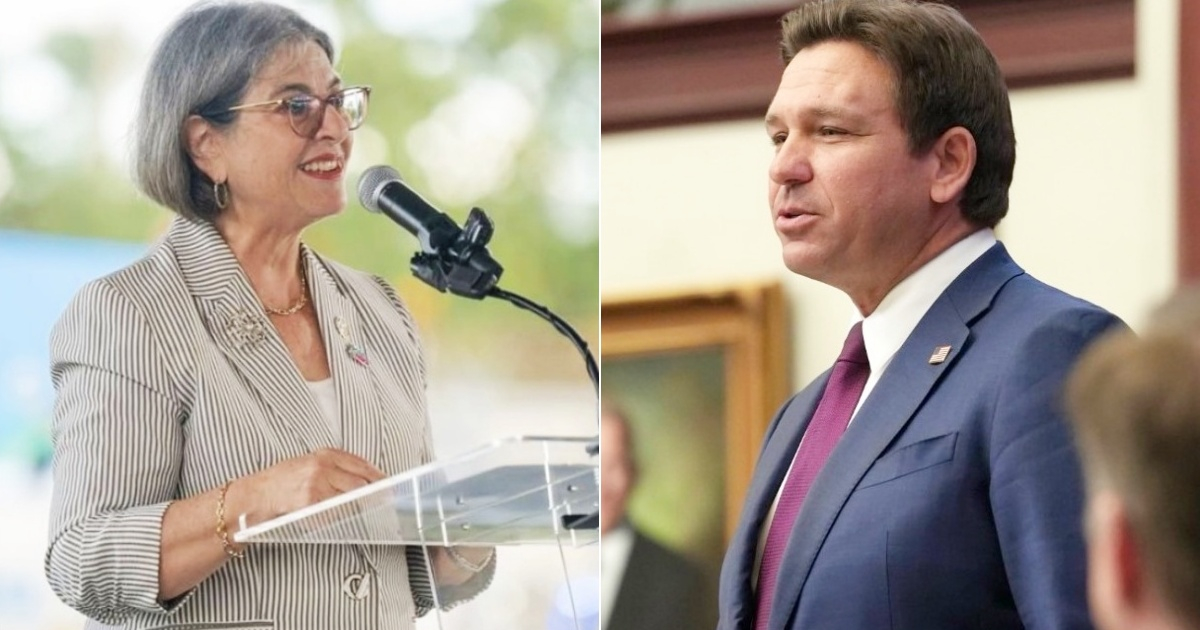
The Florida Department of Government Efficiency (DOGE), created by Governor Ron DeSantis to oversee local public spending, has initiated a comprehensive audit on the use of funds in Miami-Dade County.
According to a letter sent on August 4 to Mayor Daniella Levine Cava, DOGE requests documents and explanations regarding the management of a budget that, despite having grown significantly in revenue, faces a deficit exceeding 400 million dollars.
The county, the most populated and with the largest budget in Florida, manages nearly 13 billion dollars, making it a priority target for the DOGE team.
The reasons behind the interest in DOGE
DOGE has justified its audit by pointing out a financial paradox: while county revenues have grown significantly between 2020 and 2024, the local government projects a deficit of over 400 million for the fiscal year 2025-2026.
Some of the key data mentioned by DOGE include:
A 29% increase in property tax revenue, which represents over 430 million additional dollars.
A 56% increase in taxes on food and beverages, adding nearly 3 billion dollars in extra revenue.
-Investments in programs such as the Green New Deal and Diversity, Equity, and Inclusion (DEI) policies, which DOGE deems a priority to review.
-Technical details on traffic calming devices, such as speed bumps or roundabouts, as well as bicycle and pedestrian projects, including requests for specific documentation regarding their costs and justification.
In his letter, DOGE also requested information on salaries, leases, real estate sales, and items related to sustainability and social equity.
The county has until August 13 to respond, under the threat of possible economic penalties in case of noncompliance.
The stance of Mayor Levine Cava
Mayor Daniella Levine Cava responded to the notification from the Florida Department of Government Efficiency (DOGE) regarding the county's finances.
In her statement, the mayor defended the transparency of her administration.
“I have governed with strong fiscal responsibility and ensured that Miami-Dade operates under one of the most transparent and well-governed local systems in the country,” he said.
He highlighted that the county undergoes external audits regularly, and that financial information is available online in real-time for the public.
He added that they have reduced administrative expenses and achieved "the lowest combined tax rate since 1982" for two consecutive years, without affecting essential services.
"We open the doors to transparency with the state and with our community, and we trust in the integrity of our operations," he added.
The mayor expressed her willingness to cooperate with DOGE if the review is beneficial and does not interfere with local governance, but she warned:
"There is no need for duplications or investigations with political motives that could divert the time of personnel providing essential services."
He concluded by affirming that his focus remains on serving residents through key investments and avoiding political distractions.
"Our priorities remain focused on delivering results to the residents... without falling into political theatrics," he concluded.
Political divisions: support, criticisms, and local tensions
The review of DOGE has sparked a deep political debate in the county.
While Levine Cava denounces partisan motivations, Republican voices, such as Commissioner Roberto González, support the state audit.
González even acknowledged having personally requested the intervention of the DOGE.
"What we need to do is see what is happening, how we got to this deficit, and how we can fix it. However, without examining line by line how taxpayer money is being spent, we won't be able to do it," he stated in comments reported by the local press.
On his part, the federal congressman and former county mayor, Carlos Giménez, publicly celebrated the audit on social media.
"In just a few years, Mayor Levine has turned our good administration into a massive deficit." wrote on X.
These supports rekindle the political struggle between the local Democratic administration and the Republican state government, in a context where oversight intertwines with electoral interests and partisan rivalries.
What's at stake?
The DOGE investigation comes at a critical moment.
Miami-Dade faces tough decisions to close the deficit: the budget proposed by the mayor includes cuts to social grants, programs for the elderly, and funding for charitable organizations, as well as increases in transportation and parking fees, and the county gas tax.
Additionally, as reported by Miami Herald, in recent public hearings the mayor requested community support to keep the property tax rate stable, and warned that lowering it in 2026 would force "further cuts to services."
Meanwhile, the scope of the state audit continues to expand: other counties such as Broward, Jacksonville, and Manatee are also under review, indicating that DOGE operates as part of a broader state oversight plan.
The DOGE audit of Miami-Dade is not just an administrative exercise: it is also a battle for the political narrative surrounding efficiency, transparency, and public spending control in one of the most complex and politically significant counties in Florida.
The administration of Levine Cava insists that the scrutiny is unnecessary and amounts to "political theater."
However, with a deficit exceeding 400 million dollars and a growing climate of polarization, the review of DOGE will not only test the county's finances but also the institutional strength and political legitimacy of those currently in power.
Filed under: