
Related videos:
The Cuban government criticized on Thursday the announcement by the United States to double the reward from 25 to 50 million dollars for information leading to the capture or conviction of its ally, Venezuelan President Nicolás Maduro, who is accused by Washington of drug trafficking and terrorism.
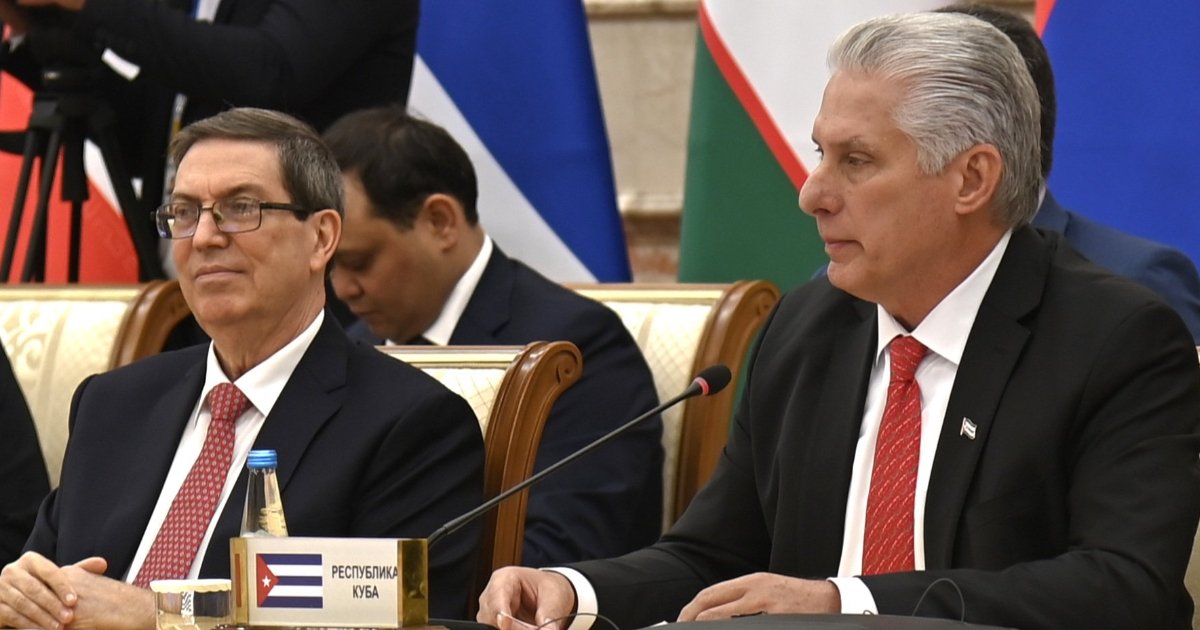
Through the social media platform X, President Miguel Díaz-Canel accused Washington of acting as a "global judge" to justify "illegal and unilateral measures against Venezuela and its legitimate president."
In the same vein, Foreign Minister Bruno Rodríguez Parrilla described the reward as "fraudulent" and characterized it as "a new act of aggression against that sister nation," asserting that the U.S. "lacks both legal and moral authority" for such a measure.
Other high-ranking Cuban officials, such as Vice President Roberto Morales Ojeda, who is increasingly gaining visibility in the power structure, and Johana Tablada, the Deputy Director General for the U.S. at the Foreign Ministry, joined in the condemnations, calling the decision an "illegitimate maneuver," a "cowardly act," and proof of "imperial cynicism."
The increase in the reward was announced by Attorney General Pam Bondi, who stated that the U.S. will not waver in its goal of bringing Maduro, who has been the main ally of the Cuban regime in recent decades, to justice.
According to the indictment from the Southern District of New York, the Venezuelan leader heads the Cartel of the Suns, with alleged ties to the FARC and other criminal organizations, responsible for sending tons of cocaine to U.S. territory.
Bondi emphasized that the measure also responds to the controversial reelection of Maduro in July 2024, which is considered fraudulent by Washington and several governments in the hemisphere, recognizing opposition leader Edmundo González as the elected president of Venezuela.
Havana has been one of the strongest allies of Chavismo since its rise to power, and the staunch defense of Maduro reflects the political and strategic alliance between both governments. The intensification of U.S. actions against Caracas threatens to deepen the frictions with Cuba, which is already suffering from sanctions and restrictions imposed by Washington.
Meanwhile, the State Department insists that Maduro "will not escape justice" and that he will be held accountable for "his atrocious crimes," keeping open the possibility of new measures to isolate him internationally.
Frequently Asked Questions about the Reward for Nicolás Maduro and Cuba's Reaction
Why has the United States increased the bounty on Nicolás Maduro?
The United States has increased the reward for Nicolás Maduro to 50 million dollars due to his alleged involvement in drug trafficking and terrorism activities. According to allegations, Maduro leads the Cartel of the Suns, a criminal organization linked to terrorist groups such as the FARC, and is believed to be involved in the shipment of drugs to the United States. This action also responds to Maduro's re-election in 2024, which Washington and several governments in the hemisphere consider fraudulent.
How has the Cuban regime reacted to the announcement of the reward?
The Cuban regime, led by Miguel Díaz-Canel and Foreign Minister Bruno Rodríguez, has harshly criticized the announcement from the United States, calling it "fraudulent" and "an act of aggression." Cuba views the reward as an illegitimate maneuver and a display of the "imperial cynicism" of the U.S. Havana, a steadfast ally of chavismo, sees these actions as an attempt to destabilize Venezuela and criticizes what it perceives as interference in the internal affairs of a sovereign nation.
What effects could this measure have on the relations between Cuba and the United States?
The measure to increase the reward for Nicolás Maduro could deepen tensions between Cuba and the United States. Cuba is already facing sanctions and restrictions imposed by Washington, and the increased pressure on its Venezuelan ally could worsen bilateral relations. Historically, U.S. actions against the Venezuelan government have impacted Cuba, exacerbating existing frictions and complicating any attempts at dialogue or normalization of relations.
Filed under: