
Related videos:
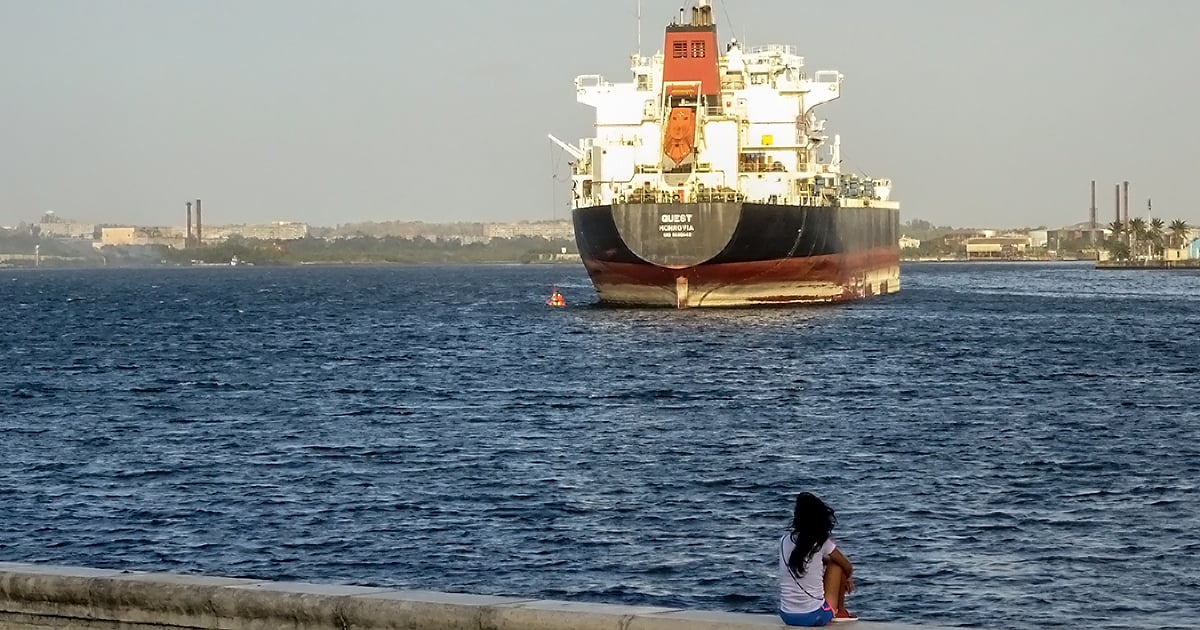
Amid daily blackouts, electric stoves on the brink, and a country engulfed in energy uncertainty, Venezuela increased its shipments of crude oil and derivatives to Cuba in July, reaching 31,000 barrels per day (bpd). Although this marks a significant rebound from the historical low of June, when only 8,000 bpd were delivered, the volume remains insufficient to alleviate the crisis facing the Island.
According to data revealed by the agency Reuters, the shipments include crude oil, gasoline, and jet fuel, placing Cuba back on the energy map of its primary political ally. However, the reality in the country remains the same, with prolonged power outages, generation deficits, and the inability to pay for liquefied gas that has been docked for months at the port.
“We have a formula with Venezuela”, admitted in May the Energy Minister, Vicente de la O Levy. However, neither he nor Miguel Díaz-Canel wanted to provide details about this strategy, arguing that it could lead to international sanctions.
Although the regime insists that work is being done "in two scenarios, with and without fuel," the truth is that the Cuban people are already living under the latter. Specifically, the Electric Union reported this Monday a generation deficit of over 1,700 megawatts, directly affecting the distributed generation system, which relies on imported fuel.
Official words are not enough to explain how millions of Cubans face days without electricity, nights without fans, and cold kitchens, while they hear about barrels that do not arrive or arrive late.
Despite the increase in July, the volume sent from Venezuela remains well below the 55,000 bpd agreed upon in 2000 between the dictators Hugo Chávez and Fidel Castro, and far from the more than 100,000 bpd that Caracas used to send during prosperous years.
Meanwhile, Chevron and other partners of PDVSA have the green light from Washington to resume operations after the suspension of licenses. According to Reuters, the new mechanisms could include payments in kind and oil exchanges for diluents, which would reveal the financial precariousness of Maduro's regime.
China, as usual, captured 95% of Venezuelan oil, and although Havana managed to obtain a minimal portion, the reality is that the fate of the crude oil remains more in Asia than in the Caribbean.
However, with every announcement of "improvement on the way," the ordinary Cuban responds with resignation and a fan. People are tired of "secret formulas," of promises that do not translate into energy, and of speeches where the blame is always placed externally.
According to Minister De la O Levy himself, the Island should import five million tons of fuel per year, but it currently consumes "only imported crude" due to the collapse of its domestic production. The rest consists of estimates, silence, and blackouts.
Frequently Asked Questions about Venezuela's Oil Supply to Cuba
What is the current situation of Venezuela's oil supply to Cuba?
In July, Venezuela increased its shipments of crude oil and derivatives to Cuba, reaching 31,000 barrels per day, a significant increase compared to June, when only 8,000 barrels per day arrived. However, this volume is still insufficient to resolve the energy crisis on the island.
What impacts does the energy crisis in Cuba have due to the lack of fuel?
The energy crisis in Cuba has caused daily blackouts, electric stoves on the brink, and severe energy uncertainty. The electricity generation deficit exceeds 1,700 megawatts, directly impacting the distributed generation system that relies on imported fuel. This has resulted in prolonged interruptions of basic services and a challenging environment for businesses and the daily lives of Cubans.
Why is the increase in oil shipments from Venezuela to Cuba insufficient?
Although the increase in shipments from Venezuela to Cuba is significant, the current volume of 31,000 barrels per day is well below the 55,000 barrels per day agreed upon in 2000 between Hugo Chávez and Fidel Castro, and far from the over 100,000 barrels per day that were sent during years of plenty. This means that the supply is insufficient to meet the island's energy needs.
What measures is the Cuban government taking to address the energy crisis?
The Cuban government has announced the addition of more solar parks to increase energy generation capacity. However, these efforts are not enough to cover the current deficit due to the lack of fuel and the obsolescence of thermal power plants. Furthermore, it has been acknowledged that blackouts will continue to impact the daily lives of Cubans.
How does the political situation in Venezuela affect the oil supply to Cuba?
The political situation in Venezuela, including international sanctions and internal issues, has directly impacted the oil supply to Cuba. The sanctions from the United States have complicated the export operations of Venezuelan crude oil. Recently, Chevron's exit from Venezuela may force the Maduro regime to seek new markets and increase shipments to partners like Cuba to offset the loss of revenue.
Filed under: