
Related videos:
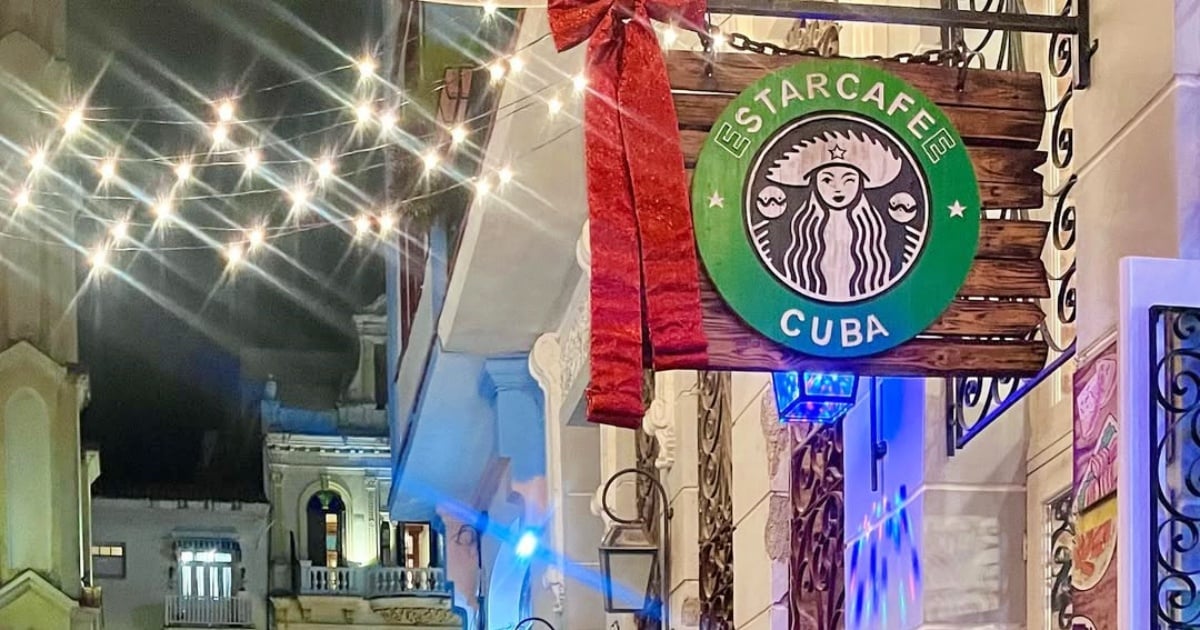
In Cuba, there are no American franchises, but that hasn't stopped an increasing number of private cafes and restaurants in recent years from recreating, with a local touch, the aesthetics and menus of global brands like Starbucks, Burger King, or KFC.
They are businesses born from ingenuity and opportunity, which adapt the concept, preserve the most recognizable symbols, and blend them with Cuban idiosyncrasies.
However, for a large part of the population, these places are little more than showcases: they exist, can be seen on social media, but are prohibitive for an average state salary.
The arrival of mobile internet in 2018 and the reopening of the private sector in 2021 have created a fertile ground where, in central neighborhoods of Havana, it is now possible to order a frappuccino with your name written on the cup, a fried chicken combo on a touchscreen, or a "crowned" burger without leaving Cuba.
The image is aspirational and, for many, it comes down to just another photograph on Instagram rather than the actual consumption experience.
The "Starcafé" that went viral
In front of the iconic Bodeguita del Medio, a barista named Melisa García wears a green apron featuring the logo of a mermaid with wavy hair. She loudly calls out the name written on a cup and hands over a frappuccino. It could be a Starbucks, but it's Starcafé, which opened in 2023.
The music is Cuban, the menu items replace cold sandwiches, and the clientele comes more for the photo than to work on their laptops.
“Videos have gone viral quite a bit (…) they know us for the ‘reels.’ Many young people, who are influencers, come and do reviews of both the coffees and the food,” Melisa stated in comments to the agency EFE.
For the local workers, it was no surprise to see the influx of customers under 35 looking to snap a selfie with their cup in hand. Many do this while imitating family members in Florida.
But, outside the photogenic frame, the prices at Starcafé place it out of reach for thousands of Cubans, except for those who receive remittances or work in the private sector with income in foreign currency.
Copy the format, but in the Cuban way
In 2024, in addition to Starcafé, a KFC-style restaurant opened in Havana - featuring a touchscreen for ordering combos - and a hamburger joint called Burger Queen.
The partner of the establishment, Andy García, explains it this way: “We thought about what exists in the world. What makes you think of a burger? Of course, there is Burger King.”
For him, the key is to offer experiences that were impossible until recently.
"For Cubans, it is difficult to leave Cuba. And since we have had internet access, we have been able to engage much more with social media and consume things from abroad. That always creates curiosity (...) In a way, these types of businesses (...) offer Cubans the chance to experience that."
However, that "possibility" is relative: access depends not only on curiosity or preference but also on economic capacity.
The Burger Queen menu, although cheaper than its international counterpart, still exceeds what many families can afford without sacrificing other essential expenses.
The aspirational appeal and local adaptations
Melisa and Andy agree: there is an aspirational component. The personalized cup, the order screen, or the burger combo are not just products; they are symbols of global belonging.
These venues preserve the iconic aspects—colors, rituals, aesthetics—but adapt everything else:
-Music and ambiance tailored to the local culture.
Menus that replace cold sandwiches with dishes more in line with Cuban tastes.
-Ingredients and recipes adapted to what's available in the market.
-Influencer-based marketing and viral “reels.”
Between isolation and openness
After 1959 and with the sanctions from Washington, American franchises disappeared from the Cuban landscape.
The recent opening of the private sector and access to the internet have enabled entrepreneurs to connect with global trends, sometimes creating tension with government sectors that view these fashions as "a practice of cultural colonization foreign to our identity," as noted by the newspaper Granma on one occasion.
In Cuba, "living the experience" of a global brand doesn't mean consuming its original product, but rather its local interpretation: a hybrid of what is seen on social media and what can be served at a table in Havana.
For a minority with purchasing power, it is an appealing novelty; for the majority, it remains a scene viewed from afar, like a display of globalization that not everyone can afford.
Filed under: