
Related videos:
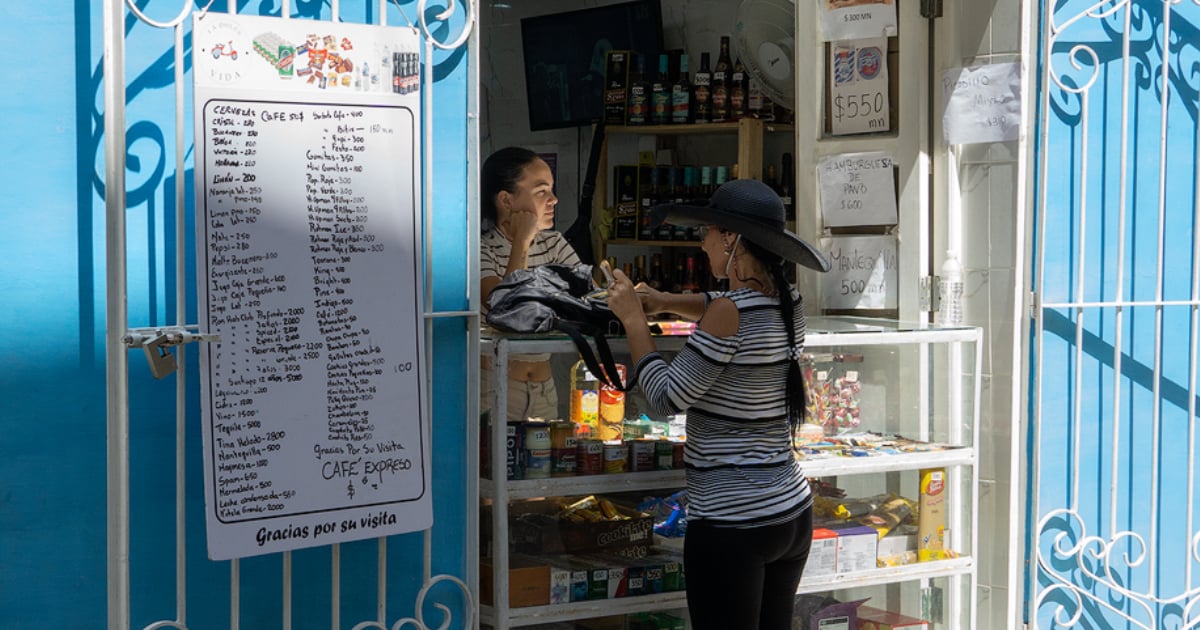
For the first time since Fidel Castro nationalized the Cuban economy in the 1960s, the private sector has surpassed the state sector in retail sales in the country.
According to preliminary figures published by the National Office of Statistics (ONEI), the "non-state" sector accounted for 55% of total retail sales of goods and services in 2024, compared to 44% in 2023.
The information, released by the agency Reuters, excludes public services such as water and electricity, but signifies a turning point in the Cuban economic model.
The expansion of the private sector has occurred gradually since the fall of the Soviet Union, accelerating in recent years due to the crisis of the state apparatus, which has seen the economy contract by 11% over the last five years, amidst power outages, inflation, and widespread shortages.
Despite the fact that the State operates thousands of stores selling basic products, most of which have a limited selection, informal markets and fairs such as the one at Puente 100 in Havana encompass a significant portion of the actual buying and selling activity.
This situation is highlighted by a series of testimonies collected by the cited agency.
"There are many things that cannot be found in the state sector," said Diamela García, a clothing vendor at one of these fairs.
"Many people come here to look for those things," he added.
"You can find everything, although the prices are high," explained María Karla Hernández, a 27-year-old physiotherapist, while shopping for supplies for her work.
This price difference was crucial for the private sector, which is more flexible but also more costly, to gain that share in the market, warned Cuban economist Omar Everleny Pérez.
"Prices are subsidized in the state sector and are much higher in the private sector. However, the state lacks the liquidity to import, so people turn to the private sector."
The Minister of Economy, Joaquín Alonso, recently reported to the National Assembly that private sector imports have exceeded one billion dollars this year, representing a 34% increase compared to the same period in 2023.
Alonso acknowledged that "non-state economic actors are making progress," and although he stated that there is no intention to confront the sector, he urged the need to "guide it properly."
Currently, around 1.6 million Cubans —out of a workforce of four million— work in the private sector, a growth that creates internal tensions within the government, emphasized Reuters.
While some defend liberalization as a strategic part of the model, others resist giving up more space to what Fidel Castro once referred to as “a concession to the enemy.”
The Cuban economist Pedro Monreal evaluated on social media that the growth of the private sector should be accompanied by a more ambitious policy.
According to data from the National Occupation Survey 2024, only 4.5% of workers in the non-state sector are employed in MIPYMES, which, in their view, indicates a limited institutional design.
Monreal warned that a "bifurcated" structure persists between the state sector —which is more intensive in technical and managerial functions— and the non-state sector, where services and production trades prevail.
For the expert, legalizing medium and large private enterprises would be crucial to enhancing productivity, wages, and competitiveness, but "that is not politically acceptable today."
The growth of the private sector in Cuba contrasts with a deep labor crisis and a general contraction of the national economy.
Almost half of Cubans of working age neither work nor seek employment, an unprecedented situation that reflects both the demotivation caused by low state salaries and the rise of informality at all levels.
While some entrepreneurs manage to establish themselves in the domestic market, other small businesses are beginning to close down.
For the first time since their legalization, Cuba reported a net reduction of active MIPYMES. The figure, although still moderate, indicates a saturation point for certain sectors where profit margins have decreased and the costs of importation and operation continue to rise.
This trend has forced many of these microenterprises to take desperate measures.
Various businesses have begun to liquidate their inventories after losing access to foreign currency accounts, highlighting the structural fragility of the mixed economic model that the regime attempts to sustain. In many cases, the lack of legal and financial guarantees hinders the expansion of viable projects.
Frequently Asked Questions about Private Sector Leadership in Retail in Cuba
Why has the private sector surpassed the state sector in retail trade in Cuba?
The private sector has surpassed the state sector in retail trade in Cuba due to the lack of liquidity of the government to import goods, which has led the population to turn to the private sector to meet their needs. Furthermore, the flexibility of the private sector and the expansion of informal markets have facilitated its growth, despite the high prices it charges compared to the state sector.
How has the economic crisis in Cuba affected the state sector?
The economic crisis in Cuba has severely impacted the state sector, resulting in an economic contraction of 11% over the last five years. The scarcity of resources and lack of liquidity have limited the state's ability to maintain an adequate supply of basic goods, which has driven citizens to seek alternatives in the private sector, which offers greater variety although at higher prices.
What challenges does the private sector in Cuba face?
The private sector in Cuba faces the challenge of operating in a restrictive economic environment, with limitations on access to foreign currency and difficulties in importing products. Furthermore, although its growth is remarkable, political and social tensions within the government persist that could complicate its expansion and long-term sustainability.
What role does inflation play in the current Cuban economy?
Inflation remains a significant issue in Cuba, particularly affecting the most vulnerable sectors of the population. While the government reports an annual inflation rate of 16.43% in the formal market, the reality is that prices in the informal market are much higher, reflecting the lack of control and the scarcity of essential goods.
Filed under: