
Related videos:
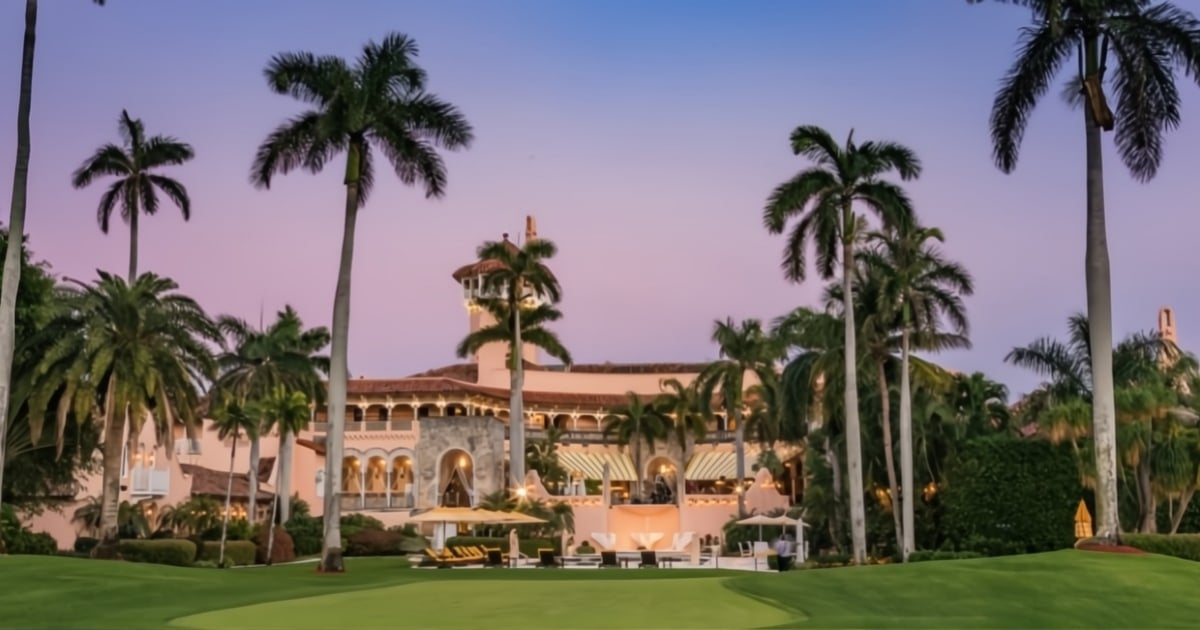
Mar-a-Lago, the Hispano-Moorish style mansion located in Palm Beach, Florida, is much more than a luxury property, and its construction holds unexpected connections to Cuba.
The mansion was built between 1924 and 1927, and its first owner was American Marjorie Merriweather Post (1887 – 1973). She was a businesswoman, socialite, and philanthropist. She inherited the fortune from Postum Cereal Company, which became General Foods Corporation.
This villa, covering over eight hectares, was designed as a winter retreat for millionaires, presidents, and dignitaries, a project infused with diplomatic intention and aesthetic grandeur.
Post, one of the wealthiest women of her time, worked with the American architect Marion Sims Wyeth and the Viennese Joseph Urban to create a Mediterranean palace that blended elements of Spanish, Venetian, and Portuguese architecture, leaving no detail overlooked.
The house was built with limestone imported from Genoa, cypress beams from the region, and treasures sculptures carved by European artists. One of the most striking and lesser-known elements is that part of the black and white marble used in the floors comes from an ancient castle in Cuba.
The consulted sources do not reveal exactly which Cuban building or site the marbles come from, but they do specify that other high-quality Cuban materials were used. The roof was covered with 20,000 tiles produced on the island, specially imported to enhance the colonial aesthetic with authenticity.
Another iconic villa in Florida that imported Cuban stones is currently known as the Vizcaya Museum and Gardens. It belonged to American businessman James Deering (1859 – 1925), who also built it as a winter residence, further south in the state, on the shores of Biscayne Bay. It is a monumental complex of heritage value.
Mar-a-Lago has heritage value in the United States
The mansion, topped by a tower over 22 meters tall, was declared a National Historic Site in 1969, and in 1973, following Post's death, it was bequeathed to the United States government with the hope that it would be used as a winter presidential residence. That was the wish of its original owner.
However, the high maintenance costs and logistical complications caused the project to fail. In 1980, the property returned to the Post Foundation and awaited a new owner who would keep the spirit of the mansion alive.
That chapter came with Donald J. Trump, who in 1985 managed to acquire the property for a price much lower than its actual value, taking advantage of federal indifference and it is rumored that he also exerted some pressure in the real estate sector.
Trump initially turned it into his personal residence, but in 1995, he transformed it into the exclusive Mar-a-Lago Club. This change in use was not only a business move, but also symbolic. The mogul was solidifying his brand in one of the most iconic locations in South Florida.
Mar-a-Lago quickly became his stronghold, a sort of modern palace from which he projected a narrative of power and success, with exclusive access.
Mar-a-Lago, the favorite home of the President of the United States
During his first term as president, the mansion was nicknamed "The Winter White House", hosting diplomatic meetings, state events, and encounters with world leaders. In a way, Trump was fulfilling the dream of Marjorie Merriweather Post, the first owner of Mar-a-Lago.
Beyond its real estate or architectural value, this property encompasses all the elements that are associated with the current president of the United States. There is wealth, opulence, and roots in the old world that convey ideas of colonial power, lineage, and a hint of exceptionalism or exclusivity.
The aesthetics of Mar-a-Lago also serve a political function. Its 15th-century tiles, the dining room with Cuban marble, its gardens with royal palms, the gilded ceilings, and its spaces of opulence not only tell a story of taste and influence; they convey a message of control, economic solidity, and permanence or stability.
Trump did not choose Mar-a-Lago just for its beauty, but for its history and what it represents. It is an aristocratic legacy transformed into a personal symbol of power.
Today, with memberships exceeding one million dollars and a list of members that includes everyone from celebrities to former political leaders, Mar-a-Lago is an epicenter of influence in the southern United States.
Frequently Asked Questions about Mar-a-Lago and its Connection to Cuba
What is the connection between Mar-a-Lago and Cuba?
Mar-a-Lago has a connection to Cuba through building materials. Part of the black and white marble used in the mansion's floors comes from an old castle in Cuba, and the roof was covered with 20,000 Cuban tiles specially imported for the project.
What significance does Mar-a-Lago hold in American politics?
Mar-a-Lago has become a symbol of political power and exclusivity. During Donald Trump's first term, it was referred to as the "Winter White House" due to the diplomatic meetings and state events held there. Additionally, it serves as a hub of influence in the southern United States.
Why is there a consideration to rename a road leading to Mar-a-Lago?
There is consideration to rename the road as "President Donald J. Trump Boulevard" as a symbolic tribute. This measure, driven by a state law, aims to recognize Trump's influence and political impact in Florida, where he has a strong support base.
Filed under: