
Related videos:
Several days have passed since the Miami Herald published an investigation that shook the media landscape regarding Cuba: leaked internal financial documents from GAESA, the military business conglomerate, reveal that this controls over 18 billion dollars in assets that can quickly be converted into cash.
The figure exceeds the international reserves of countries like Uruguay, Panama, or Costa Rica, and according to the investigation by the prestigious media outlet, it remains beyond the reach of state auditors, in the hands of the Revolutionary Armed Forces (FAR), and outside the most urgent needs of the population.
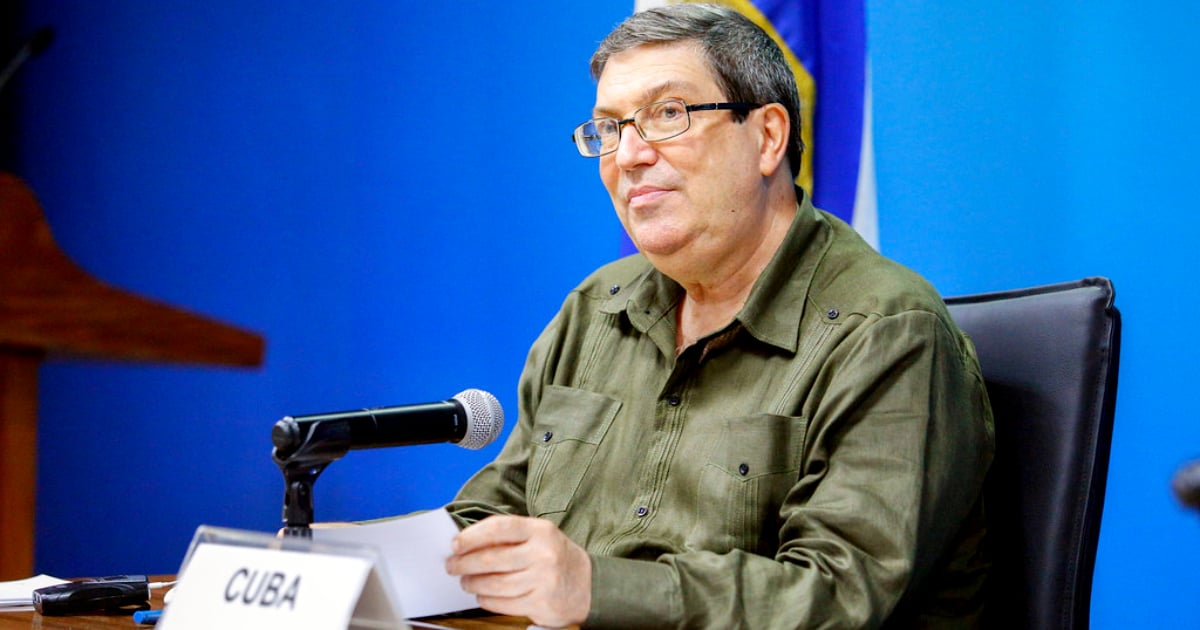
Despite the magnitude of the accusation and the international impact it has had, the Ministry of Foreign Affairs (MINREX) has not issued any official response. There have been no statements from its head, Bruno Rodríguez Parrilla, nor any communications on its institutional channels, nor interviews in state media that address the substance of the matter.
The issue also does not appear on the covers of the official press, which has chosen to ignore the scandal and stick to its usual propaganda agenda.
An indirect and personal response
The only public reaction related to the Foreign Ministry has come indirectly and not directed at the Miami Herald.
Rodney González Maestrey, director of Legal Affairs and Analysis at the U.S. General Directorate of MINREX, published a message on Facebook that, rather than addressing the allegations made by the American newspaper, focused on attacking independent journalist Mario J. Pentón.
Pentón, a resident of the United States and a contributor to independent media, had commented on the investigation by the Herald and criticized two prominent figures in Cuban diplomacy: Carlos Fernández de Cossío, Deputy Minister of Foreign Affairs, and Johana Tablada de la Torre, Deputy Director General of the U.S. Division.
In his post, Pentón pointed out that none of them had said a single word about the 18 billion dollars attributed to GAESA, questioning their silence and reminding that a significant part of the Cuban population cannot freely access the original report due to internet restrictions on the island.
Rather than addressing the challenge of responding to or clarifying the information, González Maestrey dedicated his message to discrediting Pentón, labeling him as an “instrument of the extreme right of Cuban origin” and accusing him of attempting to “legitimize” Washington's policies against Cuba.
In his text, the official mixed references to U.S. sanctions on fuel trade, the situation of transportation and industry, and a defense of tourism managed by companies linked to the Armed Forces, presenting criticisms of that sector as self-interested attacks against the country.
The art of steering the conversation
The result was a text that completely evaded the underlying issue: the existence of a multimillion-dollar reserve held by GAESA and the lack of transparency regarding its destination. Instead, González Maestrey chose to focus the conversation on two recurring themes of the official discourse:
- The embargo/blockade as a universal explanation for the shortages in Cuba. The official presented the report and Pentón's comments as part of an "attack" framed within U.S. policy towards the island, without providing evidence to refute the figures presented by the Herald.
- The defense of tourism controlled by GAESA as an "important source of income," questioning the criticism of the militarization of the economy and suggesting that such criticisms are "pretexts" to undermine an activity that, in their view, benefits the country.
This type of argumentation—a classic in official propaganda—shifts the focus from concrete data to a simplistic narrative where any criticism is interpreted as complicity with "the far right" or "the external enemy."
An old tactic: personalizing the conflict
González Maestrey's message also focused on personal elements. He pointed out that the "sin" of Deputy Minister Fernández de Cossío was having family in the United States, while Tablada de la Torre's was traveling to that country for official reasons.
Under that logic, he sarcastically remarked, figures like Senator Marco Rubio would also lack the authority to express an opinion given the corruption in his own country.
This tactic of shifting the debate towards the personal or family lives of the interlocutors is another common strategy of the regime: to personalize the conflict in order to avoid addressing structural issues.
In this way, the legal advisor of the Chancellery aimed for the discussion to shift away from the existence of 18 billion dollars beyond civilian control and instead turn into a clash of cross accusations regarding morality, travel, and personal connections.
What is not said
In none of González Maestrey's text was there an explicit denial of the figures published by the Miami Herald. There was also no explanation regarding the origin, use, or destination of those funds, nor was it clarified whether GAESA is obligated to report or transfer part of its reserves to the state budget to alleviate the crisis.
This silence contrasts with the speed at which MINREX usually responds to other critical reports or topics for which the propaganda machinery is more finely tuned, such as U.S. sanctions and the repercussions of the "blockade."
In this case, the institutional silence and the personal, tangential response of an official serve as indicators of the cold sweat in Havana and the totalitarian regime's fear of the dissemination of information that exposes its corruption and cruel nature, disconnected from any public service or commitment to the well-being of its citizens.
A problem that goes beyond social networks
González Maestrey's publication operates within the realm of social media, where the Foreign Ministry has attempted in recent years to project an image of "ideological combat" through active accounts and frequent messaging.
However, when it comes to issues of significant economic and political impact like this, the strategy appears to be the opposite: to avoid making an official statement and allow digital noise to replace formal responses.
In this case, the "noise" has consisted of discrediting the messenger —Pentón— and reiterating the narrative of the embargo and the defense of sectors controlled by the military, without addressing the substance of the complaint.
For observers and critics, this is confirmation that the Foreign Ministry acts as part of the political shield for GAESA, the conglomerate that accumulates and manages most of the foreign currency that enters the country.
Silence as a strategy
The absence of an official response from MINREX regarding the 18 billion dollars from GAESA, combined with the attempt to divert the conversation towards personal attacks and narratives about the embargo, constitutes a strategy of discourse control: the allegation is neither confirmed nor denied, it is simply avoided to keep public attention off it.
Meanwhile, living conditions on the island continue to deteriorate, and the regime keeps its reserves in military hands, away from citizen oversight or use to alleviate the crisis.
The case illustrates how, in Cuban politics, official silence is not an absence of response: it is a response in itself, calculated and consistent with the opaque management of economic power.
Filed under: