
Related videos:
In Cuba, several cases have been documented that illustrate the risks of investing in the Island, especially for entrepreneurs trying to establish businesses in a system controlled by the regime.
The sudden changes in the rules of the game, the lack of legal security and bureaucratic obstacles and corruption are a deadly combination that would deter anyone from investing in the country.
The case of Juan Carlos Hernández Mora
Juan Carlos Hernández Mora, a Cuban-German who left behind 12 years of life in Europe to invest in the island and finish his days close to his roots.
Today, at 52 years old, he lives with a 12-year sentence hanging over him, without his guesthouse, without his home, and with a ban on leaving Cuba until 2030.
Repatriated in 2008, he bought a colonial house in the historic center of Trinidad and opened a tourism business that allowed him to live and help those in need. “I missed my country, my customs... I thought I could survive here,” he told Martí Noticias.
In 2019, he was arrested and a year later, in a closed-door trial, he was convicted of pimping, bribery, and electricity fraud.
He claims that the accusations are unjust and that all the individuals mentioned in the case were adults, without coercion or deception. Following the verdict, the State confiscated his home and relocated his family to a modest apartment on the outskirts of Trinidad.
The Spanish Armando Unsain Bartolomé
In 2021, the Spanish Armando Unsain Bartolomé, declared a defender of the regime and owner of the boutique hotel La Colonial 1861 in Havana, received an order from the Ministry of the Interior to leave the island within 30 days or face deportation.
The authorities accused him of violent behavior and of having been investigated for serious crimes, which he categorically denied.
The document provided by MININT states that the individual "has been processed for disturbing public order and investigated as a suspected perpetrator of crimes related to the corruption of minors and drug trafficking, actions that prompted the temporary cancellation of his rental license, and has shown a behavior of confronting social coexistence norms and has not achieved adequate integration into the community where he resides."
Despite his political affinity and his investment in the tourism sector, he had to leave Cuba, denouncing an "injustice" and an "arbitrary exile."
The owner of the "Cuban Costco"
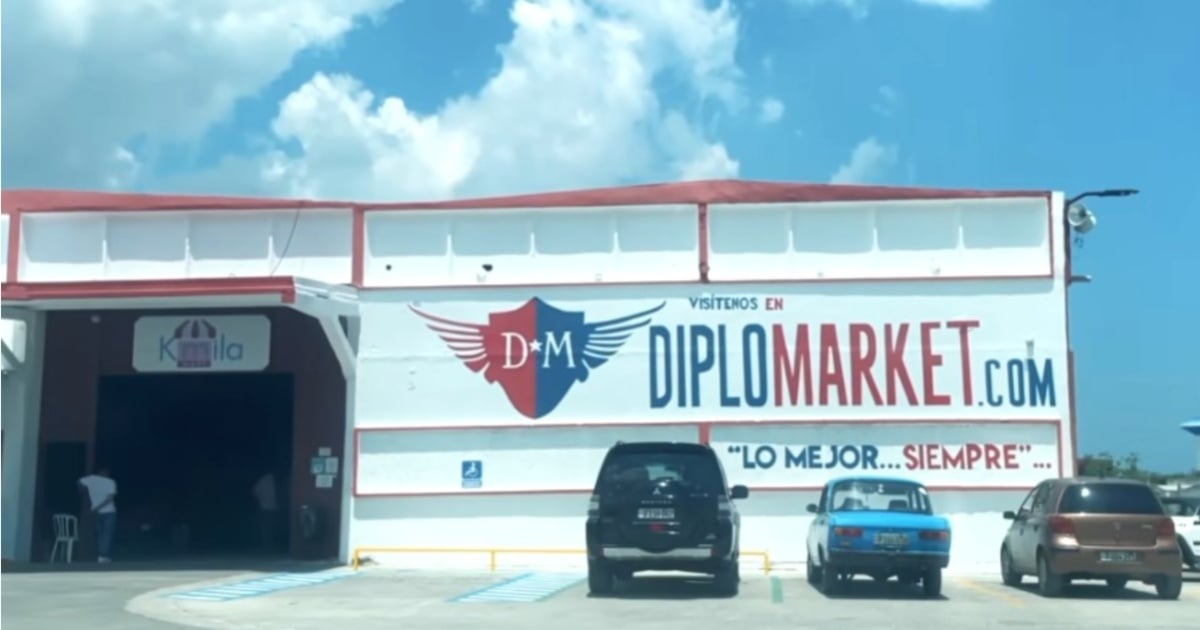
The Cuban-American entrepreneur Frank Cuspinera Medina, founder of the supermarket Diplomarket, known as the "Cuban Costco," was arrested in 2024 on charges of tax evasion, currency trafficking, and money laundering.
Your company was intervened by military forces and all its assets confiscated.
On May 21, Cuspinera sent a handwritten letter from prison, in which he denounced the lack of legal guarantees in his process and requested the intervention of international organizations and the U.S. Department of State.
In the text, he attacked State Security and the Cuban judicial system, which he accused of fabricating charges without granting him the right to an effective defense.
These cases have had a devastating effect on the trust of the private business sector in Cuba. Many view these arrests and expropriations as a punitive measure by the authorities to intimidate those who invest in the private sector. Others see them as victims of an unpredictable legal system.
The lawyer and director of Cubalex, Laritza Diversent, in conversation with Mario J. Pentón, denounces that the Cuban regime uses criminal law as a control tool to seize valuable properties, especially those renovated for tourism. “Today they may invite you to invest; tomorrow they imprison you and take everything away,” she warned.
Frequently Asked Questions about the Risks of Investing in Cuba
What are the main risks of investing in Cuba?
The main risks of investing in Cuba include sudden changes in regulations, lack of legal security, and bureaucratic obstacles and corruption. These factors create an uncertain and hostile environment for entrepreneurs, who may face expropriations and arbitrary accusations from the Cuban regime.
What happened to Juan Carlos Hernández Mora when he invested in Cuba?
Juan Carlos Hernández Mora was arrested and sentenced to 12 years in Cuba for pimping, bribery, and electrical fraud, charges he denies. His home was confiscated and his family was relocated, illustrating the dangers of investing under an unpredictable legal system on the island.
Why was Armando Unsain Bartolomé expelled from Cuba?
Armando Unsain Bartolomé was accused of violent behavior and having been investigated for serious crimes, which he categorically denied. Despite his support for the regime, he was forced to leave Cuba, demonstrating the arbitrariness of the Cuban system even against those who show political affinity.
What was Frank Cuspinera Medina's situation in Cuba?
Frank Cuspinera Medina was arrested on charges of tax evasion, currency trafficking, and money laundering. His company was seized and all his assets were confiscated, illustrating how the Cuban regime can use the legal system to appropriate private businesses.
What role does the Cuban regime play in private investments?
The Cuban regime uses criminal law as a control tool to appropriate valuable properties, especially in tourism. This practice discourages private investment by creating a climate of legal insecurity and risk of arbitrary expropriation.
Filed under: