
Related videos:
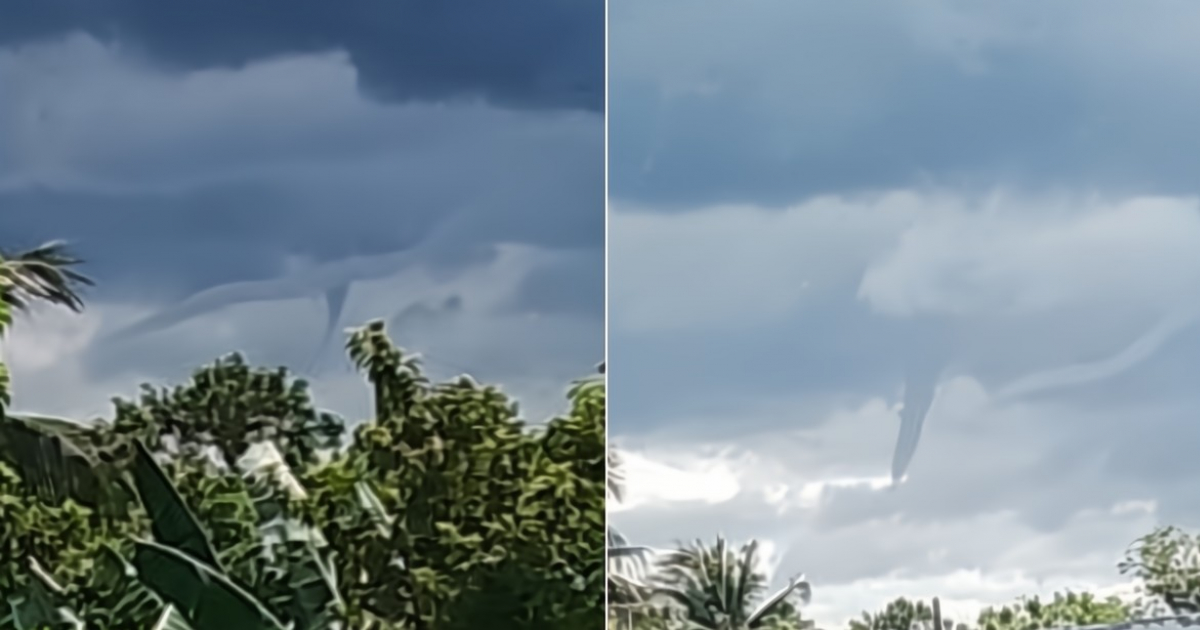
Two waterspouts were spotted this Saturday in the municipality of Mantua, in the western part of Pinar del Río, amidst a day characterized by unstable atmospheric conditions.
The stunning images, shared on social media by user Irenaldo Caro Muñoz and disseminated by the specialized page Meteorología_Cuba, show a vertical waterspout and another crossing it diagonally, a rare phenomenon that caught the attention of local residents.
According to meteorologist MSc. Álvaro Pérez Senra, this type of phenomenon is due to specific conditions of humidity, temperature, and wind that can create these funnels of air in elevated areas.
A waterspout surprised swimmers in the Isle of Youth
This sighting occurs just days after a waterspout surprised bathers and residents at Bibijagua beach, on the Isle of Youth. The phenomenon, recorded on August 9th in the afternoon, was captured by photographer Dianys Vélez and quickly went viral on social media.
The images clearly show the column of air descending from a storm cloud to the sea, in a spectacle as impressive as it is rare. Fortunately, no damage or impact was reported in the area.
A waterspout is a rotating funnel that connects clouds with the surface of the sea. Although they are generally less powerful than tornadoes, they can pose a real danger to boats, fishermen, or coastal areas if they come ashore.
This new episode in Pinar del Río reinforces the streak of atmospheric instability that the country is experiencing, following the recent sighting of another water spout on the Malecón in Havana, causing alarm among pedestrians and authorities.
Frequently Asked Questions about Tornadoes and Weather Phenomena in Cuba
What is a waterspout and how does it form?
A waterspout, also known as a water tornado, is a rotating funnel of air that connects clouds with the surface of the sea. It primarily forms under conditions of high humidity, temperature, and wind, and although they are generally less powerful than tornadoes, they can pose a real danger to vessels and coastal areas if they come ashore.
Why are there so many waterspouts occurring in Cuba lately?
In recent years, Cuba has experienced an increase in the frequency of extreme weather phenomena due to a combination of factors such as global warming, atmospheric instability, and the interaction of tropical waves. These factors create favorable conditions for the formation of waterspouts and tornadoes, especially during the Caribbean summer.
What is the difference between a waterspout and a tornado?
The main difference between a waterspout and a tornado is their place of formation. Waterspouts form over water, while tornadoes develop over land. Although both phenomena exhibit rotating columns of air, waterspouts are generally less intense and destructive than tornadoes.
What precautions should be taken in the event of a waterspout?
In the presence of a waterspout, it is important to stay away from the coast and avoid nautical activities. Vessels should seek shelter, and swimmers should get out of the water. It is also advisable to follow weather updates and remain alert to the warnings issued by local authorities.
Filed under: