
Related videos:
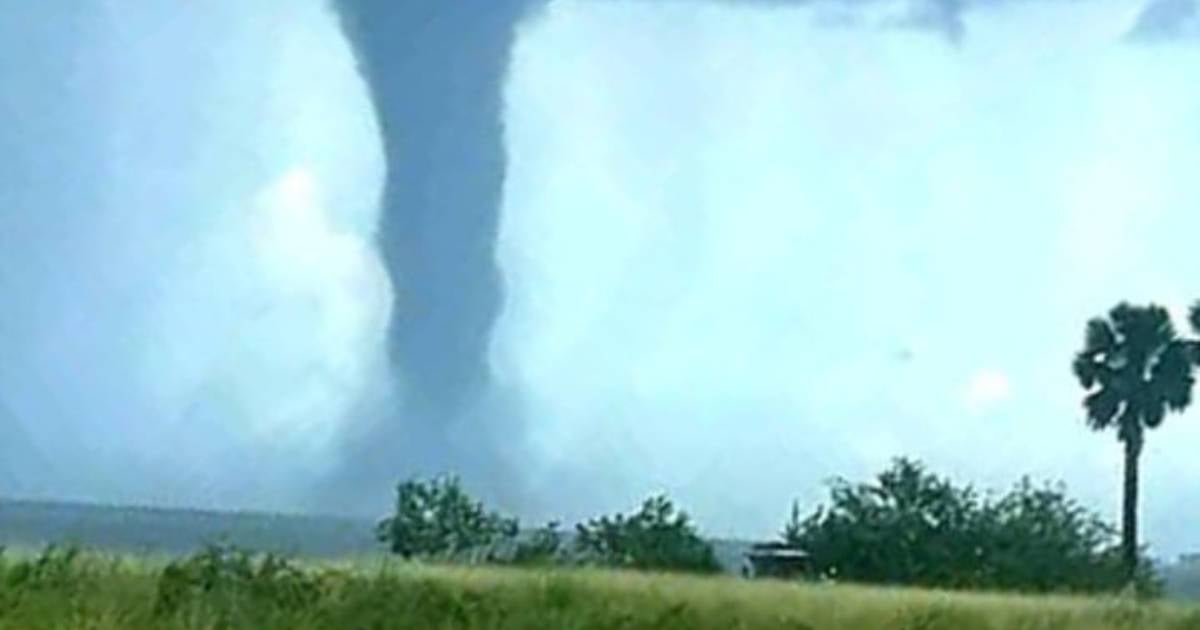
An impressive waterspout surprised beachgoers and locals at Bibijagua Beach this Saturday afternoon, on the Isle of Youth.
The phenomenon, recorded around 5:32 p.m., was captured in images by photographer Dianys Velez and shared on social media by users and meteorology pages, quickly generating comments and reactions.
The photos show a column of air and water descending from a storm cloud to the sea, in a spectacle that is as imposing as it is rare. No damage or impacts have been reported.
A waterspout, also known as a water tornado, is a meteorological phenomenon that forms over the sea, characterized by a rotating funnel of air that connects the ocean with the clouds.
Although they are usually less intense than tornadoes and dissipate quickly, they can pose a threat to vessels and coastal areas if they approach the shore.
This new episode occurs just a day after another waterspout caused alarm along the Malecón in Havana, highlighting the streak of atmospheric instability affecting the island in recent days.
Frequently asked questions about waterspouts in Cuba
What is a waterspout?
A waterspout is a meteorological phenomenon that forms over water and is characterized by a rotating column of air that connects the ocean to the clouds. While they are generally less intense than tornadoes, they can pose a danger to vessels and coastal areas if they come ashore.
Why are more waterspouts being observed in Cuba lately?
In recent years, Cuba has experienced an increase in the frequency of extreme weather phenomena, such as waterspouts and tornadoes, particularly in the western region. This increase could be related to atmospheric instability and changes in climate patterns, possibly influenced by climate change.
What are the differences between a waterspout and a tornado?
The main difference between a waterspout and a tornado is the location where they form. Waterspouts develop over water, while tornadoes form over land. Although they are visually similar, waterspouts are generally less intense and destructive than tornadoes.
What are the climatic conditions that favor the formation of waterspouts?
Water spouts form under conditions of atmospheric instability, where there are strong updrafts and storm clouds. Heat, humidity, and the presence of low pressure in the atmosphere can also favor their occurrence.
Filed under: