
Related videos:
A letter signed by a professor, on behalf of ten other teachers from the mixed school Alberto Fernández Montes de Oca, in the municipality of Jagüey Grande, expressed the faculty's dissatisfaction with the failure to pay for the additional workload, a right enshrined in official regulations that, until recently, was fulfilled without difficulty.
According to those affected, the school's administrative specialists assured that the overdue payment from December would be made in February, but it never happened.
On three occasions, the Municipal Education Directorate promised to meet with them and has still not shown up, revealed the section Apartado 1433 of the official newspaper Girón.
The issue was forwarded to the Municipal Party Committee, the People's Opinion Office, and the municipal union of the sector, without receiving a response or the owed money.
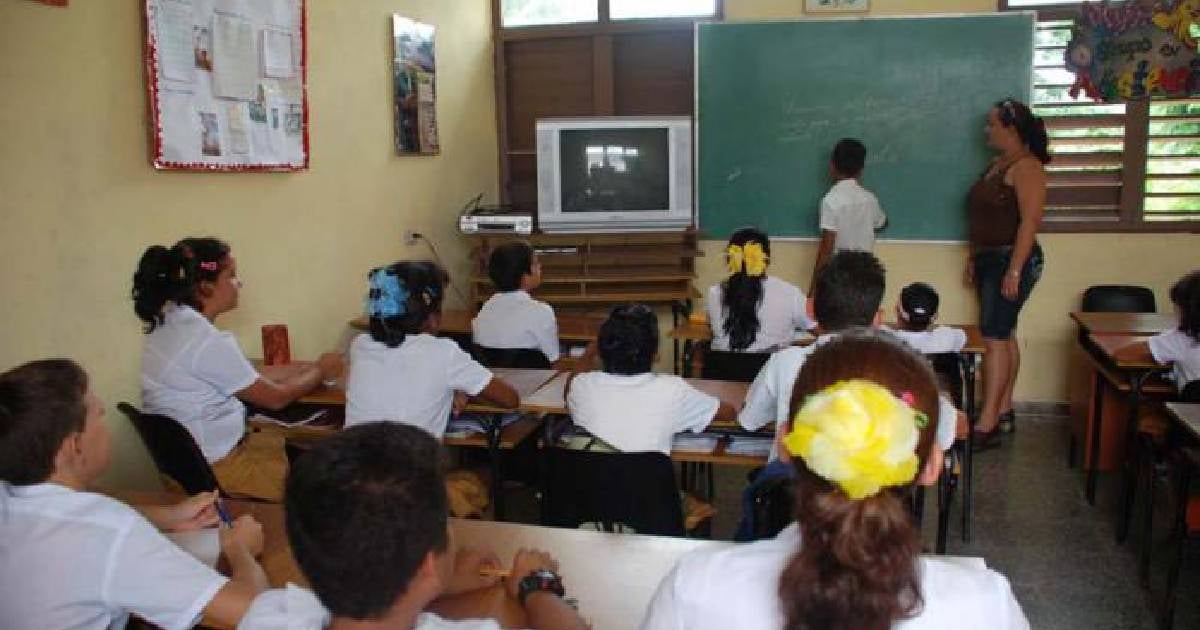
Meanwhile, the operation of the school relies on the heavy workload of the few available teachers, as the staff remains incomplete.
In this context, the Provincial Education Directorate itself reminds that Resolution 10/2024 from the Ministry of Education (Mined) ties additional payments to the non-execution of the budget at the municipal level and prioritizes certain levels of education, in addition to not recognizing retroactive effects.
That bureaucratic interpretation keeps the educators supporting the aforementioned basic secondary education in a state of uncertainty.
The situation demonstrates a glaring contradiction: the system demands more working hours from teachers to cover vacancies, but denies the compensation that the same regulations recognize, while the responsible institutions choose evasion and silence.
Cuba began the 2024-2025 school year with a deficit of 24,000 teachers, in the context of a high migratory exodus, as well as rampant inflation and low salaries and pensions, as part of the multisystemic crisis in which the island is submerged.
The teacher shortage is particularly concentrated in secondary education and in pre-university programs for exact sciences, both in Havana and in other provinces in the west and center of the country.
The government approved the Labor Code in 2014, which authorizes the modality of multiple employment to supposedly mitigate the effects of population aging, stimulate work, and allow people to earn more money.
In recent years, hundreds of Cuban teachers who had left the classrooms have returned to teaching, as well as retired professionals who, in addition to continuing to receive their pensions, are taking advantage of the new payment options.
Months ago, the Cuban content creator Sheyla Reyes (@sheyreyes03) showcased in a video posted on TikTok what a teacher in Cuba can buy with their monthly salary that they earn from their job.
Reyes explained that the average salary of a teacher falls between 2,500 and 3,000 Cuban pesos, a figure that has been severely impacted by the unchecked inflation and the devaluation of the CUP in recent years.
In April, the Ministry of Labor and Social Security of Cuba announced a
In recent years, the education system has deteriorated due to the shortage of teachers, the decline in teaching quality, and the material decay of infrastructures.
Frequently Asked Questions about Non-Payment to Teachers in Matanzas
Why haven't the teachers in Matanzas received payment for overtime?
Teachers in Matanzas have not received payment for overtime due to budgetary non-implementation at the municipal level, which results in delays in the additional payments recognized by the Cuban Ministry of Education regulations. Local authorities have not provided a concrete solution, leaving educators in uncertainty.
How does the lack of payment to teachers affect the functioning of schools in Cuba?
The lack of payment to teachers severely affects the functioning of schools in Cuba by demotivating the teaching staff, increasing the shortage of teachers, and overloading the few that remain. This deteriorates the quality of education and exacerbates the educational crisis in the country.
What measures has the Cuban government taken to address salary issues in the education sector?
The Cuban government has announced measures such as salary increases for teachers and incentives for years of service aimed at strengthening job stability. However, these announcements have not translated into concrete payments for many workers, leading to dissatisfaction and distrust in government promises.
What is the impact of the teacher shortage on education in Cuba?
The shortage of teachers in Cuba negatively impacts education by increasing the workload for existing educators, deteriorating the quality of teaching, and limiting individualized attention to students. This issue is exacerbated by the emigration of professionals and poor working conditions.
Filed under: