
Related videos:
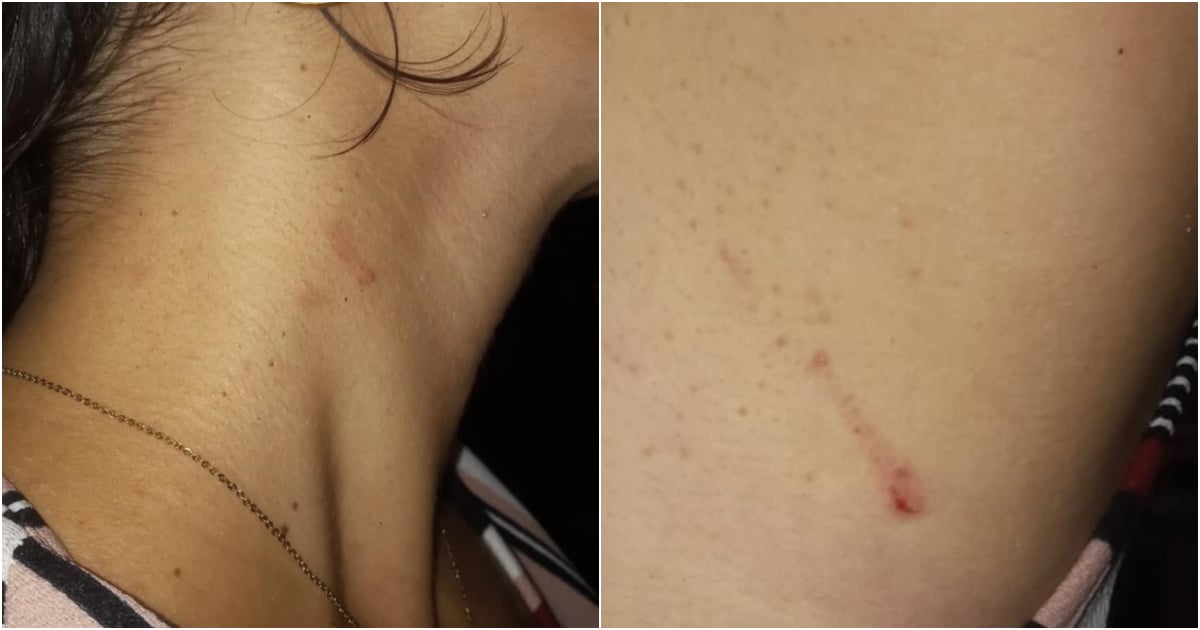
The Cuban teacher Rocío Blanco reported through social media the violent assault she suffered near her home on the night of August 8, just before her 30th birthday.
According to the testimony on her Facebook profile, she had not gone out to party, had not consumed alcohol, and the street was well-lit when, before midnight, she went out to find a sweet treat to place the candles she carried in her purse to celebrate her anniversary.
At that moment, a man attacked her from behind, grabbed her by the neck, covered her mouth, pushed her to the ground, and snatched her belongings.
Among the stolen items was his Samsung Galaxy A11 phone, which, in addition to its material value, contained personal memories and photographs of his loved ones, as well as the guides to Mathematical Foundations and other documents he needed for his university studies.
It also stored in the device the prepared materials for the classes of nearly 30 children who will start receiving lessons in September.
The victim directed her words straight at the aggressor, stating that, "even though we live in the same city where misery leads 'human beings' like you to attack lone women from behind and exert violence on them to steal their belongings; we are undeniably extremely different."
In this regard, she argued that while some resort to violence and stealing, “women like me have grown up under the same unfavorable conditions, and even live in them, yet every day we go out into the streets like WILD ONES to earn a living for our children HONESTLY, in a country where the salary doesn’t even cover the cost of food and what a teacher earns in a month is a monumental joke; at least we WORK.”
In her account, she expressed gratitude for having made it home alive to embrace her daughter, explaining that this was the only reason she decided to stop resisting. "If that girl didn't exist, you probably would have had to kill me," she warned.
She also denounced that many women have not been as fortunate and have been murdered under similar circumstances.
Blanco assured that the assault will not prevent him from continuing his training. He promised that his students will receive the scheduled classes and that he will continue to achieve high grades.
"Nothing is going to stop me from hanging a Gold Title on my wall in a year and from becoming a Doctor of Science in three or four more years," she promised.
He even said that, although the thief also took the money for the cake, he will blow out the candle on a "small cake," because "neither you nor anyone else is going to steal my smile; they haven't managed to do it so far, and they're not going to."
Finally, he confirmed his faith that divine justice and Newton's Third Law - the principle of action and reaction: for every force acting on an object (action), there is a force of equal magnitude but in the opposite direction acting on another object (reaction) - will ultimately exact the toll for the harm that was inflicted on him.
Such events occur in a context of rising public concern about the increase in common crime in various areas of the country, especially violent robberies, assaults, and thefts in broad daylight.
This type of episode has reignited the debate about public safety in Cuba, where many citizens feel increasingly vulnerable in the face of the impunity of criminals.
The Cuban government has acknowledged a concerning increase in criminal violence on the island, including the use of firearms. In this regard, it has promised to implement exemplary trials against those who commit crimes deemed serious, especially those occurring within state institutions.
An 88-year-old woman who had been reported missing in the Camilo Cienfuegos neighborhood in Havana, was found with signs of violence after suffering an assault while wandering disoriented in the street.
In the early hours of Sunday, August 4, journalist and Doctor of Science Enrique Pérez Fumero, a worker at the official station CMKC and a university professor, was the victim of a brutal beating in Santiago de Cuba during an assault.
Authorities arrested six men two days later for their involvement in the murder of a security guard and the near-fatal assault on another during a robbery at an agricultural cooperative in the municipality of Contramaestre, Santiago de Cuba, official sources confirmed on Wednesday.
On its part, the Police captured an armed gang that carried out robberies while wearing masks in Havana and Pinar del Río. The criminal group operated in several provinces, engaging in violent theft using firearms and a meticulous organization.
The authorities displayed images of the detainees and the seized weapons in an effort to demonstrate their effectiveness against organized crime.
In another alarming incident, a young man was arrested in Holguín after brutally attacking an elderly man with the intent to rob him. The attack, recorded on video by witnesses, sparked significant outrage on social media due to the viciousness with which the act was carried out and the victim's helplessness.
Frequently Asked Questions About Insecurity and Violence in Cuba
What recent incidents have raised concerns about violence in Cuba?
In Cuba, multiple incidents of violence have been reported, including assaults on individuals of all ages, from children to the elderly. Cases such as the assault on a young teacher near her home and the robbery of a child on the way to school have highlighted the growing insecurity in the country's streets.
What measures has the Cuban government promised to combat crime?
The Cuban government has acknowledged the rise in criminal violence and has promised to impose exemplary trials against those who commit serious crimes. However, many citizens question the effectiveness of these measures, as the perception of insecurity remains high.
How does the economic crisis affect security in Cuba?
The economic crisis in Cuba has exacerbated insecurity, as the scarcity of resources and lack of opportunities have led to an increase in crime. Many citizens feel increasingly vulnerable to theft and assaults, especially during prolonged power outages.
What are the most vulnerable groups to crime in Cuba?
In Cuba, the most vulnerable groups to crime are children and the elderly. These groups have been targets of violent assaults, such as the case of an elderly woman attacked during a blackout and the theft of backpacks from students. The vulnerability of these groups raises significant concern among the population.
Filed under: