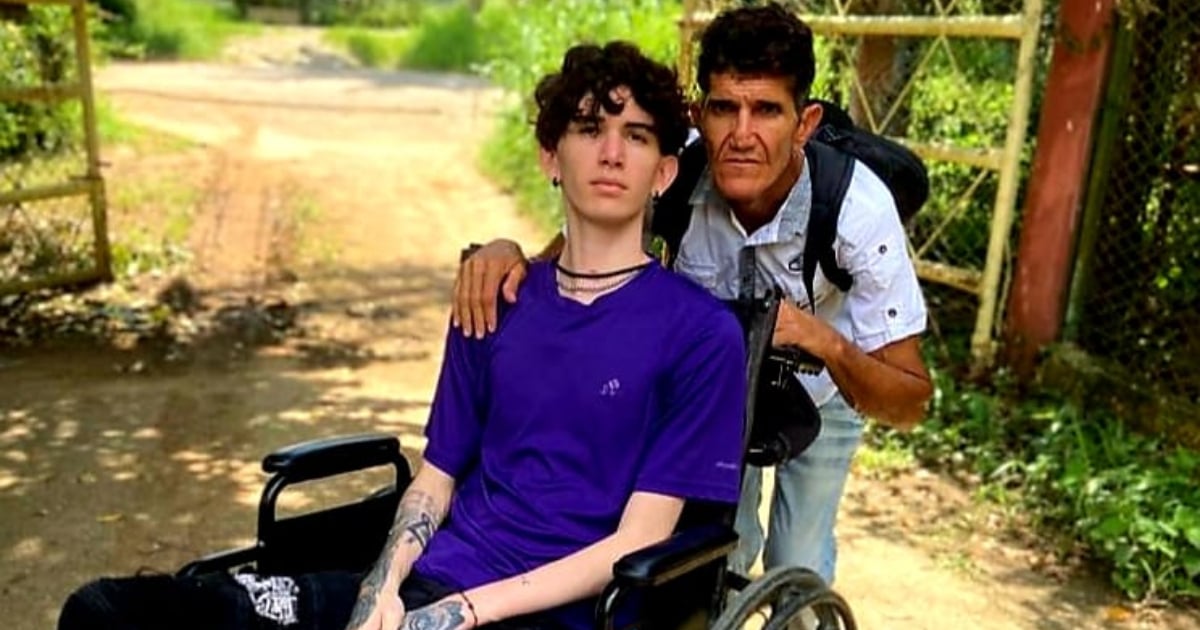
The young Cuban Lester Domínguez, a victim of a brutal machete assault in Holguín in March 2023, will be able to undergo a new surgery as part of his long and painful recovery process.
His father, Dennis Domínguez, reported on Tuesday on Facebook that, after performing an MRI, doctors confirmed that the boy "can indeed undergo surgery for the inverted vertebrae."
The family has had to secure the necessary supplies and medications due to the shortages facing hospitals in the country, and in the coming days, a definitive date for the intervention will be provided.
"Let us hope that everything goes well and that God, along with the doctors, continues to restore him," wrote Dennis, expressing his gratitude once again for the support received.
Another sequel to the attack that changed his life
In a previous post from August 4, the father explained that Lester was found to have inverted vertebrae, a serious bone condition that threatens to cause arthritis and worsen his already fragile state.
The injury adds to the list of aftereffects he has been dealing with since the attack in 2023, when assailants assaulted him with machetes to steal his cell phone.
Since then, Lester -who suffered an incomplete C5 spinal cord injury- has had to undergo multiple surgeries, treatments, and rehabilitation both in Holguín and at the Julito Díaz hospital in Havana.
Although it has gained sensitivity and certain movements, it has still not been able to walk and continues in a long and complex recovery process.
A symbol of resilience amid hardships
Lester's case has become a symbol of resistance and hope in Cuba.
His father, in addition to accompanying him at every stage, has repeatedly denounced the shortcomings of the Cuban healthcare system, which complicate access to appropriate treatments and minimum conditions for rehabilitation.
On various occasions, Dennis has confessed that he has been forced to rely on the support of family members in exile and that he has even considered leaving the country to seek specialized medical care that the island cannot provide.
"The child sees that everything becomes more difficult with the problems of blackouts in Cuba and does not have the necessary conditions for his development," he said on one occasion.
Renewed hope
Despite the difficulties, the confirmation that he can undergo surgery for the reversed vertebrae represents a new hope on Lester's journey.
His family gives thanks to God, to the doctors, and to all the people who have supported this process with solidarity and prayers.
Almost two and a half years since the attack that nearly cost him his life, the story of Lester Domínguez not only highlights the impact of violence and insecurity in Cuba, but also showcases the strength of a young man who, against all odds, continues to fight to regain his mobility and his future.
Related videos:
Filed under: