
Related videos:
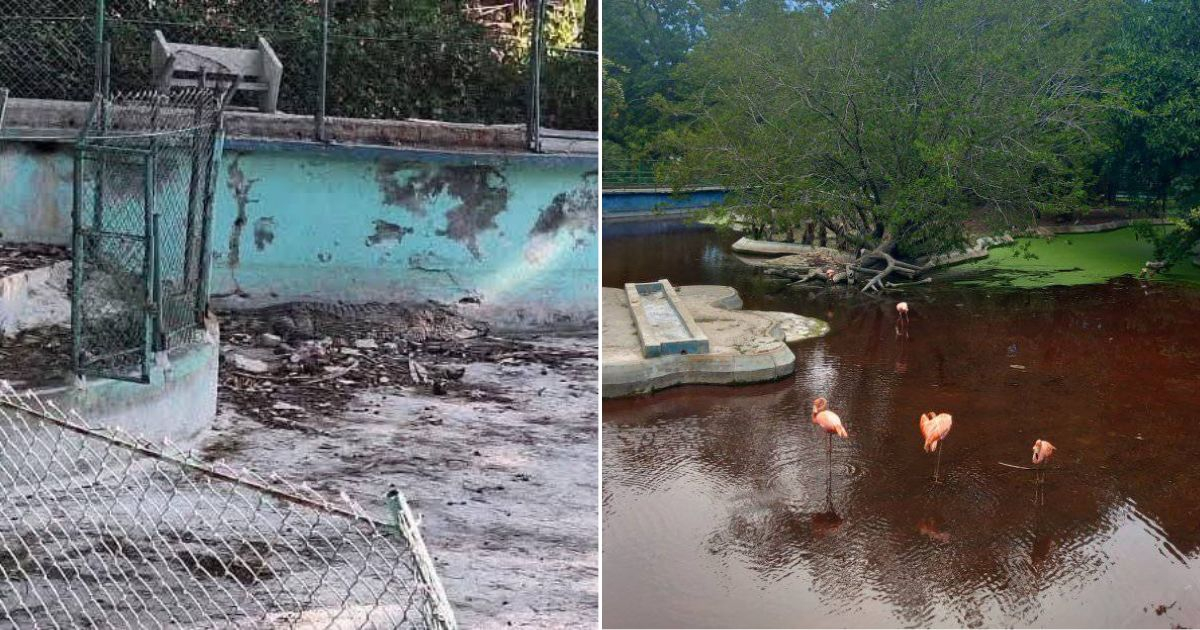
The deterioration of public spaces in Cuba is as visible as it is inevitable: tall weeds, rusty facilities, almost nonexistent services, and unaffordable prices.
However, for some journalists in the official press, the disaster still comes as a surprise.
In an article published in the newspaper Juventud Rebelde, reporter Yuniel Labacena Romero claimed to be shocked after visiting the Zoo of 26 and the Forest Park, popularly known as the Dinosaur Park, both located in Havana.
According to the description, he found broken devices, empty cages, faded structures, overgrown grass "up to the chest," and a sense of neglect that contrasts with the laughter of the children who, despite everything, seek to have fun.
The journalist regretted that recreational spaces, particularly those intended for children and teenagers, “have lost their charm” and today are a reflection of a deterioration that goes “beyond the material”.
To illustrate the magnitude of the disaster, he noted that the famous dinosaurs seem to have undergone “some cataclysm, not precisely natural,” and that the trees that once emitted sounds now convey nothing but neglect and frustration.
Beyond the physical condition of the parks, Labacena also pointed to the lack of affordable consumer options, in a context where private companies dominate the market with exorbitant prices and no guarantees of quality.
"Who is expected to provide better customer service and reasonable prices?" she asked, shifting the responsibility to a supposed lack of coordination between the state sector and the new private actors.
The journalist acknowledged that the country is going through an "extremely difficult" economic situation and blamed the U.S. embargo for the lack of investments, although he admitted that this does not justify negligence and a lack of care.
Nevertheless, his "discovery" about the abandonment of parks and zoos surprised many readers, who have been accustomed for decades to living with collapses, blackouts, inflation, and crumbling public services.
While the official press speaks of resignation and the need to maintain "passion and will" to reclaim spaces, the sentiment on the streets is quite different: the parks in Cuba are not only a reflection of the lack of maintenance, but also of the absence of a State capable of guaranteeing the most basic needs.
The astonishment of the official journalist about the silent dinosaurs and the empty cages seems to come too late: the ruin is no longer news, it's routine.
Frequently asked questions about the status of zoos and parks in Havana
What is the current state of the 26 Zoo in Havana?
The 26 Zoo in Havana is in a state of disrepair, with deteriorating facilities, empty cages, and malnourished animals. The lack of maintenance has led to rusty structures and dry ponds, creating an atmosphere of neglect that is evident to visitors.
What do visitors think about the Dinosaur Park in Havana?
Visitors, such as journalist Yuniel Labacena Romero, have expressed surprise and disappointment over the deterioration of the Dinosaur Park. The facilities are peeling, and the structures that were once attractive now reflect a state of neglect and lack of maintenance.
How has the Cuban population reacted to the state of parks and zoos?
The Cuban population has reacted with indignation and criticism regarding the state of parks and zoos in Havana. Social media reflects the widespread discontent, where citizens report the lack of attention and care for these spaces by the government, while pointing out the absence of resources for both humans and animals.
What factors contribute to the deterioration of recreational spaces in Cuba?
The deterioration of recreational spaces in Cuba is due to a combination of lack of maintenance, insufficient resources, and negligence. Although the U.S. embargo is often cited as a limiting factor for investment, many Cubans feel that poor management and the government's lack of priority towards the care of these spaces also play a crucial role in their decline.
Filed under: