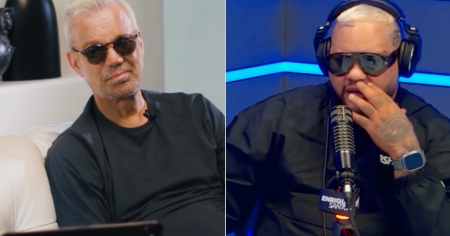
The popular Mexican YouTuber Luisito Comunica, one of the most-followed content creators in the Spanish-speaking world, granted an interview to the host Enrique Santos in which he candidly discussed his recent visit to Cuba in April of this year and his experience during the filming of the documentary This Is Cuba.
During the conversation, Luisito expressed what surprised him the most while traveling around the country: “What impacted me the most, this is my personal opinion, is seeing how many people, really, how many people in Cuba wholeheartedly support the entire system of government and the way of life. Truly, a lot of people defend it.”
The influencer explained that this viewpoint seemed more common among older generations: “I feel that perhaps among the younger population, with greater access to social media, they have a different opinion. But when you talk to people aged 30 and above, they defend it. That surprised me a bit. From the outside, we have a different perception.”
However, Luisito also made room for nuances and acknowledged the beauty of the island: “I will tell you that in many ways it is a beautiful, warm, and welcoming country, and in many others it is a country that is quite frightening.” He added that this fear is related to “the devastating effects of a doctrine that has been in play and practice for far too many years.”
The documentary This Is Cuba sparked a heated debate on social media by presenting a stark image of the country: from blackouts and connectivity issues to low wages, shortages in stores, and rationed gasoline.
With this production, Luisito Comunica offers a direct look at life on the island, without embellishments or censorship, showcasing both its warmth and its harshest contrasts.
The first video of This Is Cuba, published at the end of April on Luisito Comunica's YouTube channel, has already amassed nearly 30 million views. The documentary series sparked significant international attention by showcasing the everyday life of Cubans amidst shortages, blackouts, and the widespread deterioration of the country. Luisito stated that, despite the limitations of the trip, he tried to directly document what he saw and felt.
The interview with Enrique Santos also generated hundreds of comments on YouTube, eliciting mixed reactions. Some users expressed doubts about the authenticity of the interactions Luisito had on the island, suggesting that he might have been surrounded by people chosen by the authorities. Others questioned his statement that a significant part of the population supports the regime, arguing that the fear of reprisals influences what many dare to say in front of a camera. There were also those who appreciated his intention to show what he saw from his perspective, highlighting his respectful and measured tone. The debate remains open, reflecting the sensitivity and complexity involved in discussing the Cuban reality.
Frequently asked questions about Luisito Comunica's visit to Cuba
What aspects of Cuba impacted Luisito Comunica the most during his visit?
What struck Luisito Comunica the most was the number of people who defend the Cuban government system, especially among the older generations. Additionally, he was surprised by the conditions of scarcity, the frequent blackouts, and the widespread deterioration of the country, contrasted with the warmth and resilience of the Cuban people.
What has been the reaction to Luisito Comunica's videos about Cuba?
Luisito Comunica's videos about Cuba have generated mixed reactions. While some appreciate his effort to showcase the Cuban reality, others criticize that his perspective may be biased or superficial. The images of scarcity and decay have sparked gratitude from Cubans, but also criticism from those who believe he has idealized certain aspects.
Filed under: