
Related videos:
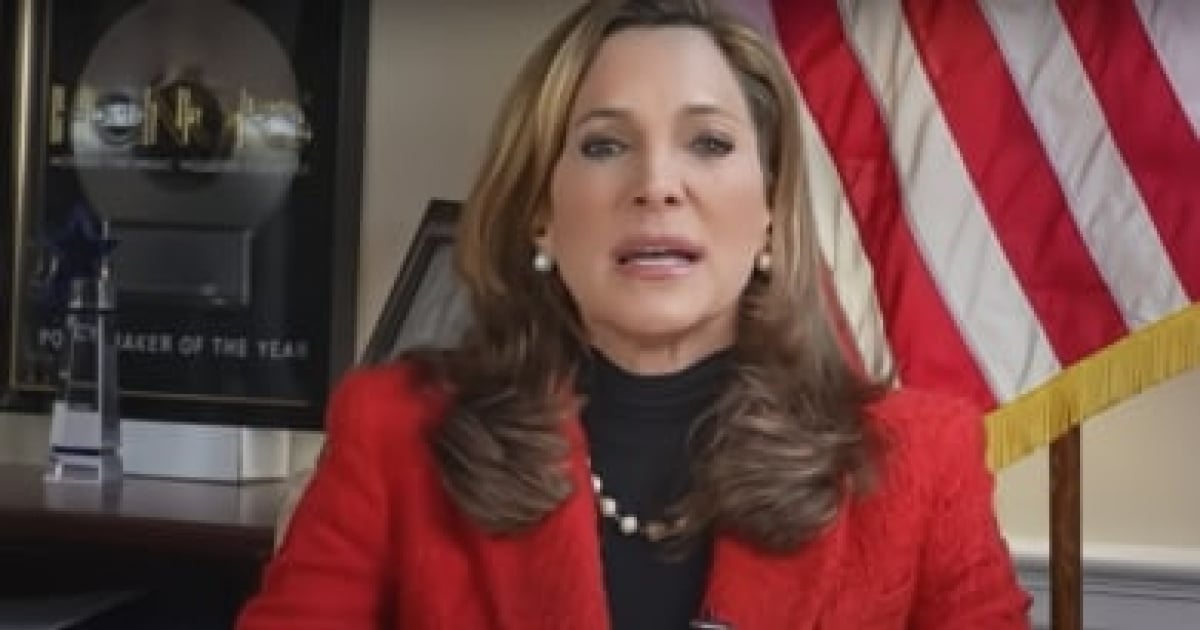
Cuban-American Congresswoman María Elvira Salazar asserted this Saturday that "the circle is closing around the narco-dictator Maduro," referring to the increasing international pressure against the Chavista regime and regional coordination in the fight against narco-terrorism.
In a message posted on her X account (formerly Twitter), the Republican legislator from Florida emphasized that “Latin America unites because stopping its narco-dictatorship is key to the security and democracy of the hemisphere. We all know that Maduro is not a president, he is the head of the Cartel of the Suns and a narco-terrorist who exports drugs, violence, and misery.”
Salazar expressed gratitude for the leadership of the President of the United States and Senator Marco Rubio, stating that the freedom of Venezuela and the region "is closer."
The congresswoman's statements come shortly after the government of Guyana expressed its "deep concern" over the threat posed by transnational organized crime and narco-terrorism in the region, directly mentioning Venezuela's Cartel of the Suns, which has been designated as a terrorist organization by several countries.
In an official statement, Georgetown warned that these criminal networks have the capacity to "overwhelm state institutions, undermine democracy, pervert the rule of law, and threaten human dignity and development."
President Mohamed Irfaan Ali reiterated his country's commitment to work with regional and global partners to address this common threat.
In parallel, Nicolás Maduro announced the deployment of 4.5 million militia members to "confront the threats" from Washington, in a speech characterized by a militaristic tone and the promise to arm farmers and workers as part of the Bolivarian Militia.
The announcement comes after the U.S. increased the reward to $50 million for information leading to the capture of the Venezuelan leader, who is accused in Washington of leading the Cartel of the Suns and facilitating drug trafficking alongside criminal networks such as the Tren de Aragua and the Sinaloa Cartel.
Frequently Asked Questions About the Situation in Venezuela and María Elvira Salazar's Position
Why does María Elvira Salazar label Nicolás Maduro as a "narco-dictator"?
María Elvira Salazar refers to Nicolás Maduro as a "narco-dictator" due to his alleged leadership of the Cártel de los Soles, an organization accused of narco-terrorism and drug trafficking. Salazar argues that Maduro is not a legitimate president, but rather the leader of a criminal cartel that threatens security and democracy in Latin America.
What actions is the United States taking against the Maduro regime?
The United States has increased pressure on the Maduro regime through economic sanctions, heightened rewards for his capture, and military deployment in the region. The administration of Donald Trump has labeled the regime as a narco-terrorist cartel and is prepared to use all U.S. power to curb drug trafficking.
How is the international community reacting to the Maduro regime?
The international community has expressed increasing concern about the Maduro regime, with several countries labeling the Cártel de los Soles as a terrorist organization. Guyana, for example, has voiced its concerns about the impact of narco-terrorism in the region and has expressed its commitment to working with allies to address this common threat.
What measures is the Venezuelan regime taking in response to international pressure?
In response to international pressure and threats of intervention, Nicolás Maduro has announced the deployment of 4.5 million militiamen to "confront the threats" from Washington. This move is part of a militaristic strategy aimed at strengthening the Bolivarian Militia and arming peasants and workers in defense of the regime.
Filed under: