
Related videos:
Five of the companies hired by Florida to build and operate the immigration detention center known as Alligator Alcatraz, located in the Everglades, are linked to allegations of fraud, overpricing, and misappropriation of public funds, according to a report by the Miami Herald.
The revelations arrive at a critical moment: just days after a federal judge ordered the permanent closure of the camp due to “irreparable” environmental damage and amid several lawsuits for violations of the rights of migrants detained there.
Companies under scrutiny
The report points to SLSCO, a Texan contractor that in 2019 had already handled more than $1.4 billion in federal contracts for the construction of the border wall. The company was accused of
Alongside SLSCO is Garner Environmental Services, noted for billing for services far above what the city of New York or other contractors for similar functions were paying.
Another company involved is IRG Global Emergency Management, which signed multi-million dollar contracts for transportation and emergency services in Alligator Alcatraz. Its executives have been linked to companies sued for inflating insurance claims after hurricanes in Florida, Texas, and Louisiana, a case that concluded with an out-of-court settlement this year.
The Canadian conglomerate GardaWorld, responsible for logistical support, also faces complaints: an investigative report revealed that its armored trucks were involved in dozens of fatal accidents due to mechanical failures and poorly trained drivers.
Finally, CDW Government, a supplier of electronic equipment for the center, acknowledged that it is under investigation by the Department of Justice for alleged fraud in federal contracts. In 2013, it had already paid $5.6 million to settle a similar case involving the sale of products manufactured in prohibited countries such as China.
Neither the office of Ron DeSantis nor the Florida Division of Emergency Management responded regarding what controls were applied before awarding these contracts. The only official explanation was that the complete files were removed from the public portal for containing "proprietary information."
A center surrounded by controversies
The revelations about the contractors reinforce the image of a project characterized by opacity and complaints since its inauguration in July 2025.
Before the ruling by Judge Kathleen Williams, who ordered the dismantling of the camp within a maximum of 60 days, the site had already accumulated legal battles.
One of them was initiated by civil rights lawyers, who reported that migrants were pressured into signing deportation orders without access to legal representation. In previous hearings, it was reported that detainees communicated with their defenders during non-confidential video calls, under the supervision of staff.
Another area of litigation has emerged with the environmental lawsuits from the Miccosukee tribe and environmental organizations, which successfully obtained temporary suspensions of the construction by claiming that the center violated federal laws and endangered protected species.
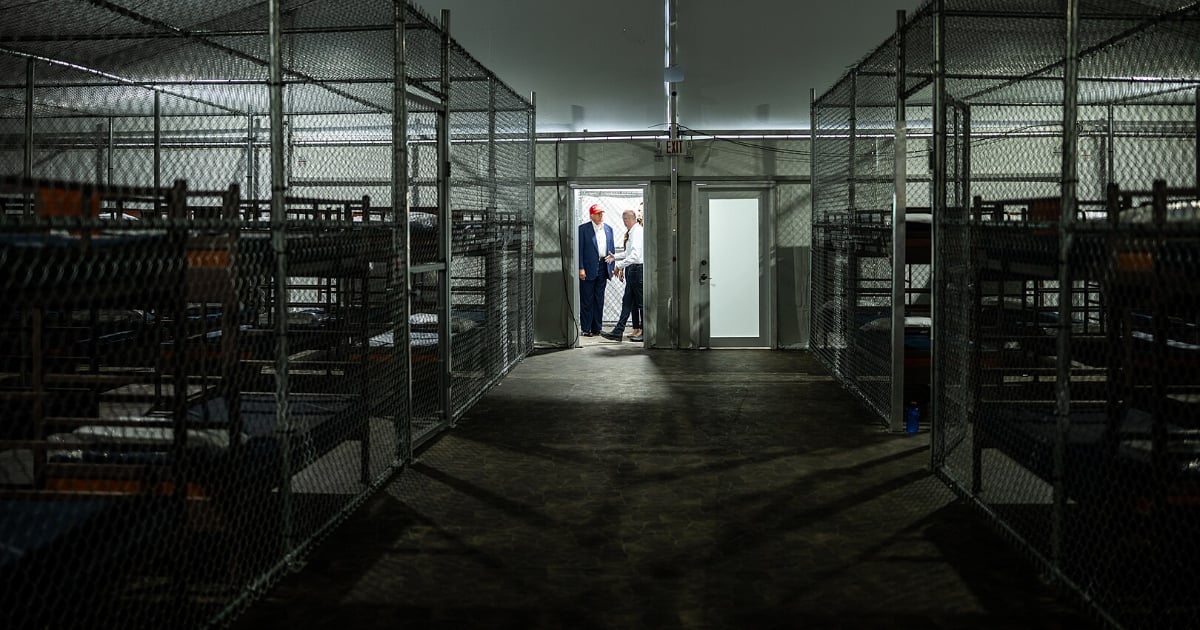
The testimonies of migrants and lawyers described inhumane conditions: tents without ventilation, food infested with worms, collapsed restrooms, constant electrical failures, and swarms of mosquitoes, all in an environment of extreme heat.
A questioned model
Despite these complaints, Governor DeSantis defended the project as part of his strategy for tightening immigration controls and even announced a second center at a military base in northern Florida. Both he and Donald Trump presented Alligator Alcatraz as a reference model for future facilities.
However, the accumulation of judicial rulings, reports of abuse, and now revelations about contractors with shady backgrounds call into question the state management of the center.
For environmentalists and Indigenous people, the closure of Alligator Alcatraz is a historic victory. For civil rights advocates, the allegations of fraud and corruption against the companies demonstrate that the prison not only violated environmental and humanitarian laws but also fueled a web of opaque businesses in the name of immigration security.
The immediate future points to a prolonged legal battle in federal courts, but the political outcome is clear: the project that was once showcased as a symbol of immigration control in Florida has become an emblem of irregularities, abuses, and opacity.
Filed under: