
Related videos:
A drug dealer was arrested in Old Havana amid the government's efforts to address the crisis of drug trafficking and substance abuse.
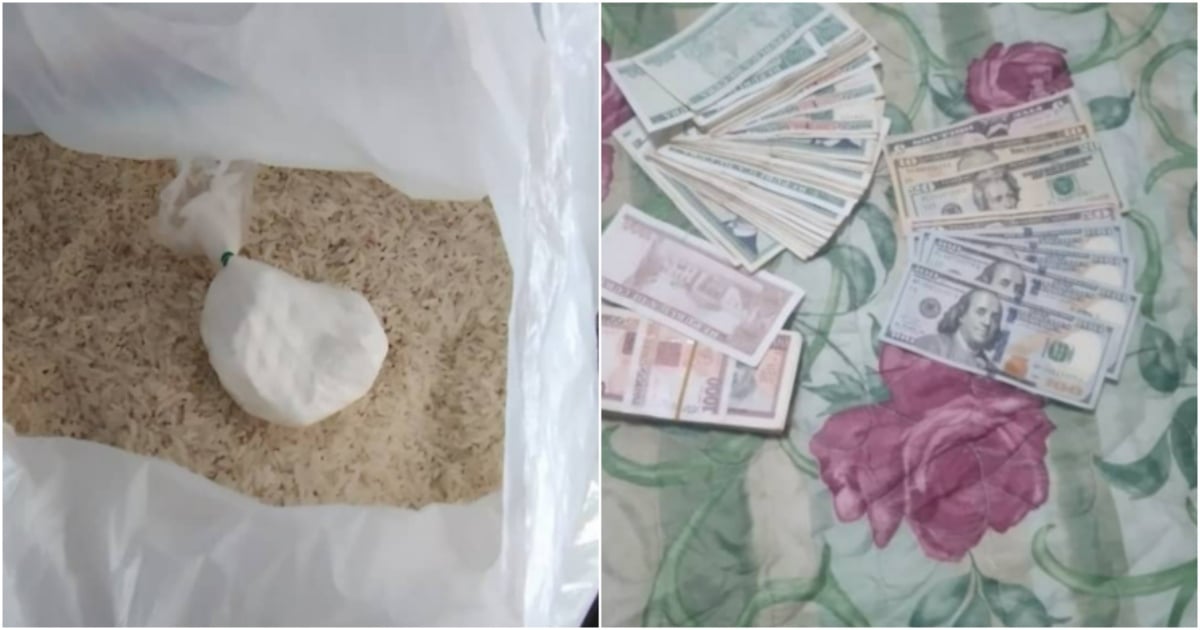
“MININT agents deployed in the area managed to capture him, seizing cocaine along with a sum of cash,” reported the anonymous profile linked to official propaganda Elizabeth Ferrer.
The publication, which did not specify the date of the seizure, included images of the confiscated merchandise and money.
On Thursday, a man and a woman, whose identities have not been revealed, were arrested in a police drug raid in the Buenavista neighborhood, Playa, according to the same source.
The operation carried out by agents of the Anti-Drug Agency along with other forces from Minint took place on 62nd Street, between 25th and 27th Avenues, and "is part of ongoing efforts to combat the trafficking of illegal substances in the community," the statement indicated.
"The individuals involved now face legal consequences for their actions, in a clear message that impunity will not be tolerated when it comes to protecting the health and safety of the youth," he warned.
The text stated that Cuban authorities "remain committed to continuing efforts to eradicate these practices and ensure a safer environment for everyone."
In light of the increase in trafficking and consumption of "crystal" and other drugs among youth across the country, the regime has intensified its efforts to curb this alarming phenomenon with systematic police operations, which have resulted in dozens of arrests in Havana and other provinces, along with the toughening of penal regulations against those responsible for these crimes.
On Wednesday, the same source reported the arrest of two more individuals for the distribution of the "chemical" in the Centro Habana municipality, near El Curita park, an area noted as a common point for drug consumption and trafficking.
In recent months, exemplary trials have taken place, in which penalties of up to 20 years in prison have been imposed for possession and sale of narcotics.
In February, the Ministry of Justice announced the creation of the National Drug Observatory (OND), featuring an early warning system to identify new substances and monitor trends in consumption and trafficking, with the support of the Police and Customs.
Frequently Asked Questions about Drug Trafficking in Cuba
How does the Cuban government act against drug trafficking?
The Cuban government has intensified police operations and increased penalties to combat drug trafficking. Anti-drug operations have been carried out resulting in multiple arrests and seizures of narcotics. Additionally, exemplary trials have been conducted with sentences of up to 20 years in prison for those involved in drug trafficking. This is part of a broader strategy that includes the establishment of the National Drug Observatory to monitor trends and emerging substances.
What is "the chemist" and why is it a concern in Cuba?
"The chemical" is a synthetic drug known as a synthetic cannabinoid that mimics marijuana but with much greater potency and toxicity. Its use has increased in Cuba, particularly among young people, due to its low cost and easy accessibility. It can cause severe side effects such as extreme hallucinations, convulsions, and, in severe cases, death. The concern over this drug has led the regime to ramp up operations and penalties to curb its circulation.
What are the legal consequences for those who traffic drugs in Cuba?
The legal consequences for those who traffic drugs in Cuba are severe. They may face sentences of up to 20 years in prison, a ban on leaving the country, and the confiscation of assets. Authorities have intensified repressive measures and police operations in various municipalities, emphasizing their "zero tolerance" stance on drug trafficking. The regime has indicated that penalties could increase to up to 30 years in prison, life imprisonment, or even the death penalty, depending on the circumstances of the offense.
How does drug trafficking affect Cuban society?
The drug trade has a significant impact on Cuban society, especially among the youth. The increase in the consumption of synthetic drugs like "el químico" has raised concerns about public health and safety. Furthermore, this phenomenon has extended to minors and has affected schools, prompting authorities to reinforce their "zero tolerance" message and intensify police operations. The situation reflects the social and economic crisis facing the country, contributing to an environment of insecurity and social discontent.
Filed under: