
Related videos:
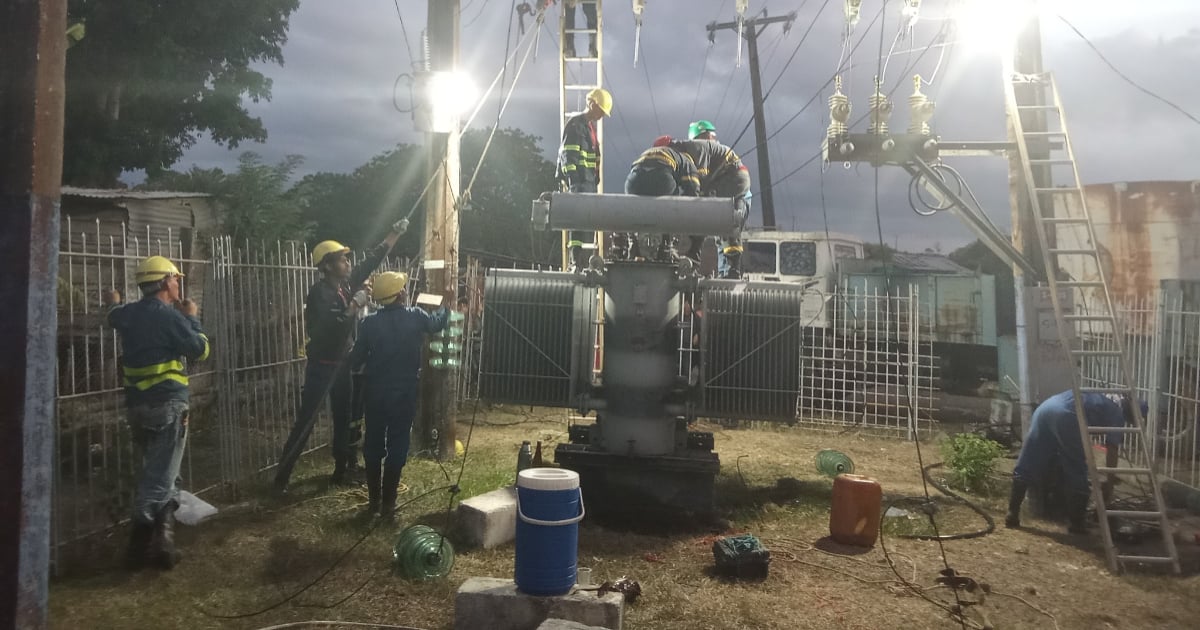
The outrage and exhaustion have taken over the small town of Jíquima de Peláez, in the municipality of Cabaiguán, Sancti Spíritus, where residents have gone for more than seven consecutive days without electricity, without water, and practically cut off from communication, after a lightning strike destroyed the transformer of the local substation.
“My people are desperate and very overwhelmed”, a resident told CiberCuba on condition of anonymity, who asked to make the situation public so that “those who need to act do something about it as soon as possible.”
In the town, as in all of Cuba, there are children, the elderly, and cancer patients, many bedridden, and families living in extreme poverty, who are not prepared to face a blackout of this magnitude. Without refrigeration, food has spoiled, homes remain in darkness, and the lack of water pumping further exacerbates daily life.
Frustration is reflected in the messages sent to our editorial team. “If the power is not restored, there will be an uproar... a scream will resound, with it Cuba will speak”, wrote a neighbor in a poem dedicated to the memory of a deceased relative, transformed into a collective outcry against indifference.
"We feel abandoned. No leader comes by here even for a minute to see our needs and hardships," denounced that same resident.
Unfulfilled promises and institutional neglect
Although a local official announced days ago that a transformer sent from Havana would resolve the outage affecting nearly three thousand people, the service has not been restored. Neighbors claim that the installed equipment did not work and that the Electric Company does not provide specific timelines or immediate solutions.
The sense of helplessness is compounded by the fact that this is not the first time it has happened. In May, the Electric Company of Sancti Spíritus reported a similar incident at the same substation in Jíquima de Peláez, which confirms that this is not an isolated event, but rather a recurring issue that has been poorly managed.
Frequently Asked Questions about the Energy Crisis in Cuba
Why has the town of Jíquima de Peláez been without electricity for more than seven days?
The prolonged blackout in Jíquima de Peláez is due to a lightning strike that destroyed the local substation transformer. Although the authorities promised to send a new transformer from Havana, the installed equipment failed to function, and electricity service has not been restored. Currently, residents are facing a complete lack of electricity, water, and communication, which exacerbates the vulnerability situation in the town.
How does the energy crisis affect the daily lives of Cubans?
The energy crisis in Cuba seriously impacts the daily lives of citizens. The lack of electricity leads to food loss due to the absence of refrigeration, hampers access to water, and disrupts rest and educational activities. In areas where blackouts are prolonged, such as Sancti Spíritus or Santiago de Cuba, the situation is even more critical, also affecting the health and safety of individuals.
What measures has the Cuban government taken to address the energy crisis?
The Cuban government has attempted to address the energy crisis by installing photovoltaic solar parks and promoting the use of renewable energy sources. However, these measures have had a minimal impact due to the lack of batteries to store the generated energy and the dependence on fossil fuels. The national electrical system remains collapsed, and the promises of improvement have not materialized into effective and sustainable solutions.
What do citizens think about the management of the energy crisis in Cuba?
Cuban citizens express deep discontent with the government's handling of the energy crisis. The population denounces the lack of transparency and coherence in the planning of blackouts, as well as the abandonment and institutional indifference towards their basic needs. Frustration is evident in protests and open criticism on social media, where a real and responsible solution to the situation is demanded.
Filed under: