
Related videos:
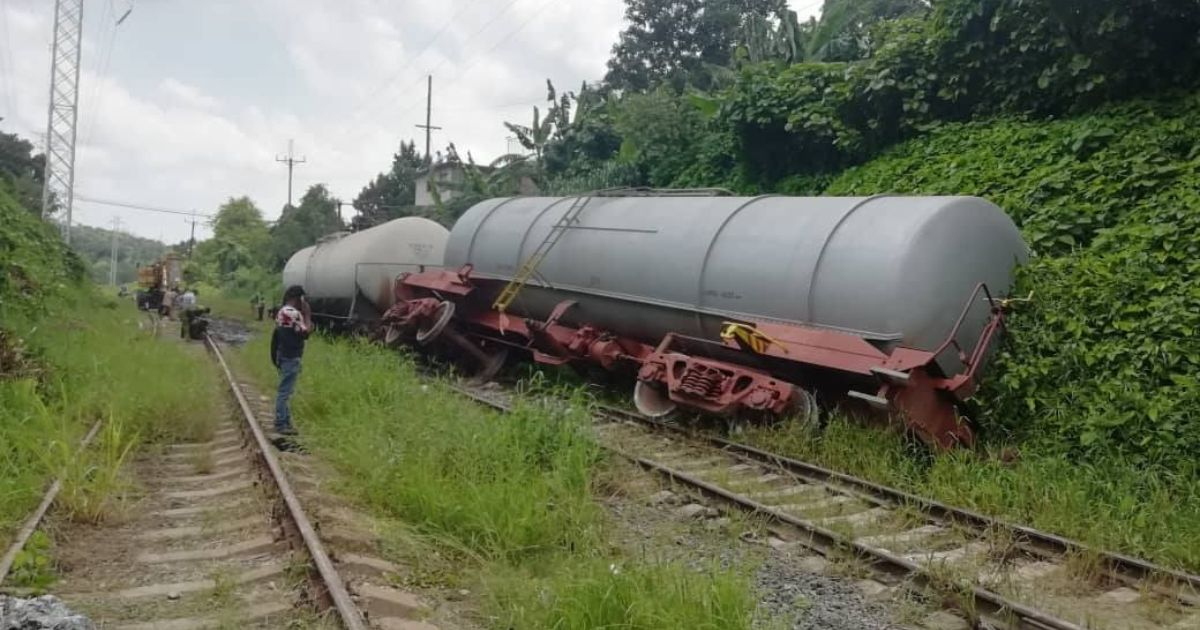
In 2024, a 14% reduction in railway accidents was reported in Cuba, although fatal incidents such as pedestrian collisions continue, with 17 recorded deaths.
The Cuban Minister of Transport, Eduardo Rodríguez Dávila, stated this Saturday on his Facebook account that railway accidents decreased in Cuba during 2024, closing the year with 137 incidents related to train movement safety, compared to the 160 reported in 2023.
The 14% reduction, according to the minister, demonstrates that the railway “remains a safe means of transport in Cuba”, despite the operational and logistical challenges faced by the national railway system.
One of the most alarming statistics is the figure of 20 incidents of pedestrians being struck in 2024, which resulted in 17 fatalities.
This is compounded by collisions at level crossings and incidents involving livestock, which continue to occur despite preventative measures.
Rodríguez also noted that many of the reported incidents were minor issues that were quickly resolved.
However, the minister acknowledged that the economic damage caused by the accidents exceeded 6.6 million Cuban pesos, impacting both the infrastructure and rolling stock.
Furthermore, he emphasized that the causes of accidents are due to both internal errors within the railway system and external factors.
“The work on maintaining the tracks, the discipline of railway personnel, and the coordination with communities to prevent animals from entering the railway lines are urgent tasks,” indicated the official, who also mentioned the collision that occurred in December on the Central Line, in Cabaiguán, as an example of the impact of human errors on traffic management.
The minister highlighted that the levels of railway accidents remain relatively low compared to other modes of transportation, thanks to actions such as surprise inspections, staff training, and control measures.
In the midst of one of the worst transportation crises in Cuba, the government has announced the restoration of the train that connects the Luyanó Terminal with the Expocuba fairgrounds, a service that ceased operation years ago due to the deterioration of the infrastructure and lack of maintenance.
The Minister of Transportation, Eduardo Rodríguez Dávila, reported on Facebook that specialized brigades have been working for months on the rehabilitation of the railway tracks, while technical adjustments are being made to the cars that will be used for the journey at the workshops in Ciénaga.
Frequently asked questions about the railroad situation in Cuba and the reduction of accidents in 2024
How has the number of railway accidents in Cuba changed during 2024?
Railway accidents in Cuba decreased by 14% in 2024, dropping from 160 incidents in 2023 to 137 in 2024. However, instances of pedestrian strikes continue, with 17 deaths recorded during the year.
What problems does the Cuban railway system currently face?
The Cuban railway system faces serious technical and operational limitations, such as a shortage of spare parts and the deterioration of rolling stock. Furthermore, only 63% of the planned cars were operational in 2024, leading to delays and irregularities in the schedules.
What measures are being taken to improve railway safety in Cuba?
To enhance railway safety, the Cuban government has implemented surprise inspections, training for personnel, and control measures. In addition, tasks such as track maintenance, discipline among railway staff, and coordination with communities to prevent animals from entering the railway lines are being prioritized.
How do railway accidents affect the Cuban economy?
Railway accidents have a negative impact on the Cuban economy by causing significant economic damages, exceeding 6.6 million Cuban pesos in 2024. These incidents affect both the infrastructure and the rolling stock, further complicating the country's economic situation.
Filed under: