
Related videos:
The United States intensified its military presence in the Caribbean on Tuesday by sending a fast-attack nuclear submarine and a missile-launching cruiser, in an operation that the White House describes as part of the offensive against regional drug trafficking. However, analysts directly link it to the pressure on the regime of Nicolás Maduro.
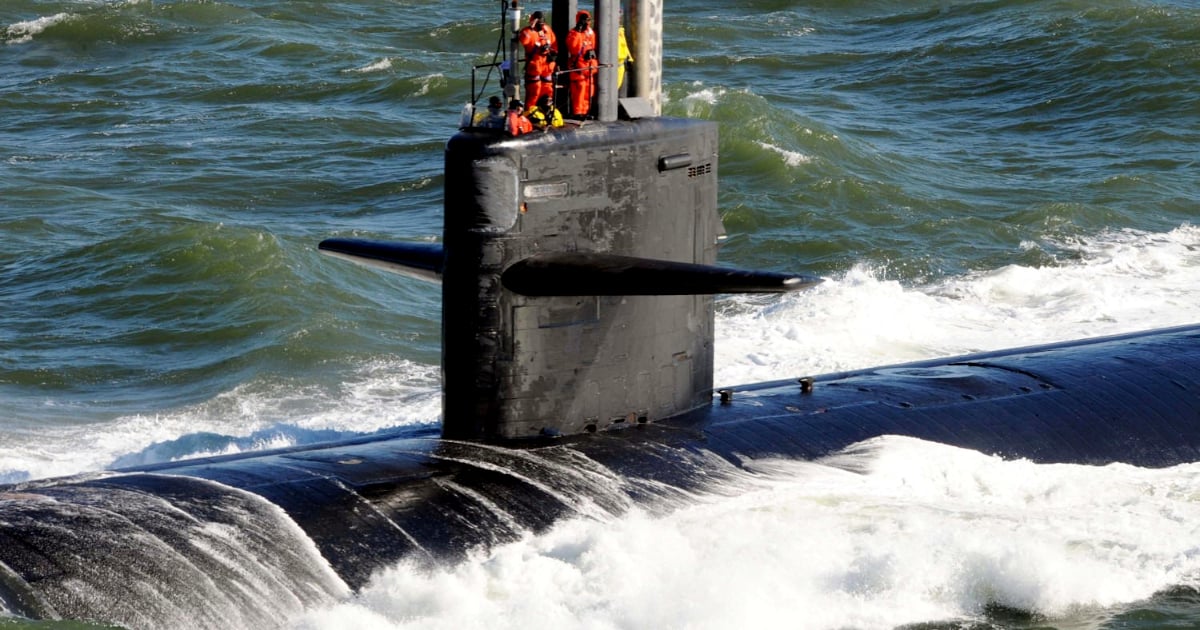
According to the agency Reuters, the USS Lake Erie, a guided missile cruiser, and the USS Newport News, a Los Angeles-class nuclear submarine, will arrive off the coast of Venezuela early next week.
Both will be added to a naval force that already includes three Arleigh Burke-class destroyers (USS Gravely, USS Jason Dunham, and USS Sampson) and an amphibious squadron with 4,500 personnel, including 2,200 Marines.
The deployment responds to President Donald Trump's strategy of intertwining the fight against drugs with national security. “President Trump is prepared to halt drug trafficking and bring those responsible to justice,” his spokesperson Karoline Leavitt recently stated.
The official described Maduro as the leader of a "narcoterrorist cartel" and recalled that Washington is offering a $50 million reward for his capture.
Large-scale operation
The Pentagon has not specified the exact mission of the new units, although defense sources cited by Reuters and CNN confirmed that the operation includes tasks such as intelligence gathering, air and maritime patrols, monitoring drug trafficking routes, and even the possibility of selective strikes if given the green light from the White House.
The operation also involves the deployment of P-8 Poseidon aircraft specialized in tracking submarines and fast vessels, as well as other warships. According to consulted officials, the process will extend over several months and will be adjusted based on the evolution of threats.
The Cartel of the Suns and International Pressure
Washington insists that the Cartel de los Soles, a network of military personnel and Venezuelan officials accused of trafficking cocaine to the United States and Europe, is under the direct command of Nicolás Maduro and his inner circle.
In July, the Department of State included it in the list of global terrorist organizations, along with Tren de Aragua, which expanded legal tools to pursue its members.
The message from the Pentagon is clear: Venezuela, under chavismo, has become a narco-state that poses a direct threat to U.S. and regional security.
Risk of escalation
The deployment of the nuclear submarine and the missile cruiser significantly enhances the offensive capability of the fleet stationed in the Caribbean. Although it is officially framed as a counter-drug operation, the magnitude of the deployment fuels fears that it could lead to a direct confrontation with Caracas.
“United States will not allow cartels to use Venezuela as a platform,” stated a government official quoted by Reuters, amid an atmosphere of rising tension reminiscent of the events in Panama in 1989.
While Maduro denounces an "imperial conspiracy" and mobilizes millions of militia members in his territory, the region watches closely as the Venezuelan crisis becomes a critical point in continental geopolitics.
Filed under: