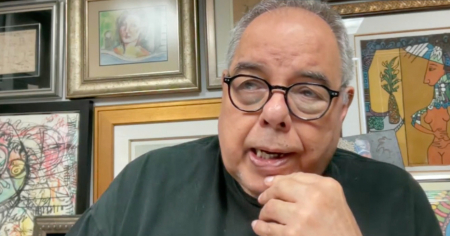
His name is Fernando Fuertes Muñoz. He entered the United States three years ago through the border and was given an I-220A. On August 4th, he had a court hearing where the judge dismissed his asylum case, and agents from Immigration and Customs Enforcement (ICE) detained him upon leaving the courthouse. Since then, he has been held in the Glades County Detention Center.
The news hit Cuba's family like a cold shower. From Havana, her sister, Milena Fuertes Muñoz, calls on all Cubans who are in a stable financial situation to contribute to the fundraising she has organized to pay the lawyer handling the case. (If you want to help, click here).
Last Friday, Fernando Fuentes Muñoz underwent a credible fear interview, but the ICE agent who attended to him decided to deny it. The defense filed a motion the next day, on Saturday, to have his case reconsidered. As of today, they are awaiting a decision.
The sister asserts from Havana that Fernando Fuertes Muñoz fled Cuba after encountering issues with the government, which makes her fear that he will be imprisoned if he is deported. "What will he do for work here?" she asks, visibly distressed.
According to Milena Fuertes, in statements to CiberCuba, the 33-year-old young man entered the United States in 2022 after leaving the Island and flying to Nicaragua, from where he crossed borders to gain entry into the U.S. Like many other Cubans, he left with an I-220A. At the time of his arrest, he was working as a welding blacksmith.
The I-220A immigration status leaves thousands of Cubans in legal limbo. Although lawyer Willy Allen believes that in the end everyone will be legalized, he admits there will be casualties along the way, and Fernando Fuertes Muñoz is one of them today.
In December of this year, the arguments that the judges will use to decide whether the I-220A is a parole are expected to be ready. The ruling could be announced in January, and if that ruling indicates that Cubans with an I-220A can be paroled, the next day, regardless of whether the Trump Administration appeals the decision, they can apply for the Cuban Adjustment Act. Most have been in the United States for more than a year and a day, making them eligible.
That decision is just around the corner, but time is running against Fernando Fuertes. Hence the desperate plea from his sister, asking for even the smallest help. "It doesn’t matter if it's one peso. We will be grateful for everything equally," she said in a video sent from Havana to this platform.
Your case shows that the detentions of I-220A continue, despite the intervention by Congresswoman María Elvira Salazar, who claims to have the magic wand in her Dignity Act to legalize the status of I-220A.
Filed under: