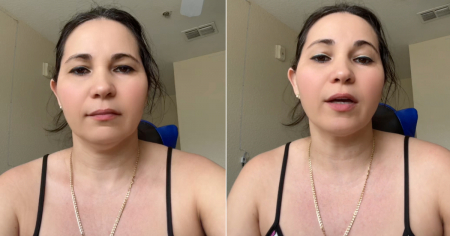
Immigration expert attorney Willy Allen Jr. has firmly asserted that I-220A forms are "in practice, a parole." In statements to CiberCuba, he recalled that arguments regarding whether I-220A forms constitute a legal entry are expected to be ready by October in the Federal Civil Court, and a more definitive decision on I-220A is likely to be reached by January 2026.
In response to CiberCuba's question about how long the journey for I-220As is until they achieve legal status, Allen Jr. stated that those who entered through Mariel had to wait 8-9 years for legalization, but he does not believe the same will happen with the I-220As.
His father, the prestigious lawyer Willy Allen, is convinced that sooner or later the I-220A will be legalized and he believes that, indeed, this will happen. In fact, he is convinced that the delay in accepting that the I-220A is a parole depends largely on "the times we are living in now," and "the pressure that this government and this administration can exert on the judges."
"I can't say for sure, but I also have a great deal of faith that sooner or later the I-220A cases will be regularized. We have been waiting for years for this, but as Willy Allen always says, those who entered with Mariel had to wait 8 or 9 years to be legalized. I believe it won't take as long for the I-220A cases because, supposedly, we don't have a specific date, but I trust that by October the final arguments will be presented in the Eleventh Circuit Court of Appeals, the Federal Civil Court for the region that includes Florida, and essentially based on those arguments, they will decide whether the I-220A cases were a legal entry or not. So if those arguments are in October, the decision shouldn't take more than three or four months, and we hope that by January there will be a more concrete decision regarding the I-220A cases."
Additionally, the lawyer reminds us that the Matter of Q. Li is also another assistance for the I-220A because if the judges apply it to deny bonds, then they must also apply it to conclude that the I-220A is a parole. "So, in the end, it will benefit the 220-A," he said.
Like his father, Willy Allen Jr believes that the I-220A entries into the United States were inspected and admitted, which in practice is a parole that allows Cubans to apply for the Cuban Adjustment Act after a year and a day of being in the United States. Additionally, he recalled that there were cases where families were entering through the Mexican border, with the mother and children receiving a parole, while the father was given an I-220A. "That makes no sense," he emphasized.
Filed under: