
Related videos:
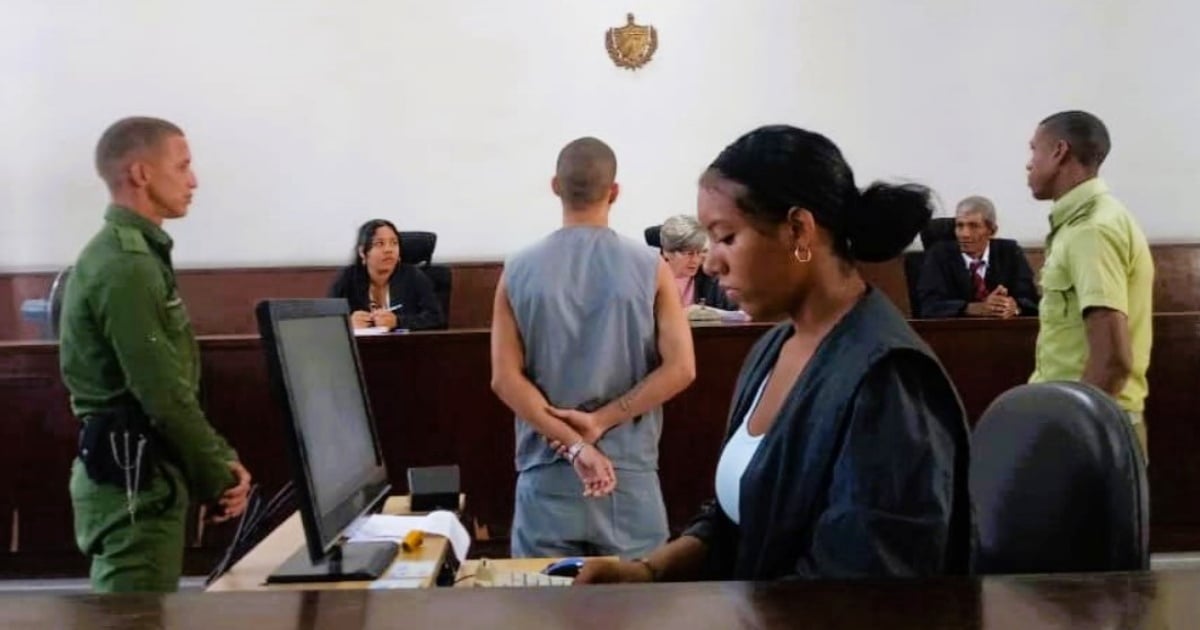
A Cuban citizen, residing in Suriname since 2022, was sentenced to 13 years in prison in Santiago de Cuba for international drug trafficking, after 300 grams of cocaine were found in a bicycle saddle he was carrying in his luggage.
However, her sister, Yaidarys Rodríguez Avilés, has reported numerous irregularities in the judicial process and asserts that this is an "unjust sentence" issued without the minimum guarantees of defense.
Official version: “exemplary” trial amid anti-drug campaign
According to the post from the Facebook profile Héroes del Moncada, the trial was conducted “in an exemplary manner, in the context of the Operation against Drugs taking place throughout the country.”
The 33-year-old man was arrested at Antonio Maceo International Airport in Santiago de Cuba when authorities discovered the drugs hidden inside a bicycle seat.
According to this version, the passenger "had received goods in their luggage from a person in Suriname" and for transporting them received 84 dollars.
The drug—300 grams of hydrochloride cocaine with 95% purity—was found after a more thorough inspection.
The person who was supposed to receive the shipment in Cuba "was not identified."
The Prosecutor's Office accused him as the perpetrator of the crime under Article 20.1.2(a) of the Penal Code, which holds responsible those who carry out the act directly.
Specifically, he was sentenced for illegal drug trafficking according to articles 235.1 a) and 2, subsections c) and g), which stipulate penalties of up to 30 years, life imprisonment, or death in aggravated cases.
Although it was acknowledged that the accused had no prior criminal record or previous connections to drugs, he was sentenced to 13 years in prison along with additional penalties, such as the deprivation of rights and the confiscation of property.
The sister's report: "She was the victim of a trap."
Yaidarys Rodríguez, sister of the convicted individual, published an extensive testimony denouncing a trial plagued by irregularities and an “incomplete and biased” account of the events. She asserts that her brother was the victim of a setup and that he was never aware that he was transporting drugs.
"During the trial, the court denied the admission of witnesses and evidence that would have demonstrated my brother's diligence and responsibility," he said.
Among those witnesses were individuals who witnessed the delivery of the saddle and who would have stated that “the object was in perfect condition and showed no signs of containing anything suspicious.”
According to Rodríguez, his brother returned to Cuba under precarious conditions, compelled by the urgency to return before the two-year period to maintain his Cuban residency expired.
In that context, he sold part of his luggage and agreed to carry some items that did not belong to him.
"If it had not been absolutely necessary, he would have brought medicine and clothes for his family," he expressed.
It also asserts that “there is evidence and testimonies that confirm he was completely unaware of the existence of drugs.”
The sister reports that the drugs were not detected during the initial inspections, either by the trained dogs or through the manual examination. They were only found after drilling into the saddle.
Even a customs witness admitted that "not even experts with years of experience would have been able to detect the substance without opening the object."
Rodríguez also claims that his brother collaborated with the authorities to identify the recipient of the package in Cuba, but "that operation did not take place and the true culprits remain at large."
It also states that the sender who delivered the package has already been identified through surveillance footage in Suriname, and their identity has been shared with the National Anti-Drug Directorate (DNA) and other authorities, refuting claims that it is an "unidentified" person.
"My brother should not be punished for a crime he did not commit with knowledge or intent," he stated, referencing the current Criminal Code, which requires conscious intent to establish culpability in cases of drug trafficking.
Encomiendas and “blind mules”: A prior warning
This case occurs in a context where the Cuban Customs has intensified its rhetoric against drug trafficking, warning about the phenomenon of “blind mules.”
In March, Isnavis Chacón, head of Customs at José Martí Airport, explained that many people travel to Cuba with packages belonging to others without knowing their contents, which has resulted in the inadvertent entry of drugs into the country.
“Blind mules are people who sell their pounds and do not know what they are carrying,” the official warned, emphasizing that “the passenger is fully responsible for the luggage they carry and is therefore accountable.”
This discourse has been used to justify exemplary trials, despite criticism for lack of transparency and the legal vulnerability of individuals without prior records or knowledge of what they were transporting.
"Justice should not sacrifice the innocent for propaganda."
In her testimony, Yaidarys Rodríguez insists that she supports "the fight against drug trafficking that causes so much harm," but demands that the principle of justice be upheld and the innocence of those who did not act with criminal intent be recognized.
"Justice should not lose its essence or unjustly condemn innocent people," he concludes. In his opinion, the conviction of his brother was more of a media spectacle than a fair judicial process.
"I request that any publication related to this case includes all perspectives, not just the official version," he finally asked, while demanding that his brother "live in freedom and regain his name and dignity."
Frequently Asked Questions about the sentencing of a Cuban for drug trafficking in Santiago de Cuba
Why was the Cuban citizen sentenced to 13 years in prison?
The Cuban citizen was sentenced to 13 years in prison for international drug trafficking, after 300 grams of cocaine were found in a bicycle saddle he had in his luggage. However, his sister claims there were irregularities in the trial and asserts that he was the victim of a set-up, as he was unaware of the presence of drugs.
What irregularities are alleged in the judicial process?
The condemned man's sister, Yaidarys Rodríguez, alleges that during the trial the court denied the admission of witnesses and evidence that would have proven her brother's innocence. She also claims that the accused cooperated with the authorities to identify the recipient of the package, but this operation was not carried out and the true perpetrators remain at large.
What is the stance of the Cuban government regarding drug trafficking?
The Cuban government maintains a policy of zero tolerance towards drug trafficking, conducting "exemplary" trials to deter these activities. In this context, penalties for drug trafficking can be extremely severe, reaching up to 30 years in prison, life imprisonment, or even the death penalty, depending on the circumstances of the crime.
What is the phenomenon of "blind mules" in Cuba?
Blind "mules" are individuals who sell space in their luggage to transport packages to Cuba without knowing the contents, which has led to the inadvertent entry of drugs into the country. The Cuban Customs warns that the passenger is fully responsible for the luggage they carry, which has been used to justify exemplary judgments.
Filed under: