
Related videos:
The Cuban regime, in its history of economic failure, has made statements that are certainly worth remembering for history and not forgetting: the most recent is the promise to produce all the aspirin that the population needs in China.
According to the newspaper Granma, starting from the technology transfer from Medsol Laboratories to the Chinese company Hubei C&C in Wuhan, the 81-milligram aspirin consumed by Cubans will be manufactured.
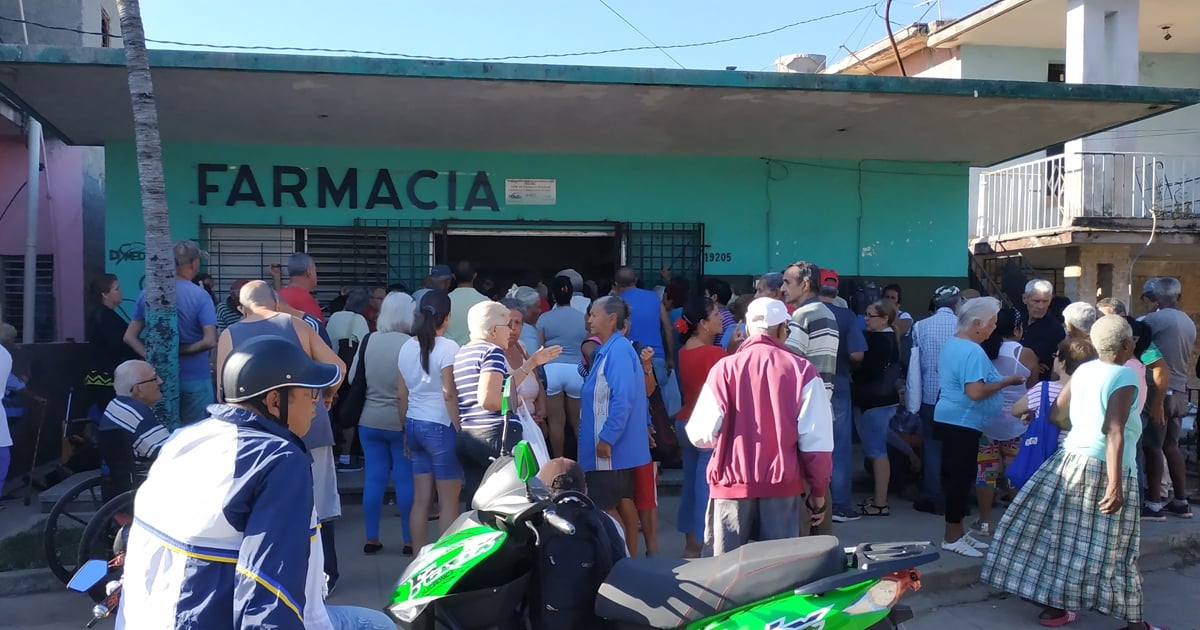
According to a report from Canal Caribe, cited by the regime's official newspaper, over 100 million tablets will be produced in the first stage to meet the demand of patients on the Island, a statement that contrasts with the ongoing shortages faced by pharmacies.
The plan is part of a new model of joint collaboration, based on the sales profits of the PPG, a product of the National Center for Scientific Research that is marketed in China.
Mayté Pérez, director of Medsol, stated that the production will meet the demand established by the Ministry of Public Health until 2026, a claim that sounds perfect… on paper.
He added that the process has the support of the State Center for the Control of Medicines and Medical Equipment, which would ensure greater efficacy and safety.
The official explained that the raw materials sourced from China for production in Cuba will now be utilized in the modern plants of the pharmaceutical company Hubei C&C, which, according to her, will help lower costs.
According to Medsol, this business model could expand to other medications also manufactured in China for the Cuban population. Although they did not specify which products would be "benefited," it might be worth adding a note: it's better to include all medications, as the predominant response in Cuban pharmacies is "there are none," a crisis that has persisted for years.
The triumphal announcement comes just a few months after the regime admitted that the crisis of medication shortages has reached alarming levels, where over 70 percent of essential drugs are missing.
According to official reports, of the 651 products that make up the Basic Medicines List, 461 are currently either completely unavailable or have low coverage, which means that more than 70% of essential medications are either not available or pose serious access difficulties for Cubans.
Similarly, the government acknowledged – although it has not resolved the issue for years – that the shortage of medications in Cuba continues to severely affect the population, especially vulnerable groups.
"The shortage of medications [...] primarily affects the Maternal-Infant Program and controlled medications, with the most affected groups being antihypertensives, those for diabetes mellitus, ophthalmology, respiratory system treatments, and antibiotics, among others," detailed the Commercializing Company of Medications (EMCOMED) in Guantánamo in a recent statement.
And in the midst of this crisis, the regime has exalted the figure of the great savior: the leader Miguel Díaz-Canel, visiting China with the not-so-first lady Lis Cuesta, was received by the Chinese leader Xi Jinping at the Great Hall of the People.
The meeting was officially presented by the Castro regime as a "productive" gathering, during which several cooperation commitments were signed, covering areas from agriculture and artificial intelligence to traditional medicine, infrastructure, and the cultural and media sectors.
Additionally, the Cuban leader inaugurated a high-tech pharmaceutical plant in Vietnam as part of his agenda during the first day of his official visit to the Asian country.
The facility is part of the joint venture Genfarma, established in May 2025 between the Cuban state company BioCubaFarma and the Vietnamese firm Genfarma Holdings.
"This is the fastest joint venture we have been able to create. We are envisioning all the future prospects, with the unity of research, innovation, and productive capabilities of this institution," declared Díaz-Canel during the inauguration ceremony.
Frequently Asked Questions about Aspirin Production in China by the Cuban Government
Why did the Cuban government decide to produce aspirin in China?
The Cuban government has decided to produce aspirin in China as part of a model of joint collaboration with the Chinese company Hubei C&C, due to the chronic shortage of medications in Cuba. This strategy aims to meet the domestic demand for aspirin by leveraging technology transfer and seeking to reduce costs.
How many aspirin tablets does the Cuban regime plan to produce in China?
According to the report from Canal Caribe, in the first phase, more than 100 million aspirin tablets of 81 milligrams will be produced to meet the demand of patients in Cuba. However, this promise contrasts with the reality of the shortages faced by Cuban pharmacies.
What problems is the Cuban healthcare system currently facing?
The Cuban healthcare system is facing a severe crisis of medication shortages. More than 70% of essential drugs are unavailable or present serious access difficulties for Cubans, severely impacting the population, especially vulnerable groups.
How does the shortage of medications affect the Cuban people?
The shortage of medications primarily affects critical programs such as Maternal-Child Health and controlled medications, with the most impacted being antihypertensives, those for diabetes mellitus, ophthalmology, respiratory system, and antibiotics. This situation forces many Cubans to turn to the informal market to obtain the necessary medications.
What other initiatives has the Cuban government taken to address the medication crisis?
The government has promoted the use of natural and traditional medicine as a solution to the shortage, creating syrups from plants such as onion and garlic. Additionally, it has signed agreements for the export of pharmaceutical products and is prioritizing the production of medicinal plants to meet the demand for medications on the island.
Filed under: