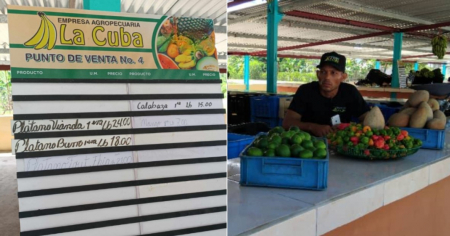
A Cuban shared a tour on TikTok of an agromarket in Havana where a wide variety of fruits, vegetables, grains, soft drinks, and packaged products can be seen.
"Then they say there's nothing here, look. Cuba is full of things; what’s missing is money. There’s everything here," he comments while recording shelves filled with pineapples, mangoes, watermelons, tomatoes, onions, grapes, and other foods.
The images, which show refrigerators stocked with beverages, bottles of oil, beans in bags, and assorted shelves, contrast sharply with the usual scarcity reported by consumers on the island. However, the reaction in the comments to the video reflects a different reality: the economic access to those products.
"My brother, without meaning to criticize you, tell me what money a regular Cuban on a salary has," wrote a user. Another added: "Yes, there is, but what they lack is freedom and money to buy those things."
The most recurring criticism was the disconnect between the existence of products and the inability to purchase them. “A retiree's pension is 1,500 pesos. So what's the story here? What’s needed is shame; it’s not about the money, nobody can buy anything, partner,” remarked another comment.
The publication reignited the debate about the high cost of living in Cuba, where inflation and the devaluation of the Cuban peso have driven up prices in agricultural markets, far exceeding state wages, which remain the primary source of income for the majority of the population.
Frequently Asked Questions about the Economic and Food Situation in Cuba
Why are there products in the markets of Cuba if Cubans say there is nothing?
In Cuba, the markets may be stocked, but the products are inaccessible to most of the population due to high prices and low wages. Inflation and the devaluation of the Cuban peso have driven up prices, making it such that even if products are on the shelves, few can afford them. The state salary, which is the main source of income for many Cubans, is insufficient to meet basic needs.
How does the Cuban economy affect access to food?
The Cuban economy negatively impacts access to food due to inflation, the devaluation of the peso, and low wages. The prices of basic goods are so high that an average salary is not enough to cover a minimum diet. Furthermore, the rationing system has collapsed, and many essential products are either unavailable or severely limited.
What impact does the dollarization of certain businesses in Cuba have?
The dollarization of certain businesses in Cuba deepens economic inequality, as only those who receive remittances or have access to foreign currency can shop in these places. These businesses accept payments only in dollars or cards topped up from abroad, excluding the majority of Cubans who earn in pesos. This creates a parallel market and a sense of injustice, as while some can access imported goods, others struggle to obtain basic necessities.
What is the minimum wage in Cuba and how does it compare to the cost of living?
The minimum wage in Cuba is approximately 2,100 Cuban pesos, which is equivalent to about 17 dollars at the informal exchange rate. This income is insufficient to cover even a basic diet, as it is estimated that a Cuban needs at least 30,000 pesos per month for food. The disparity between income and living costs reflects the severe economic crisis the country is facing.
Filed under: