
Related videos:
A federal judge in California has blocked the Trump administration's decision to revoke Temporary Protected Status (TPS) for over a million Venezuelans and Haitians, in a ruling considered historic for both its humanitarian impact and its legal implications.
Judge Edward Chen nullified the order issued by the Secretary of the Department of Homeland Security (DHS), Kristi Noem, thereby restoring the protections previously granted under past administrations.
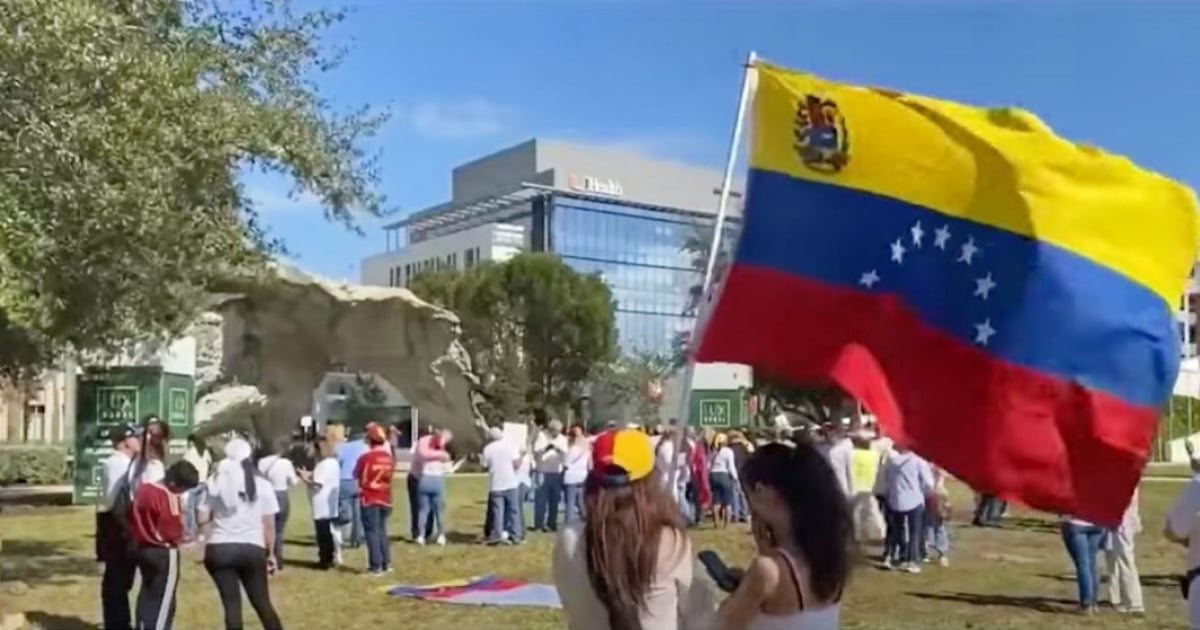
“We won the battle! All tepesianos are protected,” celebrated the president of the Venezuelan American Caucus, Adelys Ferro, in an emotional video shared on social media.
What does TPS mean and why is it crucial?
Temporary Protected Status is a migration status that prevents the deportation of citizens from countries in humanitarian, political, or natural crises, allowing them to live and work legally in the United States for as long as dangerous conditions persist in their home countries. While it does not provide a direct path to permanent residency, TPS has been essential for hundreds of thousands of people fleeing extreme circumstances.
Beneficiaries must undergo rigorous background checks and renew their status every 18 months. In return, they receive a work permit, a driver's license, and a Social Security number, but they do not have access to federal benefits.
Noem's Order: Background and Arguments
In January and June 2025, Kristi Noem announced the cancellation of the TPS extensions granted to over 600,000 Venezuelans (2021 and 2023) and 500,000 Haitians.
He argued that conditions in both countries had improved and that maintaining the protection "undermined the efforts of the Trump administration to control the southern border."
Matthew Tragesser, spokesperson for the Citizenship and Immigration Services, stated that maintaining TPS would be "a magnet effect" for irregular migration.
Noem even urged Venezuelans to self-deport through the CBP Home app, offering a free flight, a $1,000 bonus, and supposed "future opportunities for legal immigration."
Judge Chen's ruling: A course correction
Judge Chen dismissed Noem's arguments, describing them as "arbitrary and capricious."
He noted that the DHS secretary overstepped her authority by canceling previously approved extensions. In his ruling, Chen denounced that Noem generalized the alleged crimes of a few in a racist manner to justify the cancellation of TPS
"The generalization made by Noem regarding the alleged acts of a few (for which there is little or no evidence) to the entire population of Venezuelan TPS holders [...] is a classic form of racism," wrote the judge.
Chen emphasized that the TPS law was designed by Congress to be "predictable, reliable, and free from electoral politics."
Geopolitical context: a decision amid tensions
The judicial ruling comes at a time of increasing tension between the United States and Venezuela. On September 2, U.S. forces attacked a ship in the Caribbean, allegedly linked to drug trafficking and Venezuelan criminal gangs. At the same time, the Trump administration ramped up military presence in the region as a pressure tactic against Nicolás Maduro's government.
The State Department has also ramped up diplomatic pressure, offering a $50 million reward for the capture of Maduro, whom it identifies as the leader of the Cartel of the Suns.
The weight of the Venezuelan and Haitian community in the U.S.
Many TPS beneficiaries reside in Florida, especially in the southern part of the state, where they have built strong labor and community connections.
Catalina Restrepo, an immigration attorney in Greenacres, recounted the fear her clients face:
"Some employers have already threatened to fire them after September 10. Others fear being detained and separated from their families. For many, returning to Venezuela would be a death sentence."
Restrepo emphasized the value of these communities: “They contribute by starting businesses, working in our shops, factories, and all types of different jobs. They are here to improve our communities.”
Venezuela and Haiti: Countries Still Engulfed in Crisis
The conditions in both countries remain devastating. Venezuela is experiencing a prolonged humanitarian emergency, characterized by hyperinflation, food shortages, the collapse of basic services, and systematic human rights violations.
In the case of Haiti, the situation remains critical since the earthquake in 2010.
Gang violence, food shortages, and institutional collapse have hindered any form of structural recovery. Over 500,000 Haitians remain under the protection of TPS.
Political Reactions: From Congress to the Communities
Democratic Congresswoman Debbie Wasserman Schultz, a proponent of the Venezuela TPS Act of 2025, celebrated the ruling
"The TPS beneficiaries are legal. Trump's attempts to revoke their status were illegal. The judge has just clarified that distinction."
Meanwhile, the organized Venezuelan and Haitian community celebrated what they see as a victory not only legal, but also moral and human.
Conclusion: A breath amid uncertainty
The decision by Judge Edward Chen marks a milestone in the defense of migrant rights in the United States. Beyond the legal technicalities, his ruling reaffirms the humanitarian nature of TPS and puts a stop to political manipulations that endanger human lives.
Although the Trump administration is expected to appeal the ruling to the Supreme Court, for now, more than a million Venezuelans and Haitians can breathe easy: their rights remain protected by law.
Filed under: