
Related videos:
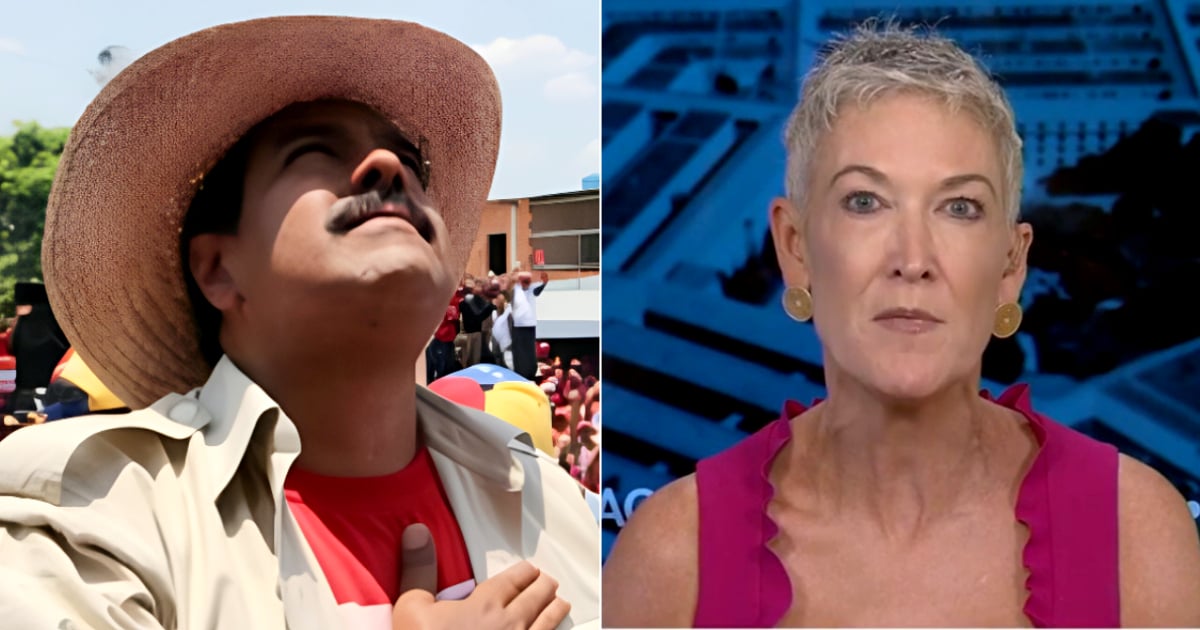
The renowned American journalist Jennifer Griffin, national security correspondent for Fox News and one of the most influential military analysts at the Pentagon, raised alarms this Friday with a comment on social media about the deployment of aircraft and warships in the Caribbean.
Griffin confirmed that the Department of Defense sent 10 stealth fighters F-35 to Puerto Rico for "anti-narcotics" tasks as part of the operation against the Cartel of the Suns, linked to the regime of Nicolás Maduro. However, he warned that the type of weaponry used suggests a mission much more aggressive than simply combating criminal organizations.
"Why would F-35 fighters be needed for an anti-drug mission? These planes are usually used in large bombing operations, like the attacks on Iran's nuclear facilities. They are fifth-generation supersonic fighters known for their lethality. It seems to me that the U.S. military is going to war," Griffin wrote on X.
The journalist also recalled that the presence of eight U.S. Navy destroyers in Caribbean waters, off the coast of Venezuela, is unprecedented, which heightens the perception that Washington could be preparing for a broader military scenario.
A climate of growing tension
The deployment takes place amid the operation ordered by Donald Trump to combat organizations that the White House has labeled as “narcoterrorists.” The Cartel of the Suns, allegedly led by Maduro and other high-ranking chavista officials, was included on that list, and the United States is offering a $50 million reward for their capture.
In addition to the destroyers, nuclear submarines, and amphibious squadrons already deployed in the region, the arrival of the F-35 adds a different dimension, as these aircraft are designed for high-intensity operations and are not typically used for drug interdiction missions.
Griffin's statements, a journalist with direct access to military sources in Washington, reinforce the perception that the Trump administration is willing to escalate its pressure on Maduro, with a military deployment that, for many, already goes beyond the anti-drug narrative.
From symbolic "war" to real risk
Griffin's warning comes alongside a series of recent decisions by the White House that have strengthened the confrontational tone towards Caracas.
Trump himself signed an executive order for the Pentagon to symbolically reclaim its former name of Department of War, which was used officially until 1947.
Although the change cannot be definitive without Congress's approval, the gesture was interpreted as a message of "military strength" and a way to psychologically prepare the country for a scenario of greater confrontation.
That same day, Trump authorized the military forces to shoot down Venezuelan planes if they harass U.S. ships deployed in international waters of the Caribbean.
The instruction was given following an incident involving two F-16 fighter jets from the Bolivarian National Armed Force that flew at low altitude over the USS Jason Dunham destroyer. The Pentagon described the maneuver as "highly provocative."
In response, Maduro announced that Venezuela would enter a phase of "planned armed struggle" in the event of aggression, and emphasized the mobilization of millions of militia members for the defense of the country.
An open stage
With next-generation stealth fighters in Puerto Rico, destroyers off the coast of Venezuela, and increasingly belligerent rhetoric from Washington and Caracas, tensions are rising to a difficult-to-reverse point.
The question raised by Griffin —whether the United States is preparing for war against Maduro— encapsulates the concern of experts and analysts: is this still an anti-drug operation, or is the Caribbean on the verge of a military conflict of regional scope?
Filed under: