
Related videos:
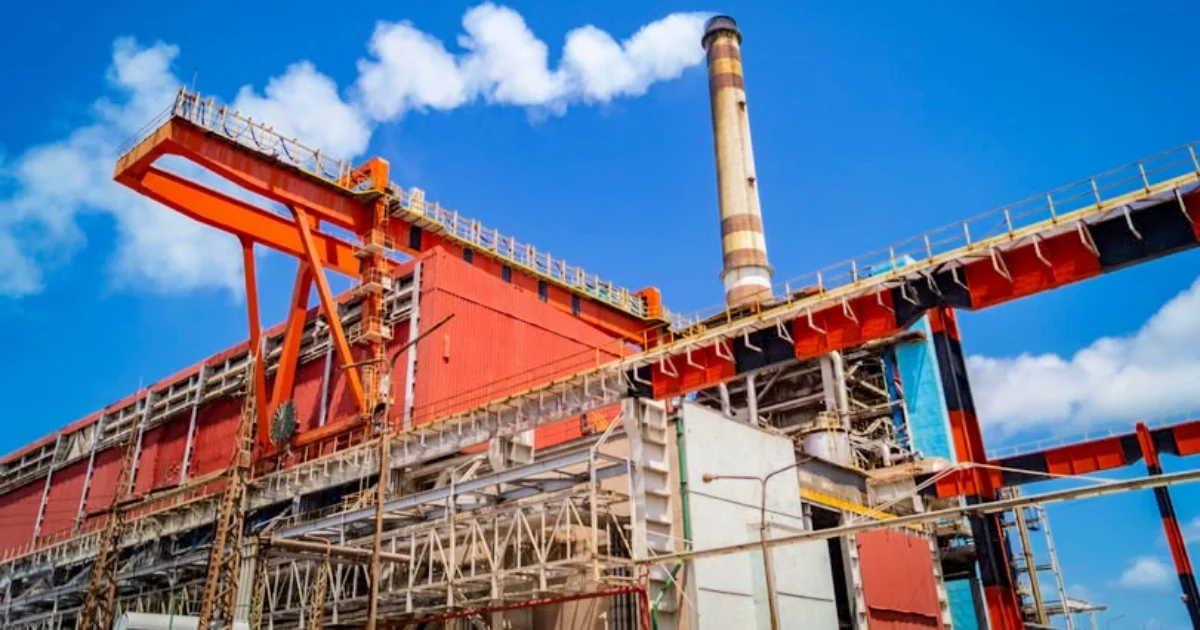
The Felton thermoelectric plant, one of the cornerstones of electricity generation in Cuba, has just gone out of service and will remain disconnected for at least 20 days, exacerbating the already collapsed energy situation on the Island.
The announcement, made on by the official journalist Lázaro Manuel Alonso, reveals that unit 1 experienced a failure in its transformer and will require prolonged repairs, in addition to cleaning work on the boiler and condenser.
The news hits at the worst possible time.
According to reports from the Electric Union (UNE), the National Electric Service (SEN) was affected on Friday, with the service disrupted for 24 hours and remaining impacted throughout the early hours of today.
The highest impact due to generation capacity deficit occurred at 8:20 PM, reaching 1861 MW, coinciding with peak demand and exceeding the planned level due to Unit 3 of CTE Santa Cruz not coming online.
This Saturday, the country woke up with an availability of only 1,405 MW against a demand of 2,860 MW, resulting in an immediate deficit of 1,420 MW.
By noon, the impact is expected to increase to 1,350 MW.
During peak hours, the projections are even more dramatic: a deficit of 1,835 MW, with expected impacts of up to 1,905 MW.
Endless blackouts
The direct consequence is that power outages have extended up to 20 continuous hours in several areas.
In Havana, where the government is trying to sugarcoat the crisis with supposed block plans, outages occur without warning, leaving thousands of families without electricity during both day and night.
The Electric Company of the capital itself acknowledged on Facebook that "it has not been possible to meet the scheduled timetable due to a deficit" and that power outages are lasting much longer than announced.
The situation has pushed a population to the limit that is already facing food shortages, lack of transportation, deteriorating drinking water, and a collapsed health system.
Electricity, which should be a basic service, has become an intermittent luxury.
A SEN in ruins
The official report from the UNE reflects the magnitude of the disaster:
There are six thermal power units out of order at the CTE Santa Cruz, Nuevitas, Felton, and Renté.
In addition, three other blocks from the Santa Cruz and Cienfuegos CTE are undergoing maintenance.
Due to a lack of fuel, 40 distributed generation plants with a capacity of 197 MW remain shut down.
This adds up to 450 MW unavailable due to a lack of lubricants.
The list highlights a structural collapse that goes beyond a mere breakdown: it is a manifestation of an obsolete system, poorly managed and lacking in resources, trapped between the regime's disinvestment and corruption entrenched in the sector.
Solar energy: an insufficient patch
The government is attempting to showcase the addition of 28 new photovoltaic solar parks as an achievement, which produced 2,380 MWh and delivered a peak of 494 MW during midday hours.
However, that figure only compensates for a fraction of the overall deficit and falls significantly short of what is necessary to ensure a stable supply.
A country in the dark and a blind government
Meanwhile, Cubans continue to live in the shadows, forced to cook in the dark, to sleep without fans in the sweltering tropical heat, and to lose food due to a lack of refrigeration.
Each prolonged blackout represents another blow to an already devastated family economy.
The government, instead of providing structural solutions, is limited to issuing technical notes and bureaucratic excuses, without taking responsibility for decades of neglect of the electrical system.
With the departure of the Felton, one of the last strongholds of thermal generation, Cuba enters a new phase of energy anguish, where the only thing that increases is the despair of its people.
Frequently Asked Questions about the Energy Crisis in Cuba
Why are blackouts so frequent in Cuba?
Power outages in Cuba are frequent due to the structural collapse of the national electricity system. The lack of investment, the deterioration of infrastructure, and poor government management have left the country with insufficient generation capacity to meet demand. Breakdowns in thermal plants, inadequate maintenance, and fuel shortages further exacerbate the situation, leading to prolonged and continuous power cuts.
What is the impact of power outages on the daily lives of Cubans?
Prolonged blackouts severely affect the daily lives of Cubans, interrupting the water supply, damaging food due to lack of refrigeration, and making everyday activities like cooking and working more difficult. Additionally, they negatively impact the functioning of essential services such as hospitals and public transportation, increasing the pressure on a population already struggling with shortages of basic resources.
What measures has the Cuban government taken to address the energy crisis?
The Cuban government has tried to showcase the incorporation of photovoltaic solar parks as an achievement, but these measures are insufficient to mitigate the energy deficit. Furthermore, the lack of structural solutions, such as investment in modern infrastructure and efficient resource management, remains a critical issue that hinders effective resolution of the crisis.
What is the role of the Unión Eléctrica de Cuba (UNE) in managing the crisis?
The Cuban Electric Union (UNE) is responsible for managing the country's electricity supply, but it has been criticized for its lack of transparency and effectiveness. The reports issued by UNE often do not reflect the severity of the actual situation, and promises of improvements frequently go unmet, leading to distrust and frustration among the population.
Filed under: