
Related videos:
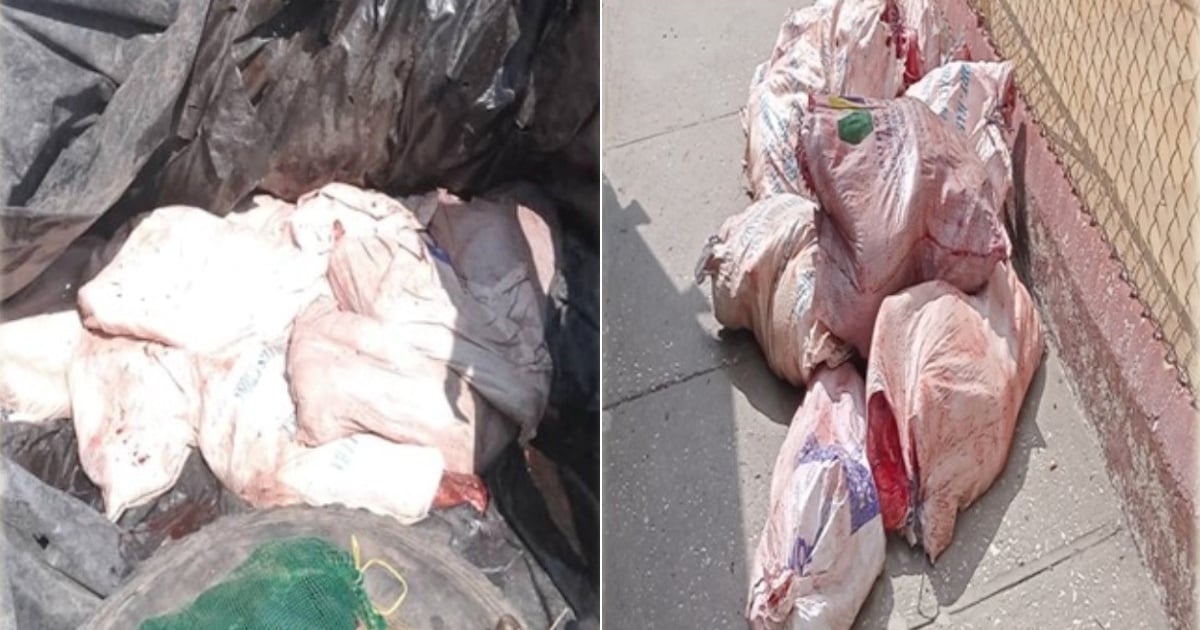
Two individuals from Laguna Blanca, in the municipality of Contramaestre, Santiago de Cuba, were arrested while transporting hundreds of pounds of beef in a truck.
The cargo, neatly arranged in bags and hidden under a large quantity of root vegetables and greens, was ultimately destined for illegal sale, as revealed by the official profile Héroes del Moncada on Facebook.
The operation was carried out by members of the National Revolutionary Police (PNR) in the locality of Guaninao.
After a thorough inspection, authorities discovered over 700 pounds of beef, allegedly the result of illegal slaughter, which constitutes a serious offense under Cuban law.
However, on social media, instead of finding a unanimous reaction of condemnation, the news has sparked a profound social debate, where popular frustration, chronic food shortages, and the perception of institutional impunity intersect.
Between Law and Necessity: Voices of the People
The post generated a flood of comments revealing a fractured society, divided between those calling for justice for the affected breeders and those who see these acts as a desperate escape from misery.
On one hand, many demanded a hardline approach to crime, especially from the perspective of livestock farmers:
"That's not fair; they take what others have raised with effort. Anyone with children knows that you have to find food for them, but not like this." "The owners of the animals were left crying. This is something we all suffer as cattle ranchers: we raise them, and they just take them away." "Robbery will never be a justification to escape a problem. Those who work honestly will never see it as an option," were some of the opinions.
On the other side, voices have emerged pointing to the context of hunger, corruption, and structural inequality as underlying causes.
"Thanks to those people, one can barely feed themselves. They don’t even send anything for the children anymore; now what they distribute is soybean ground meat and skin." "The greatest thief lives in the palace and spends his life traveling around the world with his family." "If meat were legalized and sold like in any normal country, there wouldn't be illegal sacrifices," others expressed.
"What exists in this country is hunger. They should distribute that meat to children and pregnant women. But we all know where it's really going," declared another commentator.
“In this country, everything is illegal. How do you make a living? Even the milk for the children has to be obtained from outside.”
The dilemma of red meat: a symbol of collapse
The case of the 700 pounds of meat is not an isolated incident, but rather a symptom of a collapsed system. In Cuba, beef represents much more than just a food item: it is synonymous with scarcity, strict state control, repression, and for some, resistance.
While the State tries to present these operations as achievements in the fight against illegality, the invisible figures of children without milk, desperate parents, and plundered farmers reveal a much harsher reality.
“You go to a prison and ask the inmates why they are there, and 99% is for beef or horse meat. A sign that there is hunger”, lamented a commentator.
And another points out with irony the paradox of the official discourse: "To crime, not even a little bit... Otherwise, there wouldn't be any leaders left."
What happened in Contramaestre is more than a police case. It is an episode that highlights the contradictions between legality, morality, and survival in a Cuba where the boundaries between what is right and what is necessary have become blurred.
The punitive approach, without deep reforms, will not resolve a structural problem. As one user expressed: “Legalize the meat and the black market will end."
Filed under: