
Related videos:
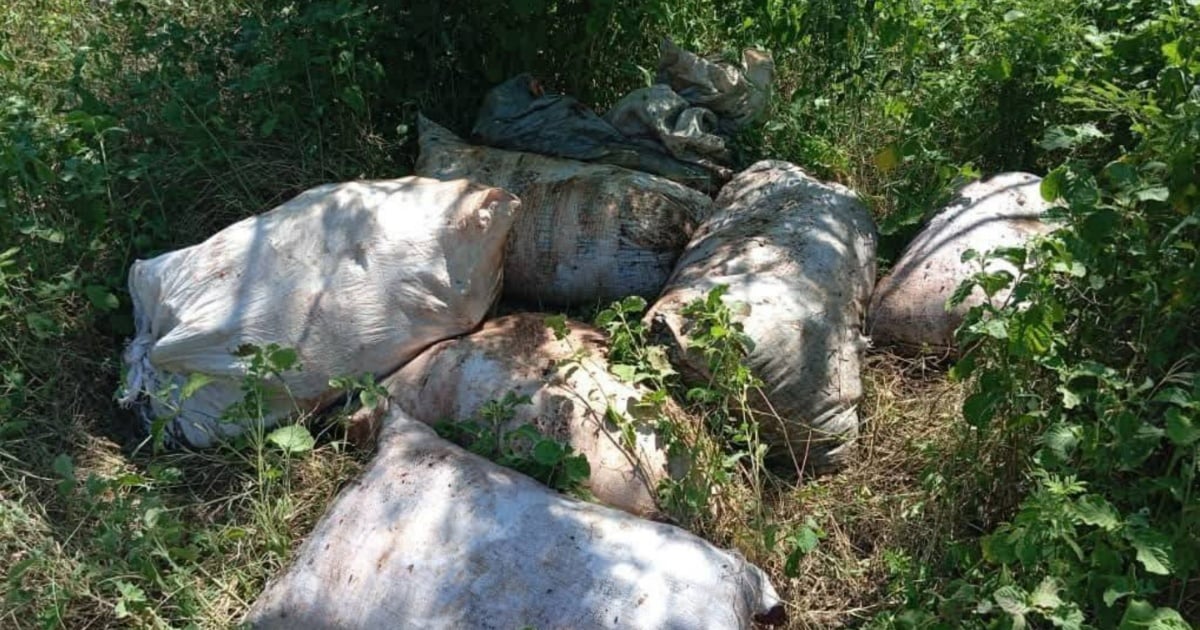
A group of slaughterers was arrested in Río Cauto, Granma, while attempting to transport stolen beef in state vehicles.
A Facebook post from the official page El Cubano Fiel reported that the police detained the individuals after they sacrificed several animals in the vicinity of the Cauto el Paso dam and attempted to transport the meat to the municipality of Río Cauto.
The official page states that "the police alarms went off when they learned that two state vehicles would be traveling late at night to that remote location to transport the meat."
However, it is not mentioned which state-owned companies the cars belonged to, nor is there any indication that any officials are arrested in connection with the incident
"When the police arrived at the home of one of the butchers, they found that the place was a real slaughterhouse that was depriving local farmers of their cattle. According to conjectures from some participants in the police operation, this does not appear to be the first time the criminals have carried out this type of operation," the source reported.
At the site, they found “more than a thousand pounds of meat, remains of the sacrificed animals, tools used in the slaughter, and of course, the butchers who ended up in prison,” he concludes.
Cuban farmers are reporting that the theft and slaughter of cattle remain rampant in the countryside of the island, severely impacting the agricultural economy and food security.
This Saturday it was reported that, in El Cristo, a town belonging to Santiago de Cuba, a hooded man wearing gloves stole a horse during the early morning, and so far the Police have not informed whether an investigation has been initiated, despite the fact that the incident was captured by a security camera and reported immediately by the victims.
Despite the efforts announced by the government, ranchers and farmers claim that the theft of cattle and the subsequent illegal sale of meat has become an almost unpunished practice, especially in provinces with high livestock activity such as Camagüey, Sancti Spíritus, Villa Clara, and Ciego de Ávila, as reported by the official media Cubadebate.
In Manzanillo, the Police arrested four individuals for sacrificing someone else's bull in the Cayo Espino area, as part of a series of operations by Minint in various municipalities of Granma, reported the official newspaper La Demajagua.
Weeks ago, in the town of Uñas in the municipality of Gibara, in the province of Holguín, a butcher, after consuming large amounts of alcohol, stole a chestnut horse belonging to a neighbor. He took the animal to his mother's house, where he proceeded to slaughter it.
However, the effects of alcohol were such that, once the violent act was over, he fell asleep on top of the animal's body. It was in this position that the authorities found and arrested him.
Additionally, another Cuban was taken into custody after being
In April, the People's Municipal Court of San Antonio del Sur, in Guantánamo, issued a ruling of three years of deprivation of liberty against a man accused of stealing two horses, earlier this year, at a farm in the Playa Sabanalamar neighborhood.
Frequently Asked Questions about the Illegal Theft and Sacrifice of Livestock in Cuba
Why is the theft and illegal slaughter of livestock so common in Cuba?
The theft and illegal slaughter of livestock in Cuba is common due to food shortages and the economic crisis, driving people to turn to the black market for meat. The lack of adequate surveillance and insufficient resources to protect farms also contribute to this problem. Furthermore, the impunity and lack of effective actions by the authorities have allowed this practice to become almost unchecked in many regions of the country.
How does the illegal slaughter of livestock affect the agricultural economy in Cuba?
The illegal sacrifice of livestock severely impacts the agricultural economy in Cuba by reducing the availability of animals for legal meat production and consumption. This not only affects the ranchers and farmers who lose their animals, but it also undermines the country's food security by decreasing the supply of meat in the official market. The illegal practice increases the population's dependence on the black market, where prices are unattainable for many Cubans.
What actions are the Cuban authorities taking to combat the illegal trafficking of beef?
Cuban authorities have intensified operations to combat the illegal trafficking of beef. These operations include patrols in neighborhoods, the reactivation of surveillance detachments, and rural patrols. However, the effectiveness of these measures is questioned by ranchers, who point out that without an adequate supply of inputs, feed for livestock, and exemplary punishment for organized networks, the problem will persist.
What are the legal consequences for those involved in the illegal slaughter of livestock in Cuba?
The legal consequences for those involved in the illegal slaughter of livestock in Cuba are severe. In 2024, 90% of those prosecuted for this crime received custodial sentences, with 78% of them facing penalties of up to 15 years. These measures aim to deter offenders and reflect the seriousness with which the Cuban government addresses this issue, although many cases still remain unpunished.
Filed under: