
Related videos:
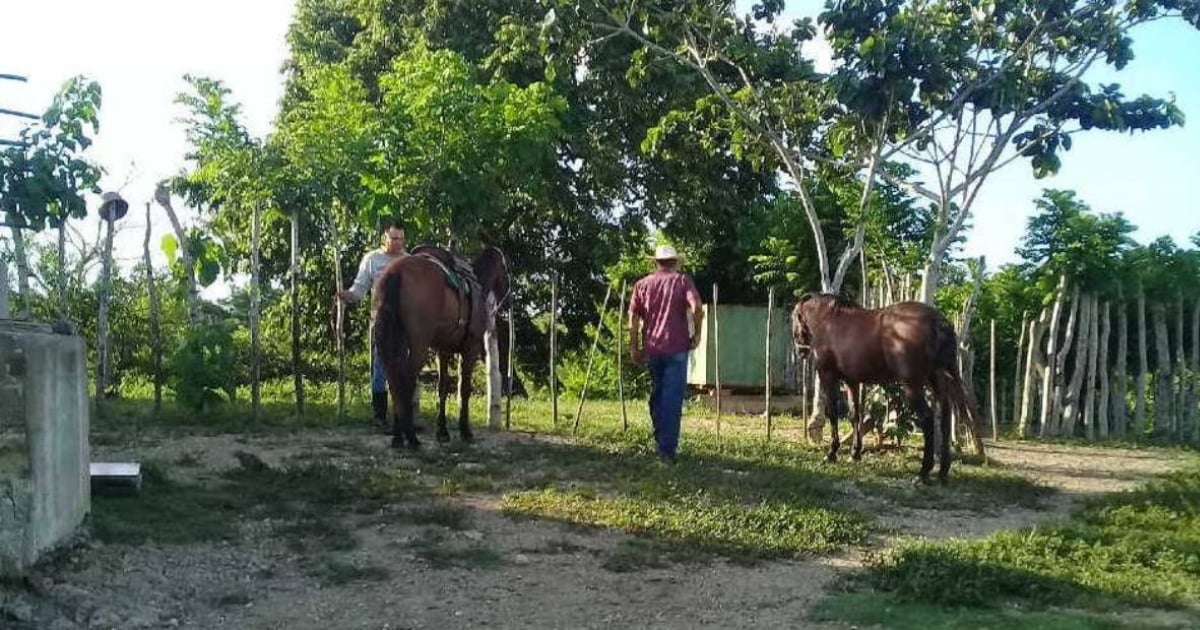
A cattle rancher and his brother were arrested after being accused of illegally slaughtering two horses from the El Corojal livestock unit in the municipality of Rafael Freyre, in the province of Holguín.
The arrest occurred a few days ago when the police searched their homes and found beef.
They also discovered in the vicinity of the cattle ranch a "graveyard" where the remains of illegally sacrificed horses and cattle were hidden, reported on Facebook by the official profile El Cubano Fiel, associated with Minint.
Residents of the area confirmed that the capture of both individuals was linked to the discovery of those remains, which brought an end to the illicit activities they were carrying out both inside and outside the state facility, the source added.
The situation once again highlights the deterioration within the Cuban agricultural system, where workers involved in production find themselves entangled in crimes against the very assets they are responsible for safeguarding.
A few days ago, a group of 10 men, riding horses, hooded and armed, attacked a cooperative in Limoncito, in the municipality of Cacocum in Holguín, and forcefully took almost 60 head of cattle.
The event, worthy of a North American Western film, took place at the Basic Cooperative Production Unit (UBPC) in the locality and involved the kidnapping of several employees and guards, who were released kilometers later.
The men, who were hooded and armed, acted with complete impunity. Among the attackers was a fugitive from justice. This assault has instilled panic among the residents of the area, who fear for their safety and that of their belongings.
In an unusual modus operandi, a man kidnapped two cattle in the municipality of Báguanos in Holguín, not with the intention of slaughtering them for their meat, as is common in Cuba, but to demand a ransom of 60,000 pesos from their owner, a plan that the police thwarted in May.
In April, a series of robberies that had kept several rural communities in the Mayarí municipality on edge came to an end after a police operation that caught the perpetrators with over 400 pounds of stolen meat, several live cows, horses, and tools used for livestock smuggling.
The cases of cattle theft and slaughter in Cuba are on the rise, and owners are desperate. The increase in slaughterhouses in rural areas leaves farmers unable to sleep, vigilantly watching over their animals and at risk of becoming victims of thieves themselves.
The increase in crime in Cuba is closely linked to the economic crisis, where the lack of resources and the ineffectiveness of the authorities have weakened public safety and led to a rise in thefts and minor crimes that directly affect the citizens.
Frequently Asked Questions about the Increase in Livestock-Related Crimes in Cuba
Why were the head of the cattle ranch and his brother arrested in Holguín?
The head of the cattle ranch and his brother were arrested for illegally slaughtering two horses from the livestock unit El Corojal in Rafael Freyre, Holguín. During the search of their homes, remnants of beef and a "graveyard" of illegally sacrificed animals were found, which led to their detention.
What is the context of insecurity and cattle theft in Holguín?
In Holguín, there has been a significant increase in thefts and illegal slaughtering of cattle, which is causing insecurity in rural areas. Recent examples include a robbery at the UBPC of Limoncito, where an armed group stole nearly 60 head of cattle, and cases of cows being kidnapped for ransom. These acts reflect the economic crisis and the lack of resources in Cuba.
What measures are the Cuban authorities taking in response to the illegal slaughter of livestock?
Cuban authorities have intensified operations to combat the illegal slaughter of livestock. From January to August 2024, 1,615 individuals were convicted for offenses related to the slaughter and trafficking of beef, with sentences of up to 15 years in prison in many cases. However, the effectiveness of these measures is questioned due to the sustained increase in these crimes.
How does illegal cattle sacrifice affect Cuban producers?
The illegal sacrifice of livestock severely affects Cuban producers, who are stripped of their animals, impacting their livelihoods and agricultural production on the island. The perception of impunity and the lack of resources increase the vulnerability of farmers, who are facing economic crisis and food insecurity.
Filed under: