
Related videos:
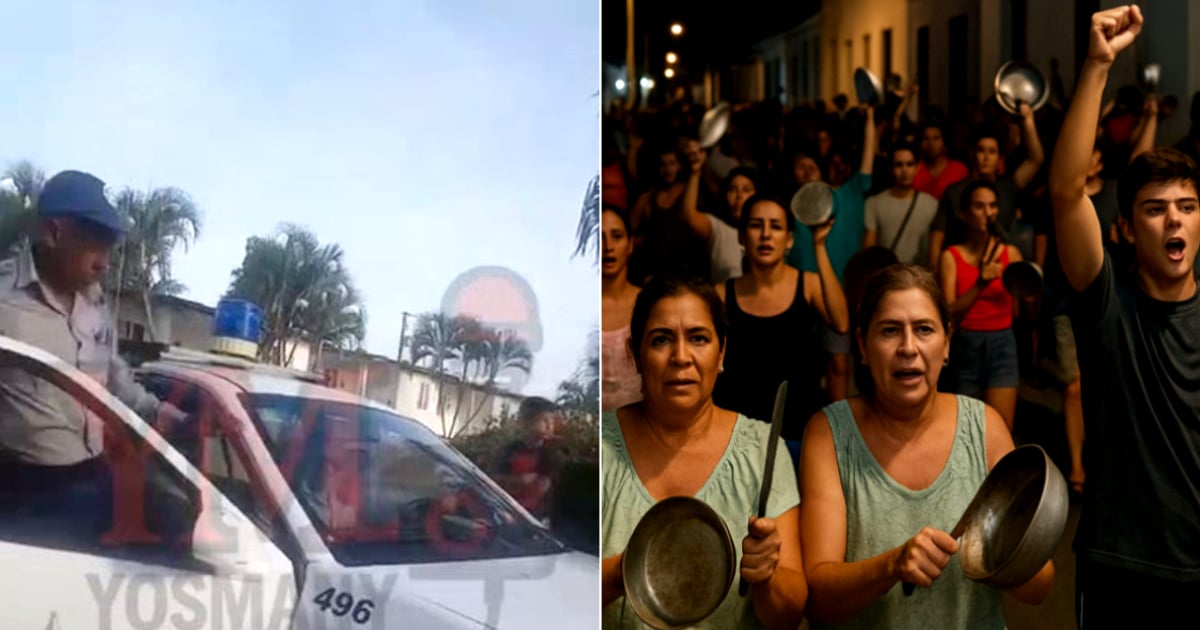
The post by CiberCuba on Facebook regarding the first arrests that occurred in Gibara, Holguín, following the peaceful protest against blackouts, sparked a wave of reactions filled with indignation and solidarity among users.
The comments gathered in the first 24 hours reflect the public's weariness in the face of repression and daily misery on the island. Dozens of internet users agreed that the protest in Gibara was a legitimate response to the collapse of basic services.
For many, the patience of the people is running out: “For all the things we Cubans are going through, and they want us to remain silent, how much longer do we have to endure?”.
Others recalled that the prolonged resignation has been exploited by the regime: “They have been enduring for so long that the communists think it is normal”.
There were also those who described the situation as unbearable: “We can't cook, wash, or sleep... what motivation does one have to get up every morning if we go to bed tired and wake up tired?”.
Human rights and freedom of expression at the center of the debate
One of the most frequent criticisms was the absence of fundamental freedoms. The comments highlighted that the repression against peaceful demonstrations is a direct violation of human rights: "Repression against freedom of expression. Where is the respect for that human right?"
Most agreed that there is no freedom of expression in Cuba. For commentators, the arrests for demanding basic services highlight the dictatorial nature of the system. "The only country where someone is arrested for expressing that they are hungry is Cuba," noted a user, while another summarized: "Here it is pure and simple dictatorship."
Amidst the torrent of opinions, several individuals recalled that the Constitution explicitly recognizes the right to protest, citing Article 56, which states that "the rights of assembly, demonstration, and association, for lawful and peaceful purposes, are recognized by the State as long as they are exercised with respect for public order and in compliance with the provisions established by law."
Call for unity and leadership
Beyond the indignation, many comments highlighted the need for civic organization. Several agreed that an opposition leadership capable of mobilizing the masses would be crucial: “When Cuba has opposition leaders who know how to move people, there won't be enough prisons to hold so many.”
Others recalled that unity is essential for achieving real change: "In unity there is strength, from Cape San Antonio to Punta de Maisí." At the same time, warnings about the vulnerability of isolated protests were not lacking, as they often end up serving the regime as an excuse to punish and intimidate the people.
Daily life during power outages
The reactions were marked by frustration over the energy crisis and shortages. “There is no food, there are no medicines, and we live in the dark,” summarized a comment.
Others recounted everyday scenes of despair: families enduring up to 40 hours without electricity, children without access to drinking water, and the sick unable to obtain medicine.
The outrage was also directed against the state's priorities: "There is always fuel, patrols, and police to imprison those who protest. But there is no gasoline for the ambulances or medicine in the hospitals."
Between rage and despair
The tone of the comments ranged from indignation to resignation. "What a horror, we can't even protest, we can no longer endure the hell we live in", wrote a user. Others were sarcastic: "They will have to arrest all of Cuba".
Some appealed to divine justice: “Only divine justice will condemn them one by one when the final judgment arrives. They deserve to burn in hell.” Others acknowledged that fear remains a deterrent: “The support is once again for the streets and not letting them be stopped, but people are afraid.”
A message to the regime and its repressive forces
Many of the comments were directed at the Police and the agents responsible for the repression. There were calls to remember that they are also part of the people and suffer from the same hardships, but the majority issued messages of condemnation: "Thugs, repressors, their crimes will not go unpunished."
The consensus was that repression does not solve anything and only deepens the crisis. "Arresting is not resolving. People are asking for the bare minimum: electricity, water, food. That's not a luxury; it's a basic need."
A unanimous cry
Beyond nuances, the common thread in the thousands of comments was solidarity with the demonstrators in Gibara. "They are not criminals, they are just asking for what all Cubans need: the basics to survive", summarized another user.
The indignation was mixed with calls for collective resistance. "When all of Cuba does what Gibara did, they won't be able to stop everyone," expressed another comment that received widespread support.
The echo of these voices on social media shows that, although the regime tries to impose silence through patrols and arrests, public discontent finds ways to express itself and show solidarity. As one message in capital letters summarized: “They were claiming their rights!”.
Filed under: