
Related videos:
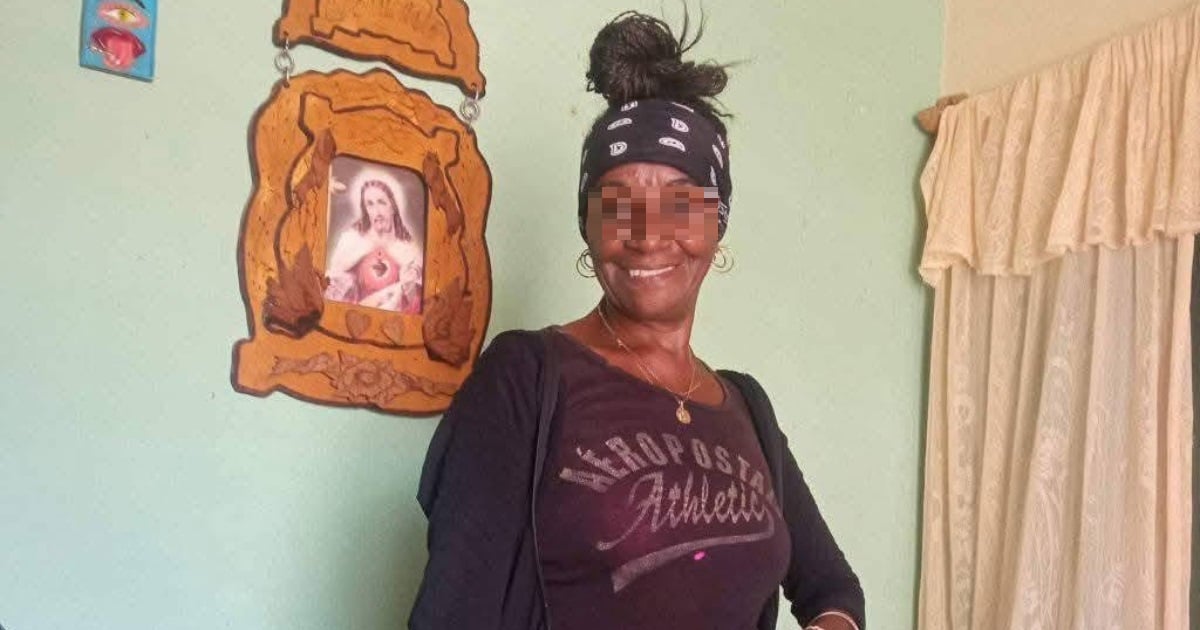
The third fatality attributed to the violent killer Arisley Cabeza Reyes (Perico) — the same man who killed a father and son in Artemisa — has been identified as Mercedes Cantero Rodríguez, known as La Mora.
The 64-year-old woman was allegedly strangled by the escaped inmate, who was apprehended last Friday in Bahía Honda by forces from the Ministry of Interior (MININT).
A relationship marked by secrecy and tragedy
Cantero Rodríguez was in a clandestine romantic relationship with her alleged attacker, who was serving a sentence for theft under a less severe regime that allowed him to work in a hospital.
Sources told Martí Noticias that she frequently visited him and brought him food and other goods.
However, the trust placed in him ended in betrayal and death: in addition to strangling her, the suspect stole money and a motorcycle from her.
The victim's body was found on September 2, in an advanced state of decomposition, hidden under her bed in the community of San Justo.
Neighbors alerted the police after noticing a strong odor coming from the house. Experts determined that the woman had been dead for at least three days.
The funeral home in Artemisa confirmed that the cause of death was strangulation and that the body could not be viewed due to its condition.
With this case, the number of verified femicides in Cuba rises to 31 so far in 2025, according to the independent observatories Alas Tensas (OGAT) and Yo Sí Te Creo en Cuba (YSTCEC).
The serial killer and his capture
The name of Arisley Cabeza Reyes was already at the center of the commotion in Artemisa due to the murder of Francisco Torres Rodríguez (80 years old) and his son Yaciel Torres Remedio (46), who were found dead on September 5 on their farm El Cusco, located in a mountainous area of the Candelaria municipality, near the community of Las Terrazas.
Both were violently attacked, allegedly by the escaped prisoner, who was seeking money following the sale of livestock conducted by the victims.
For days, Cabeza Reyes remained on the run until he was cornered by the police on September 12 in Bahía Honda. Realizing he was surrounded, he shot himself in the head in an attempt to commit suicide.
He was transferred in critical condition first to the hospital in that municipality and then to Calixto García in Havana, where he remains under police custody.
A feminicide that reveals vulnerability and structural violence
Feminist organizations have emphasized that the case of La Mora reflects the pattern of machista violence on the Island.
Ileana Álvarez, director of Alas Tensas, recalled that in 2024, 89.3% of femicides were committed by partners, ex-partners, or men who had some type of close relationship with the victims.
"We classify it as a feminicide because the person who killed her was precisely someone with whom she had a relationship. Even if there was no partner relationship, it remains a social feminicide, because the victim is a person over 60 years old, in a state of vulnerability, who allegedly knew the aggressor, and he abused her trust to rob and kill her," explained DIARIO DE CUBA.
"We are particularly concerned about the increase in femicides against older women, a highly vulnerable group. These are not isolated incidents, but rather a structural phenomenon of domination and abuse of trust," emphasized Álvarez in front of Martí Noticias.
Growing insecurity in Cuba
The triple murder attributed to Cabeza Reyes occurs within a context of social deterioration and increasing violence in Cuba.
The Cuban Observatory for Citizen Audit (OCAC) documented at least 1,319 crimes between January and June 2025, including 63 homicides and 721 thefts, figures that contradict the official narrative from the authorities, who insist on downplaying crime rates.
For the residents of San Justo, La Mora's death not only leaves an irreparable wound but also reinforces the perception that the Cuban state does not guarantee citizen security.
"She got along very well with the neighborhood. She used to make a living selling things and had money," one lamented.
The case of Mercedes Cantero Rodríguez is not only the confirmation of a third victim of a serial killer; it is also a portrait of the helplessness and gender violence that continue to take lives in present-day Cuba.
Frequently asked questions about the case of the multiple killer in Artemisa and violence in Cuba
Who was the third victim of the serial killer in Artemisa?
The third victim was Mercedes Cantero Rodríguez, known as La Mora. The 64-year-old woman was allegedly strangled by Arisley Cabeza Reyes, who also stole money and a motorcycle from her. Her body was found in an advanced state of decomposition at her home in San Justo.
How was Arisley Cabeza Reyes captured?
Arisley Cabeza Reyes was captured on September 12 in Bahía Honda. After being cornered by the police, he attempted suicide by shooting himself in the head, but survived and was taken to Calixto García Hospital in Havana, where he remains under police custody.
What is the current situation of femicide in Cuba?
In 2025 so far, at least 31 femicides have been confirmed in Cuba, according to independent observatories such as Alas Tensas and Yo Sí Te Creo en Cuba. Gender-based violence remains a serious structural problem on the island, particularly affecting older and vulnerable women.
What does the La Mora case reflect about violence in Cuba?
The case of La Mora reflects a pattern of misogynistic violence in Cuba, where victims often know their aggressors. Feminist organizations emphasize that these are not isolated incidents, but rather a structural phenomenon of domination and betrayal of trust.
Filed under: